THEA500 Mini keyboard | #MagPiMonday
THEA500 Mini console is something to write home about if you’re an Amiga fan – until you realise you can’t use its keys to do so. In the brand new issue of The MagPi, David Crookes discovers a solution. Happy #MagPiMonday!
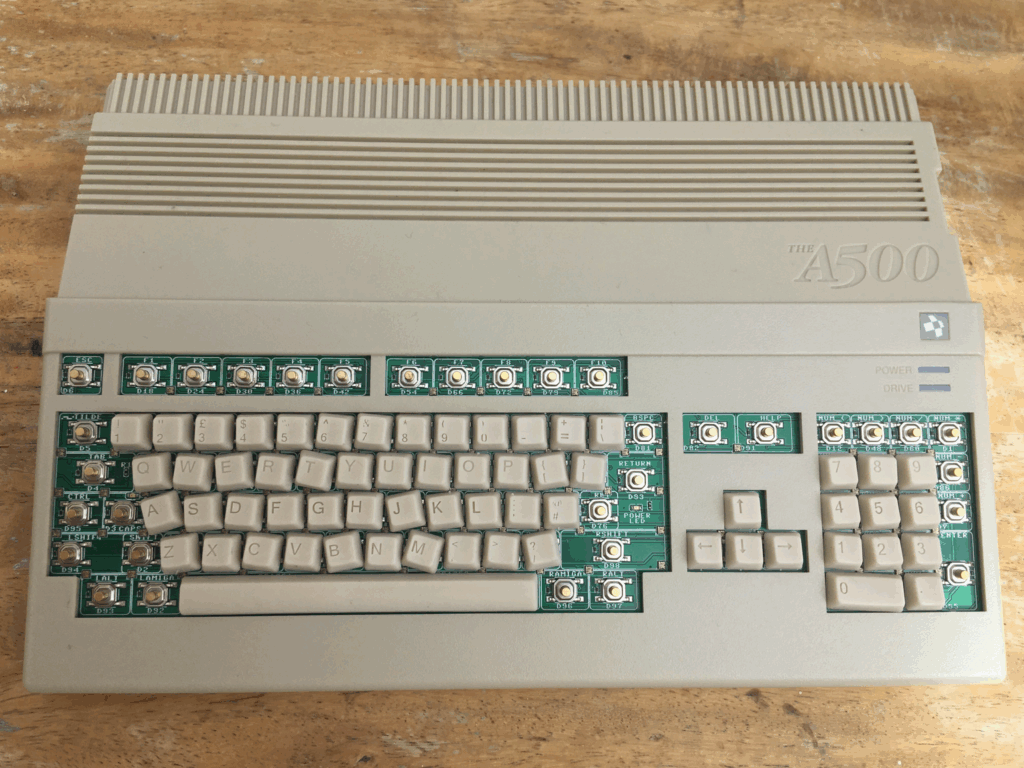
Fans of Commodore’s Amiga range of computers were overjoyed when a miniature version of one of the machines was released in April 2022. THEA500 Mini, as it’s called, is a plug-and-play reimagining of the Amiga 500 but, while it’s capable of playing thousands of games and comes with a mouse and joypad, there’s a little problem with the keyboard. It doesn’t work.
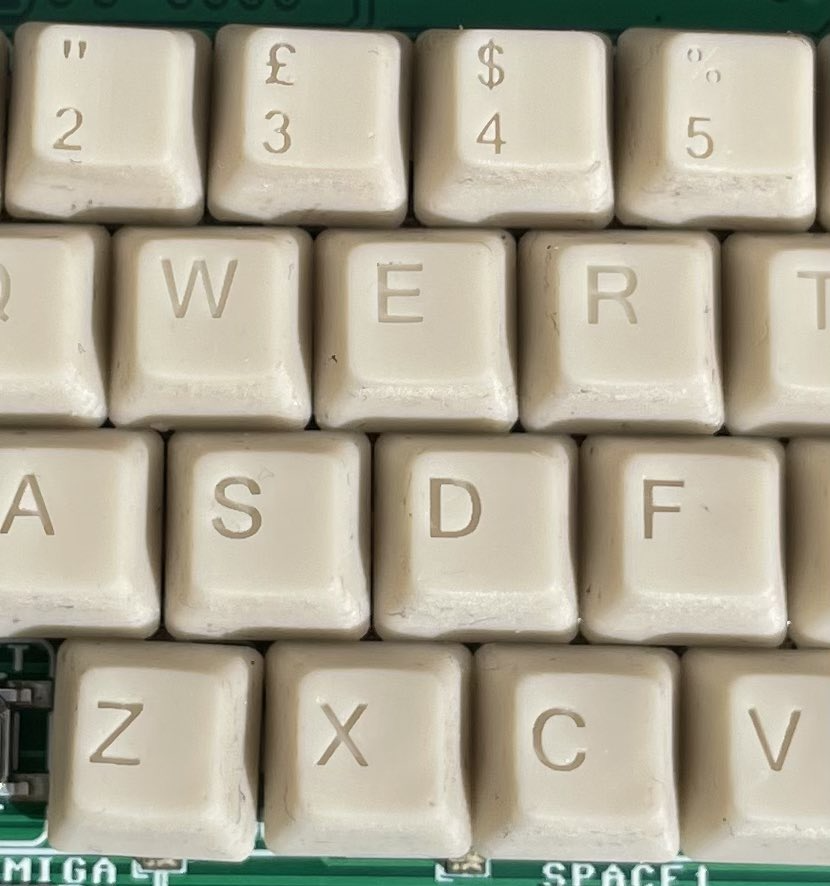
Try as you might, you’ll never be able to bash those keys because they’re a solid, non-moving, unconnected block of plastic. That, however, hasn’t prevented one Amiga enthusiast from dreaming of an alternate reality. Rather than plug in an USB keyboard as suggested by THEA500 Mini’s manufacturer, Dean Woodyatt has spent a couple of years creating a working keyboard mod. He did the same for THEC64 Mini so he’s proving to be a dab hand at such things.
Key to success
It hasn’t been easy. THEC64 Mini keyboard mod used an ATMega32U4 microcontroller, but Dean found it didn’t have enough inputs to handle all of the small-factor Amiga’s keys. “THEA500 Mini has nearly 100 keys and the 32U4 can only comfortably handle 64,” he says. “Using the raw 32U4 chip, adding support circuitry and having it assembled to gain access to enough IO to just about handle THEA500 Mini keys was really too difficult and expensive.”
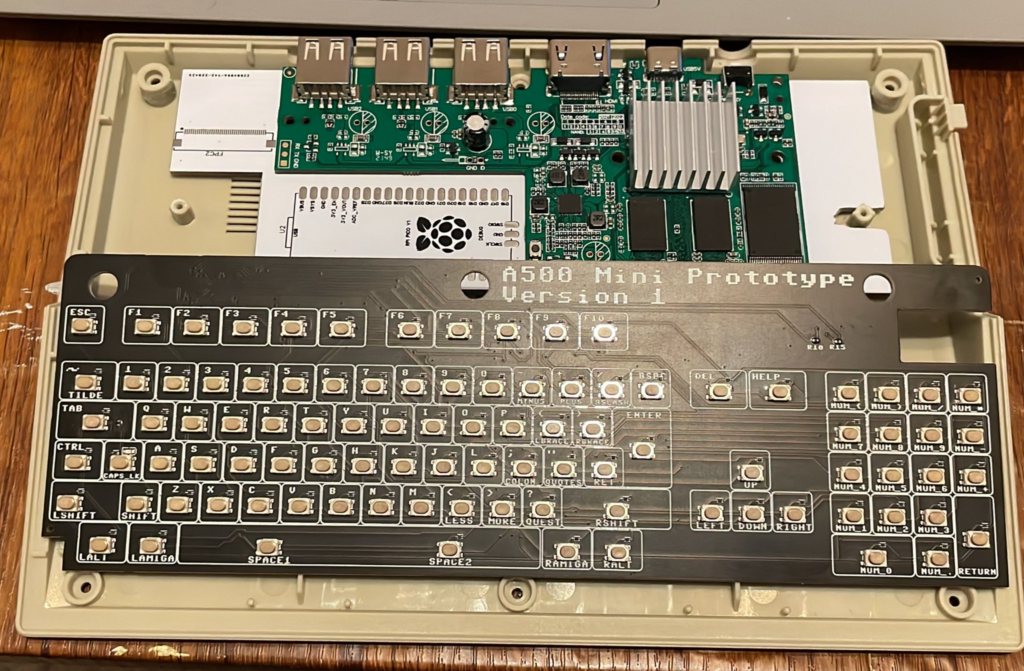
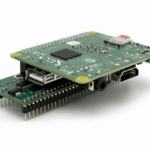
Dean also found another issue: “There is very little room inside the case for a keyboard,” he says. As such, he needed to find a simple, small solution and decided to make use of Raspberry Pi Pico. “It really makes THEA500 Mini keyboard possible,” Dean explains. “It has enough IO to make a 10 x 10 keyboard matrix possible, it’s super-cheap and it’s been widely available despite all the component shortages.
“Raspberry Pi Pico is also super slim and it allows a keyboard to fit inside THEA500 Mini by making only one small change to the case. I’m acutely aware that people hate to take a pair of snips to their devices, but this cuts away a small support inside that can’t be seen. Only a few millimetres need to be shaved off.”
If the cap fits
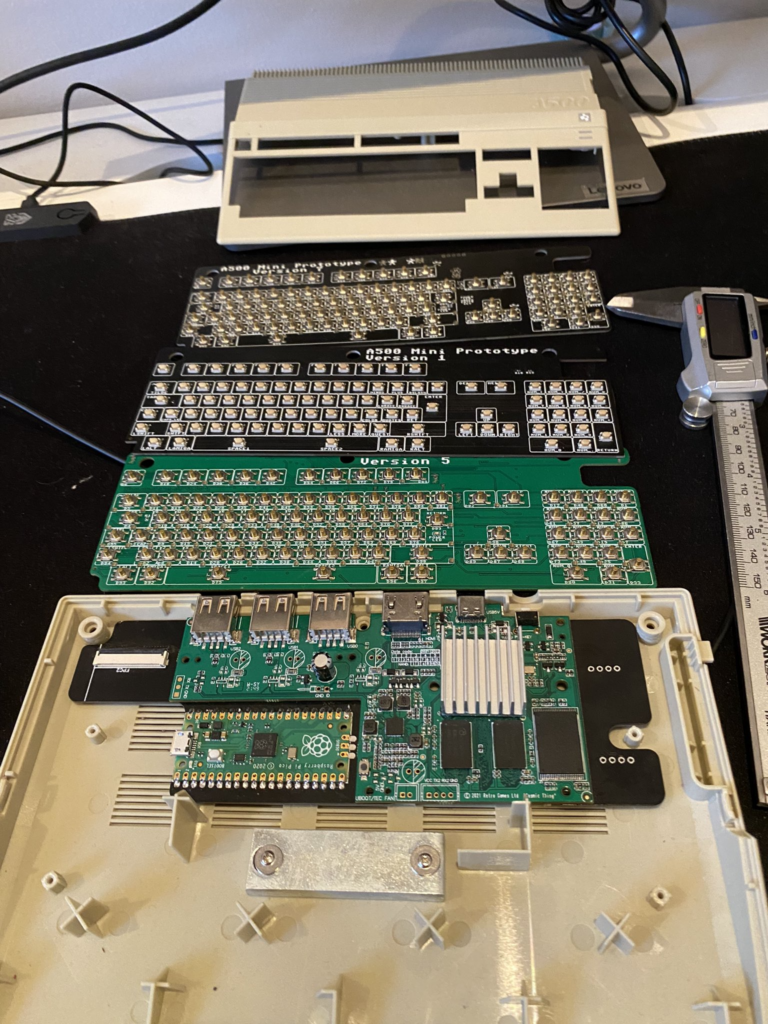
To create the keyboard, Dean made a schematic and designed the PCB and component footprints using the web-based tool EasyEDA, onto which key switches and locking mechanisms were placed. He also designed and 3D printed a set of keycaps, being sure to make them look and feel as authentically Amiga-like as possible. He even included a light beneath the Caps Lock key.
“For the keycaps, I learned how to use a resin printer and, because no one manufactures resin in the right shades of brown and beige to match the Commodore computers, I spent a few months researching how to colour resin,” Dean says.
With that done, it’s a matter of connecting the PCB to Raspberry Pi Pico and hooking up to THEA500 Mini motherboard. “I’m using a fantastic firmware called PRK which allows you to simply drag and drop a text file containing the keyboard map over to Raspberry Pi Pico,” Dean says. The hard work, however, continues.
“The project is about 80% finished, and the final 20% is iterating small parts to make it easier and cheaper to manufacture,” he adds. As for the motivation, well that’s something many retro enthusiasts will understand: “I do all this stuff mainly for me,” he confesses. “I’m really just channelling my teenage self, and using my learned skills to do stuff I figured would be cool back then.”
The MagPi #139 out NOW!
You can grab the brand-new issue right now from Tesco, Sainsbury’s, Asda, WHSmith, and other newsagents, including the Raspberry Pi Store in Cambridge. It’s also available at our online store which ships around the world. You can also get it via our app on Android or iOS.
You can also subscribe to the print version of The MagPi. Not only do we deliver it globally, but people who sign up to the six- or twelve-month print subscription get a FREE Raspberry Pi Pico W!

No comments
Comments are closed