Mechatronics engineering as a form of artistic expression
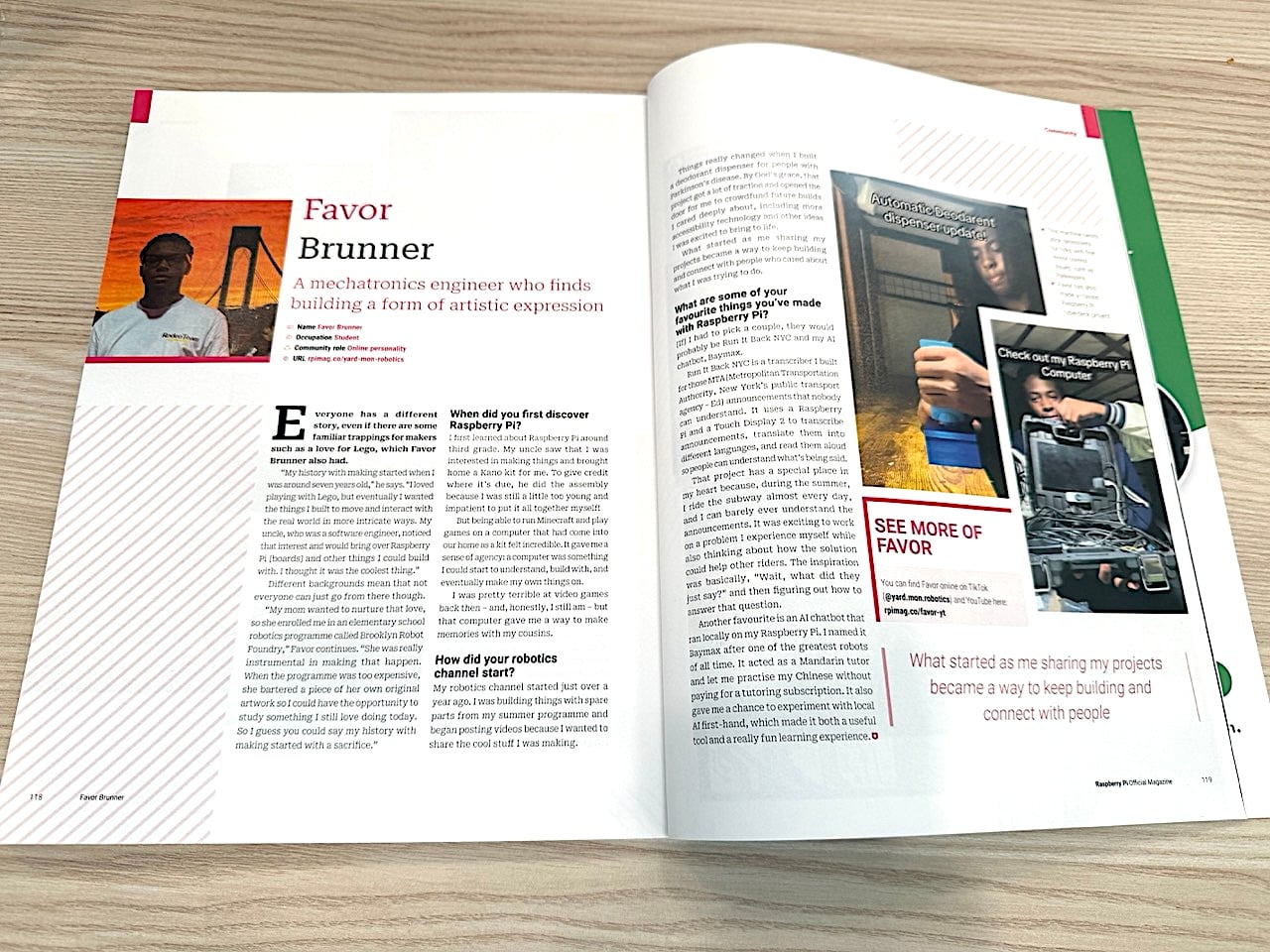
In the last issue of Raspberry Pi Official Magazine, we met Favor Brunner, a mechatronics engineer who sees building as a form of artistic expression.
Everyone has a different story, even if there are some familiar trappings for makers such as a love for Lego, which Favor Brunner also had.
“My history with making started when I was around seven years old,” he says. “I loved playing with Lego, but eventually I wanted the things I built to move and interact with the real world in more intricate ways. My uncle, who was a software engineer, noticed that interest and would bring over Raspberry Pi [boards] and other things I could build with. I thought it was the coolest thing.”
Different backgrounds mean that not everyone can just go from there though.
“My mom wanted to nurture that love, so she enrolled me in an elementary school robotics programme called Brooklyn Robot Foundry,” Favor continues. “She was really instrumental in making that happen. When the programme was too expensive, she bartered a piece of her own original artwork so I could have the opportunity to study something I still love doing today. So I guess you could say my history with making started with a sacrifice.”
When did you first discover Raspberry Pi?
I first learned about Raspberry Pi around third grade. My uncle saw that I was interested in making things and brought home a Kano kit for me. To give credit where it’s due, he did the assembly because I was still a little too young and impatient to put it all together myself!
But being able to run Minecraft and play games on a computer that had come into our home as a kit felt incredible. It gave me a sense of agency: a computer was something I could start to understand, build with, and eventually make my own things on.
I was pretty terrible at video games back then — and, honestly, I still am — but that computer gave me a way to make memories with my cousins.
How did your robotics channel start?
My robotics channel started just over a year ago. I was building things with spare parts from my summer programme and began posting videos because I wanted to share the cool stuff I was making.
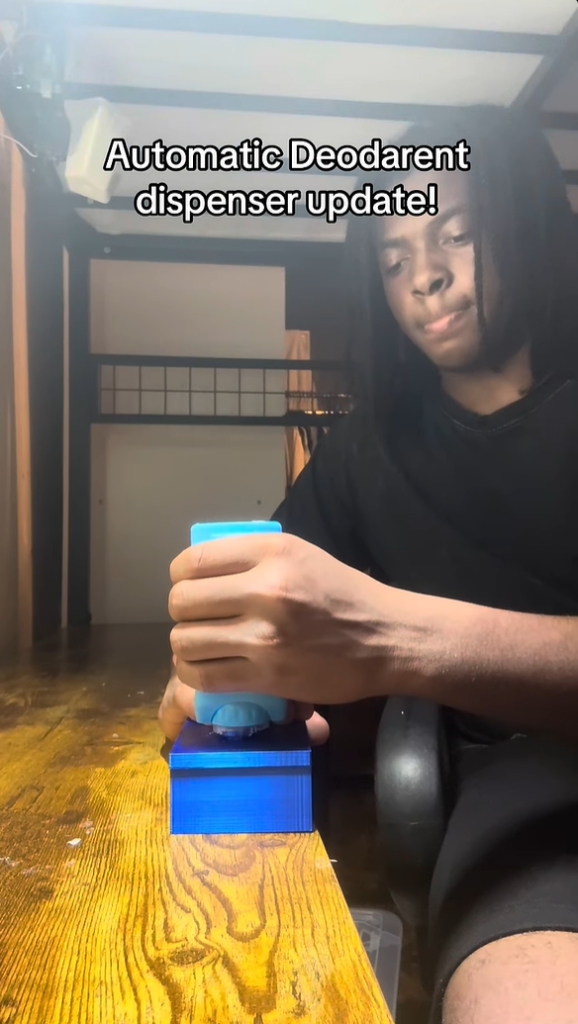
Things really changed when I built a deodorant dispenser for people with Parkinson’s disease. By God’s grace, that project got a lot of traction and opened the door for me to crowdfund future builds I cared deeply about, including more accessibility technology and other ideas I was excited to bring to life.
What started as me sharing my projects became a way to keep building and connect with people who cared about what I was trying to do.
What are some of your favourite things you’ve made with Raspberry Pi?
[If] I had to pick a couple, they would probably be Run It Back NYC and my AI chatbot, Baymax.
Run It Back NYC is a transcriber I built for those MTA [Metropolitan Transportation Authority, New York’s public transport agency] announcements that nobody can understand. It uses a Raspberry Pi and a Touch Display 2 to transcribe announcements, translate them into different languages, and read them aloud so people can understand what’s being said.
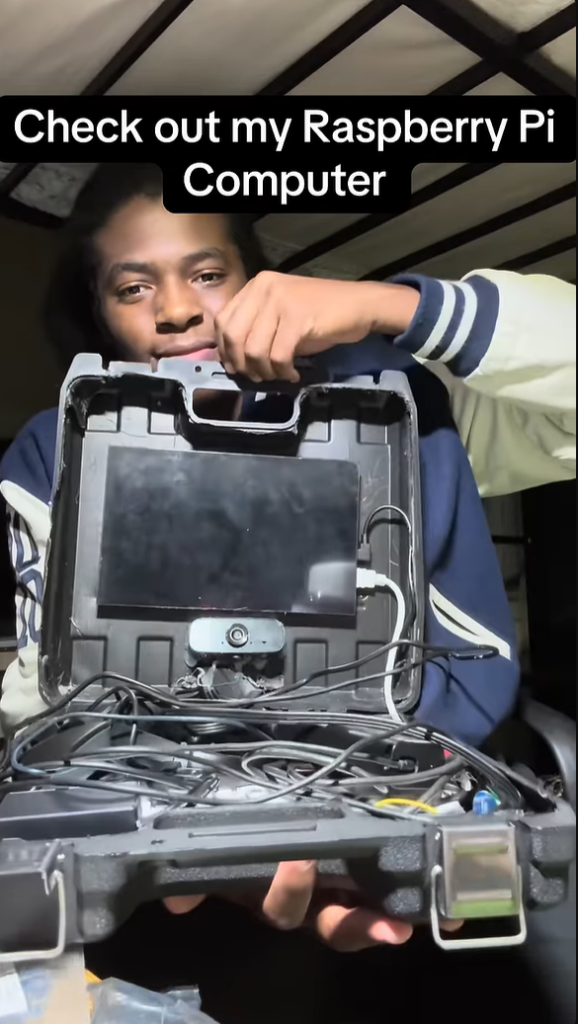
That project has a special place in my heart because, during the summer, I ride the subway almost every day, and I can barely ever understand the announcements. It was exciting to work on a problem I experience myself while also thinking about how the solution could help other riders. The inspiration was basically, “Wait, what did they just say?” and then figuring out how to answer that question.
Another favourite is an AI chatbot that ran locally on my Raspberry Pi. I named it Baymax after one of the greatest robots of all time. It acted as a Mandarin tutor and let me practise my Chinese without paying for a tutoring subscription. It also gave me a chance to experiment with local AI first-hand, which made it both a useful tool and a really fun learning experience.
See more of Favor
You can find Favor online on TikTok and YouTube.
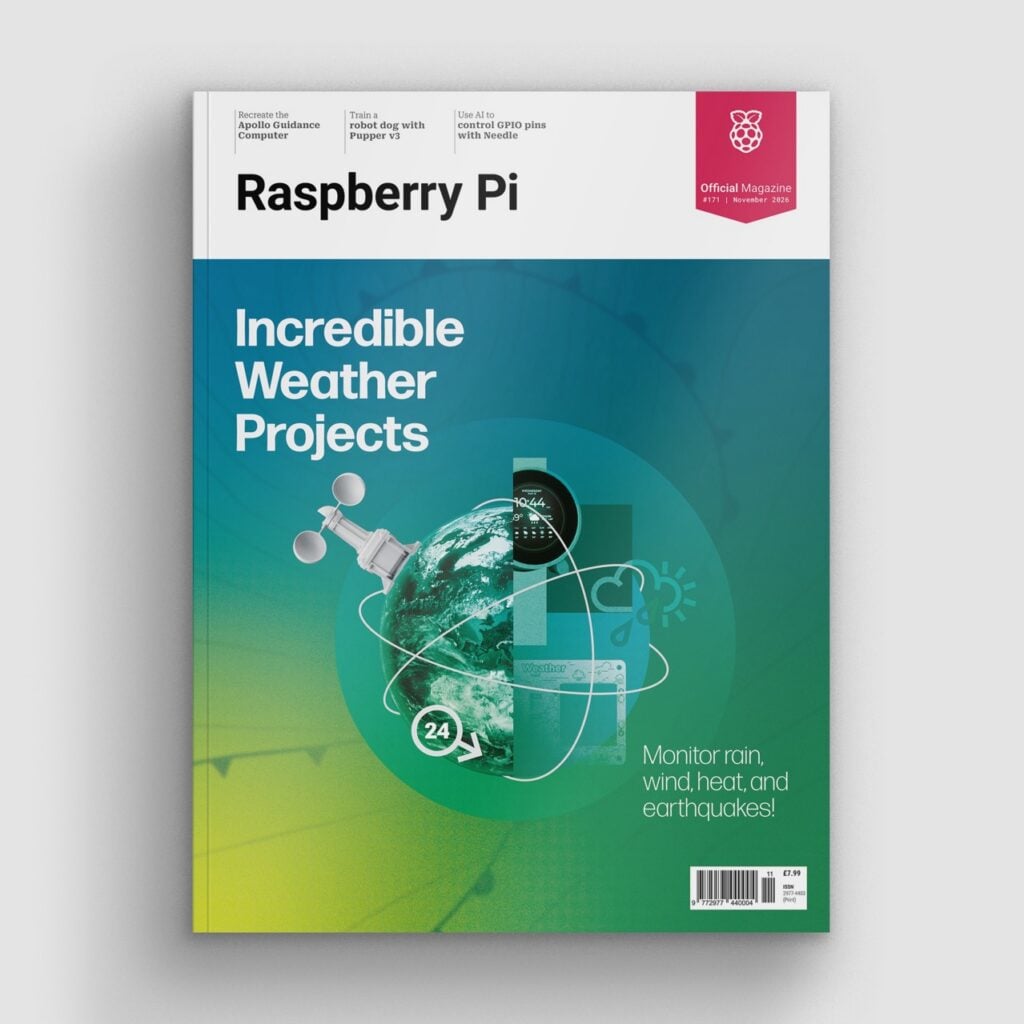
Read issue 171 of Raspberry Pi Official Magazine
This article appeared in issue 171 of Raspberry Pi Official Magazine, which you can access online. You can also subscribe to the print version of our magazine. Not only do we deliver worldwide, but those who sign up to the six- or twelve-month print subscription will receive a FREE Raspberry Pi Pico 2 W!
You can find Raspberry Pi Official Magazine on Facebook, X, Threads, LinkedIn, and Mastodon. You can also contact the team via email: [email protected]


No comments
Jump to the comment form