LEAP – Low-bandwidth Educational Access Platform
Even as global connectivity slowly improves, some locales around the world can still have very little to no internet, for various reasons such as geography and economics to name just two. Working with AID India, the team at T4EQ tried to create a solution for such remote areas so that they can access vital educational materials.
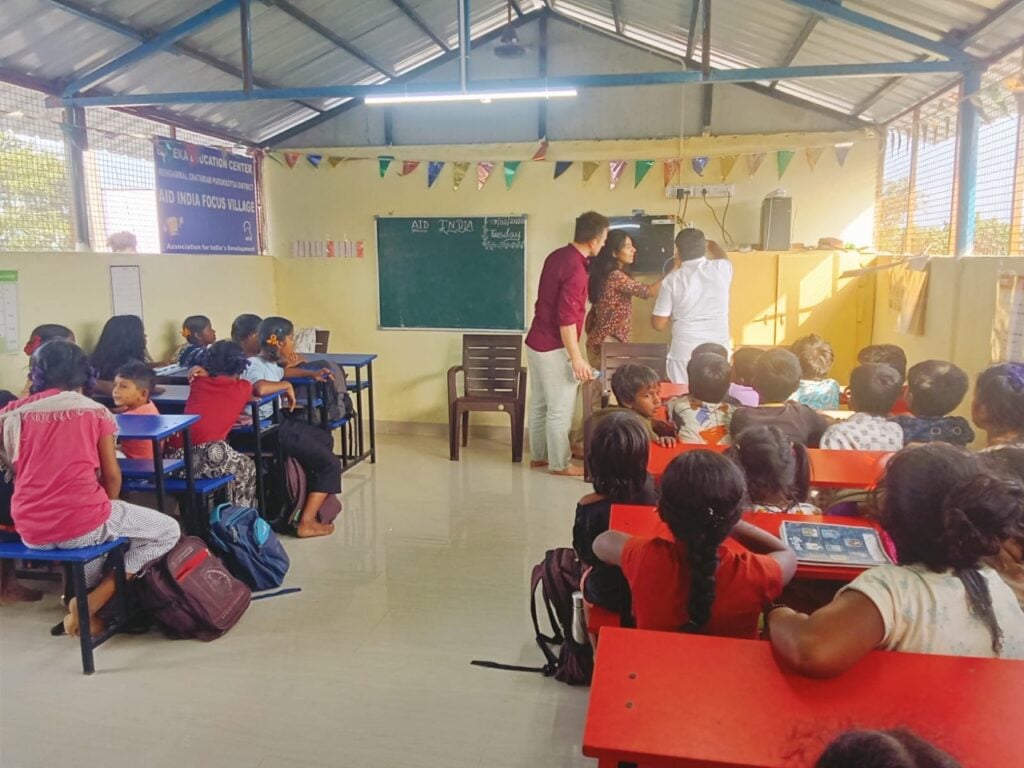
“Given that each education centre hosts around 40 kids, and each kid is provided with a mobile device or ‘thin client’, the solution needs to scale to provide video content for approximately 40 individual devices,” Dr Preethi Padmanabhan from T4EQ tells us. “In order to serve all 40 clients in a village, a computing node local to the village would host and cache the video content. We called this device the LEAP Node. The content can be distributed over the local network to all client devices without requiring any internet access. This ensures that, once the content is present in the LEAP Node, there is no further dependency on the network connectivity.”
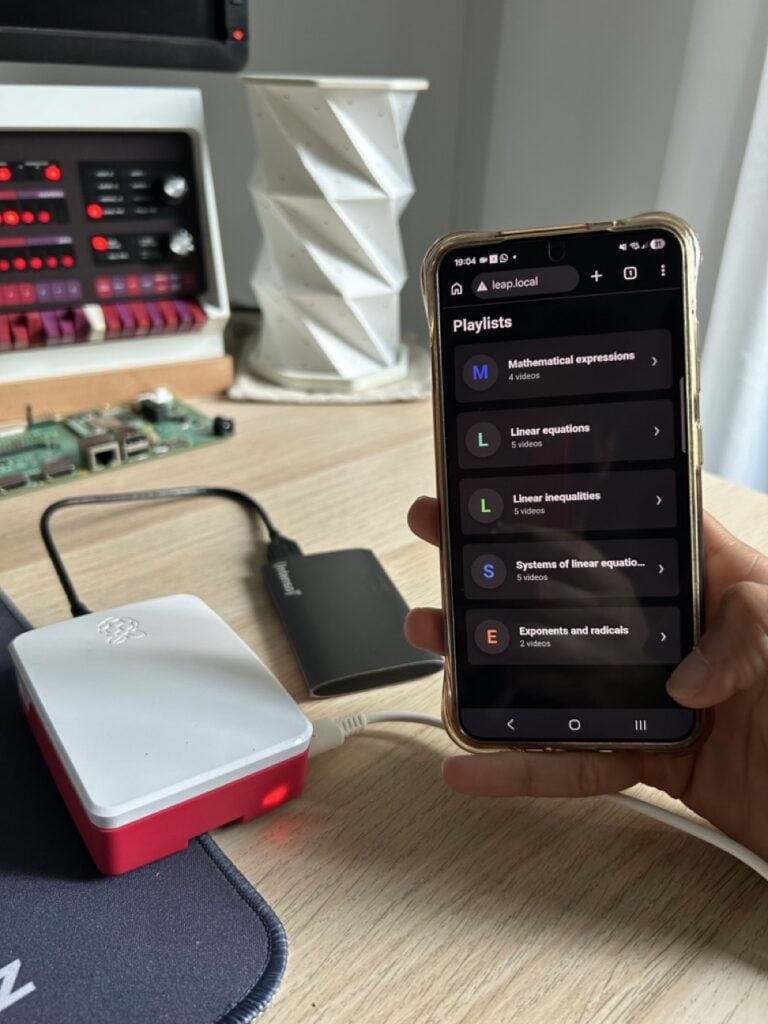
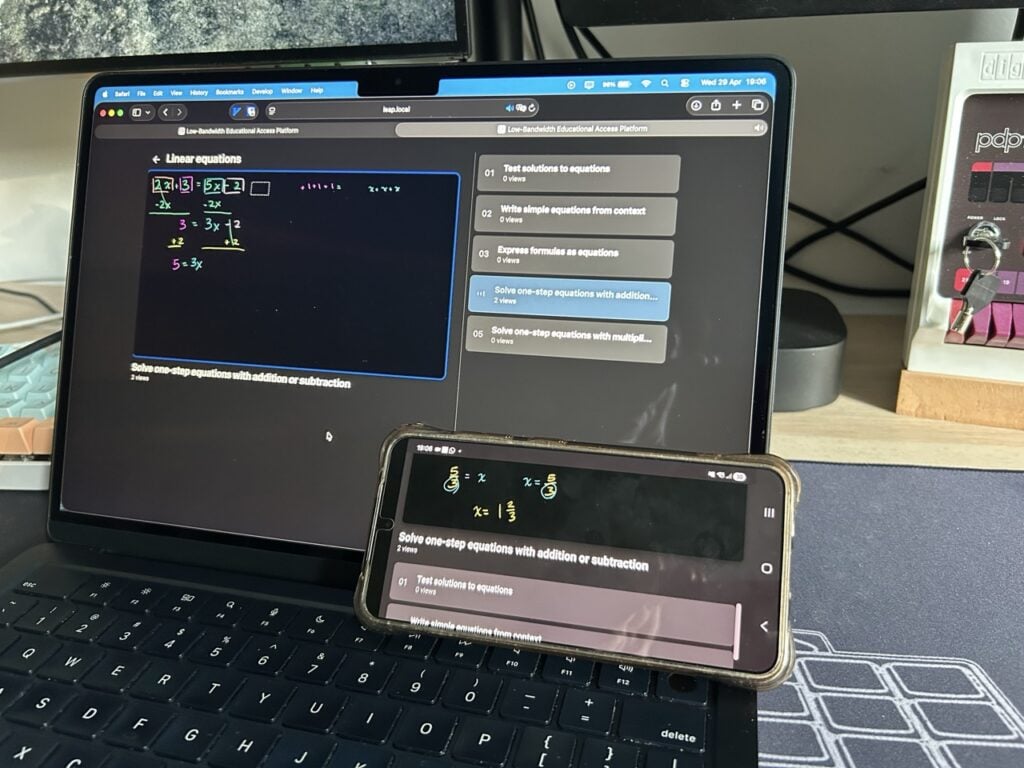
Content is served via a browser-based interface accessible from any connected device
LEAP (Low-bandwidth Educational Access Platform), as the name suggests, is designed to work in these low-bandwidth situations by accessing a curated and updated Amazon S3 repository.
“AID India will be able to manage the cached content using manifest files stored in their S3 server,” Preethi continues. “The manifest file lists the educational content to be served, divided into titled sections. The LEAP Node periodically accesses the S3 server to check for updates in the manifest file. Once an update is found, the content is downloaded, and the clients are presented with the newly updated content. The clients can use a web browser to access the LEAP Node and browse and watch all the corresponding educational content.”
Zero-bandwidth solutions
As well as this solution for low-bandwidth locations, one had to be found for villages that have access to no data. Some systems in the past have come preloaded with all relevant curriculum data. However, with content continually updating (and limited storage space), a different solution was employed for LEAP.
“The LEAP Node will also be able to fetch manifest and content updates from an external USB drive,” the team says. “This will allow the teacher travelling to the school to take the content with them and to upload it to the LEAP Node by simply plugging in an external USB drive. We have also agreed to provide a tool to manage manifest files and video content in the S3 servers. Because different centres might need different content, based on the background and age of the kids attending the classes, the LEAP Node can be configured to track different manifest files in the AWS S3 server.”
The entire final system consists of a Raspberry Pi 4, USB storage, and a router, along with the software T4EQ has developed for this specific purpose. As updates and new content are checked for and downloaded, specific content is prioritised and smart logic allows for interrupted downloads to resume, all dictated by a synced database on the LEAP nodes.
“We selected [Raspberry Pi] because it serves as an ideal, low-cost, single-board computer to host our custom application,” the team tells us. “[It allows] us to cache and serve educational content locally in classrooms without requiring an active internet connection.”
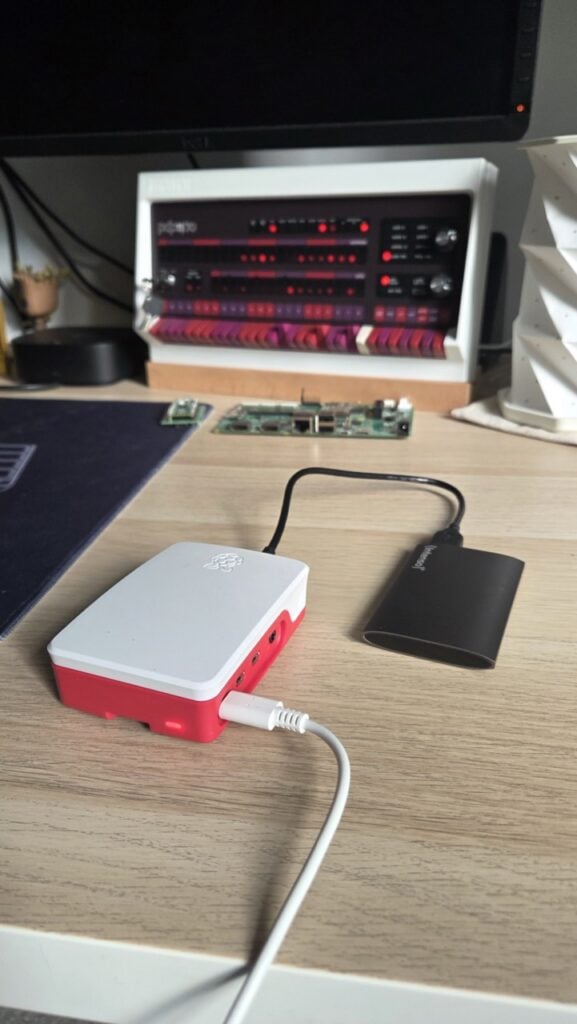
Other benefits include the price and availability of Raspberry Pi 4 1GB, as well as its gigabit Ethernet port and USB 3.0 support – perfect for serving 40 devices.
Test and deploy
LEAP is still in early phases of deployment by AID India.
“We have completed initial testing and are actively working directly with them to test and deploy it in schools,” the team explains. “While it is still early in the deployment phase, we are moving quickly and hope to share user metrics over the coming weeks.”
The code for LEAP is open source and available on GitHub. “We hope LEAP can help bring better educational access to learners beyond Tamil Nadu, India and we welcome inquiries from organisations interested in adopting the platform,” the team says.
Find more Raspberry Pi projects in Raspberry Pi Official Magazine
This article appeared in issue 167 of Raspberry Pi Official Magazine, which you can access online. You can also subscribe to the print version of our magazine. Not only do we deliver worldwide, but those who sign up to the six- or twelve-month print subscription will receive a FREE Raspberry Pi Pico 2 W!
You can find Raspberry Pi Official Magazine on Facebook, X, Threads, LinkedIn, and Mastodon. You can also contact the team via email: [email protected]




6 comments
Jump to the comment form
Rahim
Great work on this. It closely aligns with the work we’re doing at EasySTEM, where we’ve developed and deployed an offline digital learning platform for the past three years and is serving communities across six districts in Sierra Leone.
I’ll be happy to connect and share our work, as well as discuss the lessons we’ve learned from deploying in remote and underserved communities. We’d also be happy to contribute a case study on the impact and practical benefits of these systems in rural Sierra Leone.
Javier Alvarez
Hi Rahim, we (T4EQ) would love to talk about this and share our experiences as well as discuss potential synergies. You can reach out to us by email at [email protected].
We look forward to hearing from you!
crumble
Why have you decided to use S3 and not a normal file system? Sounds like overengineering, if it is not the code base of the main system.
Is there no other hardware? I expected an access point with a better antenna, so that the whole school can use the Pi. Is this because of budget or easier handling of power outages?
Javier Alvarez
Hi crumble, I am Javier, one of the members of t4eq, in charge of LEAP. We settled on S3 as part of the requirements from our partner AID India. They were already using S3 storage for video content distribution to some of the educational centers (those that are fortunate enough to have stable internet access). So because we did not want to disrupt or change their existing infrastructure, we adapted LEAP to fetch the video data from the same bucket where they already keep the video data. Of course, locally, LEAP uses an actual file system to store the local copies of the video, S3 is only used as a download backend.
The educational centers already have an access point/router, LEAP itself is designed to work in station mode. It only operates briefly in AP mode during provisioning to connect it to the right network and provide the credentials.
Stuart
Sounds like a very worthy fantastic project, congratulations to all involved.
Loving the PDP in the background!
Jerome Demers
This reminds me of Project NOMAD. Same offline-first idea: Wikipedia, local AI, maps, and education tools running on your own hardware, free and open source. Different ends of the spectrum though. LEAP caches lectures locally on low-power hardware, while NOMAD is more of an apocalypse-proof homelab with a local AI.