This camera writes poems
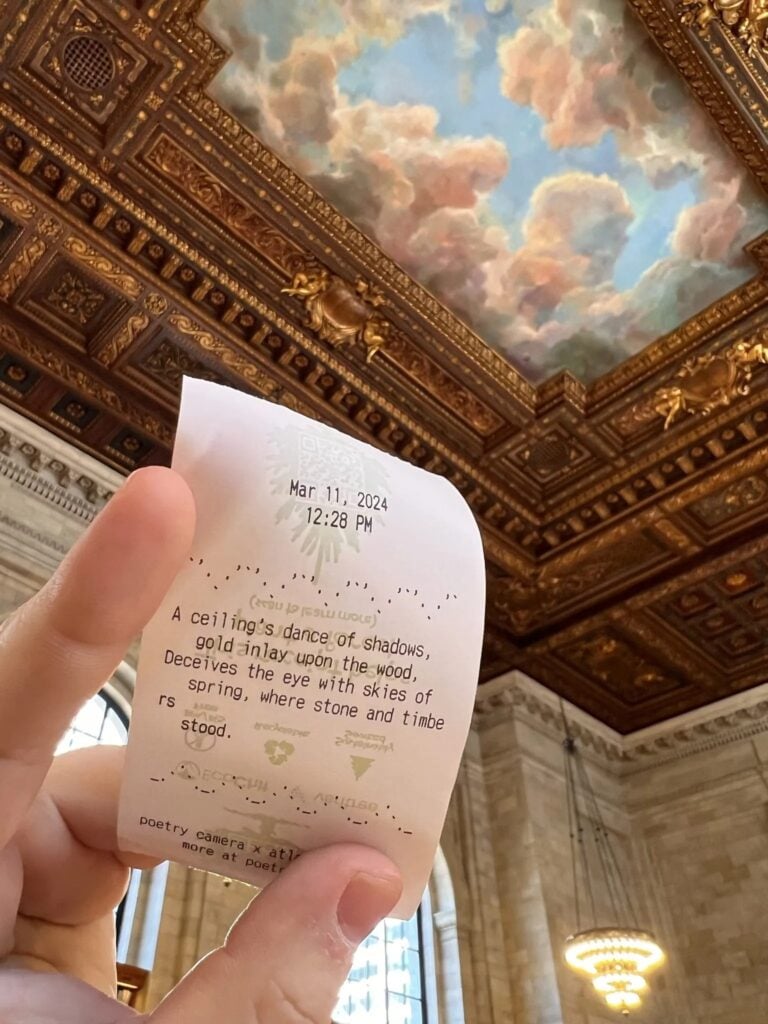
Designers Kelin Carolyn Zhang and Ryan Mather‘s art project, named Poetry Camera, uses Raspberry Pi Zero 2 W together with one of our camera modules and a thermal printer to create poems instead of pictures. The duo were looking for a new way to make memories without having to look at screens or upload photos to apps.
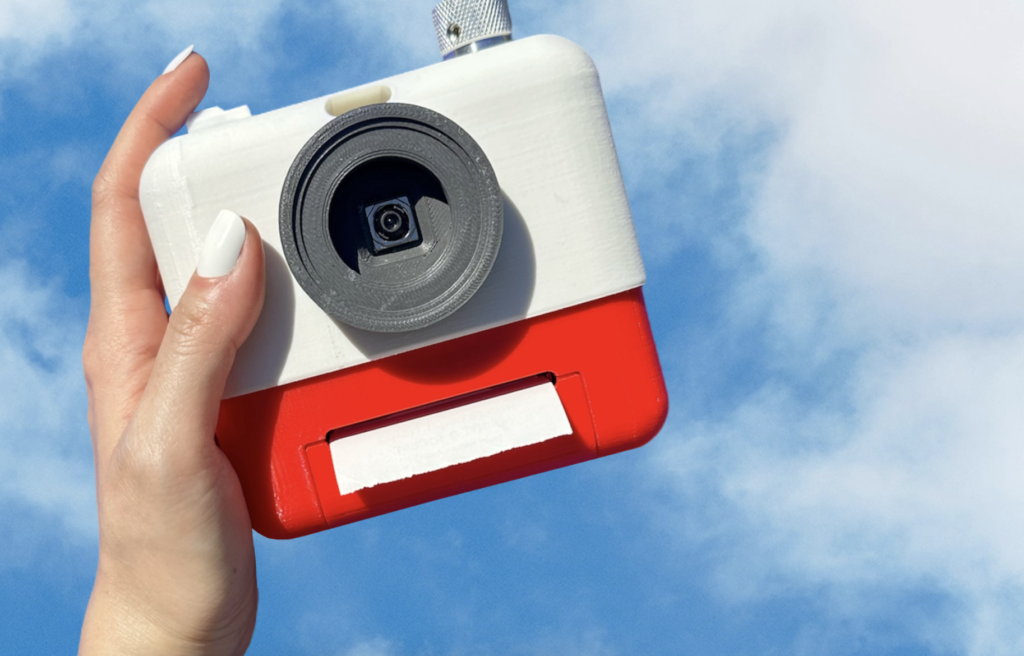
They’ve released all the details you need to build a DIY version of Poetry Camera, and the great thing about the project’s GitHub is that it was created by total beginners Kelin and Ryan for total beginners. They explain in detail why they chose each piece of hardware, down to the push buttons, before walking you through a clear step-by-step to write the code and get your camera working.
Hardware
- Raspberry Pi Zero 2 W running OpenAI’s GPT-4 model
- Raspberry Pi Camera Module 3
- Mini thermal printer (the original Poetry Camera featured a now discontinued model from Adafruit)
- Push buttons
- Ordinary batteries
How does it work?
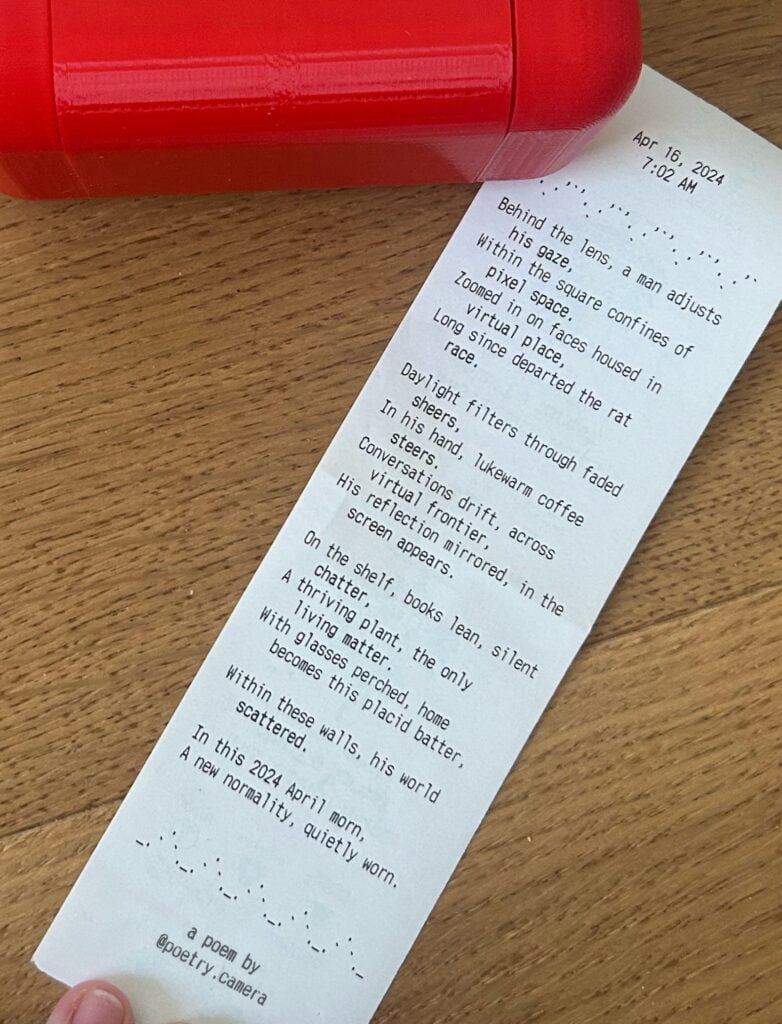
A script running on the Raspberry Pi instructs the camera to take a photo when a push button is depressed. The photo is then sent to GPT-4, which pulls out elements including colours, shapes, and general vibes picked up in-frame. It cobbles this visual data into an AI-generated poem and sends it back to the Raspberry Pi, which then asks the thermal printer to print it out.
Personalise your poems
You can tweak the AI model’s instructions so that your personal Poetry Camera delivers in sonnet or haiku form. I generally only use Chat GPT to write raps about my dogs, and not one of their 14 Instagram followers wants another identikit photo uploaded, so perhaps I’ll build a Poetry Camera to verbally capture the visualise vibes of an ageing poodle rolling in fox poo.
You’ll also need to think about a case for your camera’s electronics. I can’t find the files for you to copy the makers’ original design for their 3D printed case, but I imagine their wish is for those making a DIY Poetry Camera to harness their own artistic eye and come up with something unique. Even Kelin and Ryan started out using a cardboard box (according to their excellent TikTok maker diary videos). You can definitely do it too!




No comments
Comments are closed