Price increases for 2GB Raspberry Pi 4 and Raspberry Pi 5
Most of you will know by now that the cost of memory has risen very steeply over the past two years and continues to increase; like other companies, we have had to raise the prices of many of our products in order to keep up with the cost of production.
During our last round of price increases, in April, we were able to hold down the price of the 1GB and 2GB Raspberry Pi 4 and Raspberry Pi 5 products, while increasing the price of higher-density variants. This has now become unsustainable, and from today we are increasing the price of the 2GB variants by $12.50, to $67.50 for Raspberry Pi 4 and $77.50 for Raspberry Pi 5.
Prices for other products, including the 1GB variants of Raspberry Pi 4 and Raspberry Pi 5 and the 2GB variants of Compute Module 4 and Compute Module 5, remain unchanged.
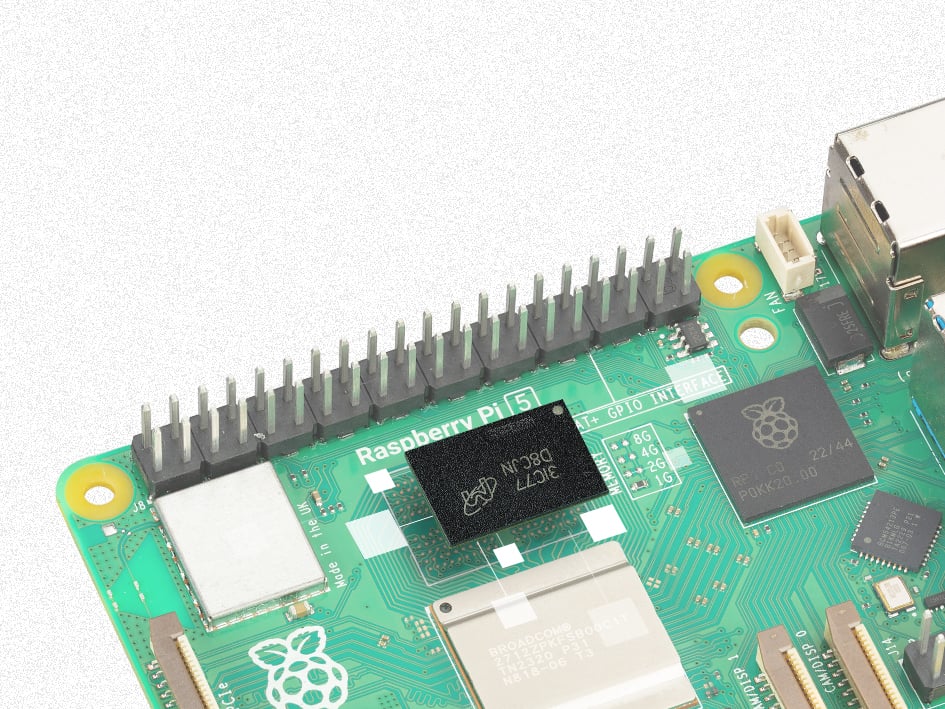
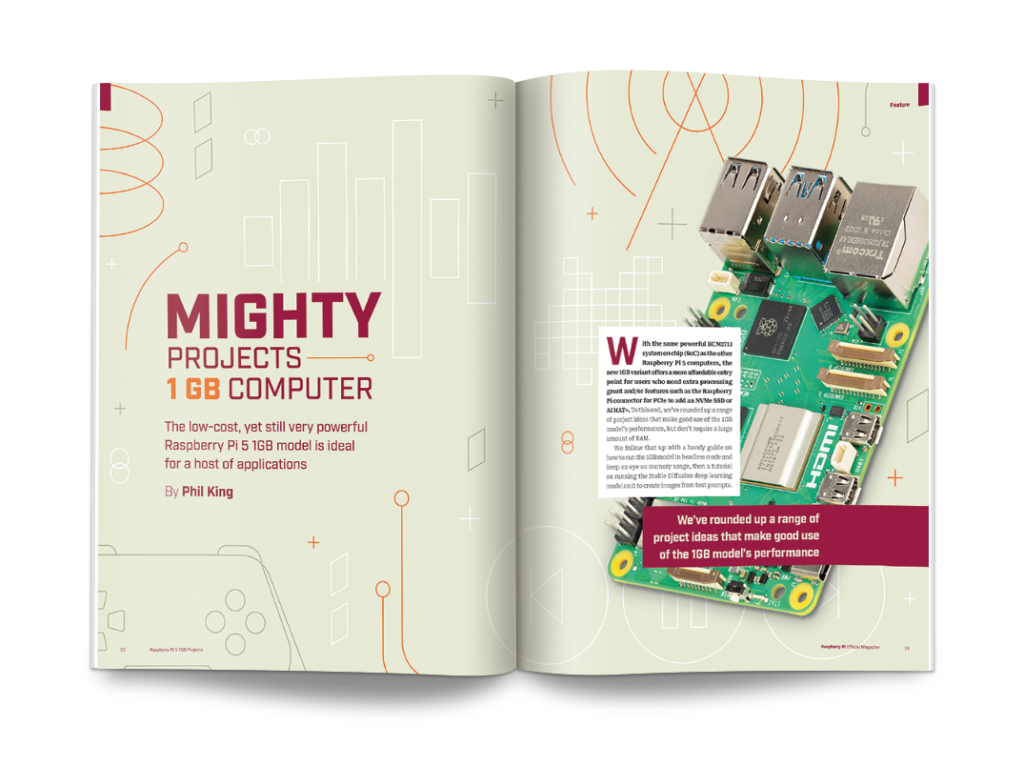
Whether you’re an individual customer or a business, price increases obviously impact your plans: we encourage you to make sure the Raspberry Pi products you buy are a good match for your requirements, and that you’re not paying for headroom you don’t need. For example, you might consider whether a less recent model, such as the perennially popular Raspberry Pi 3B, 3A+ or or 3B+, might deliver the performance your project requires at a lower cost, and you’ll certainly want to make sure you’re not paying for more RAM than you need. Raspberry Pi Official Magazine provides some guidance on how to make the most of your memory; if you’re a business customer and you’d like advice on memory optimisation for your application, get in touch with us at [email protected].
As always, make sure you’re buying from one of our Raspberry Pi Approved Resellers. These trusted partners abide by our official published maximum prices, so you can be confident that you’re not paying more than you need to; there are over a hundred of them across every continent except Antarctica, and several of them ship worldwide, so there’s almost certainly one serving your region. We’re aware that some unauthorised vendors are using inflated pricing, and even supplying products that aren’t what they seem to be – avoid this risk by sticking to our Approved Resellers.
The current memory supply circumstances are very challenging, but, as we’ve said before, they won’t last forever. The price of memory will eventually subside, and we look forward to reversing our own price increases when it does.

26 comments
Jump to the comment form
Dwarkanath Nagwekar
When we will get Raspberry pi 0 2W delivery in Mumbai, India.
We have booked material by advance payment four months back to one of your channel partner.
Raspberry Pi Staff Helen Lynn
We’re doing our best to make more of this high-demand product – drop me a line ([email protected]) and let me know which reseller you placed your order with, and I’ll get you an update.
Paul
So called ‘AI’ (or ‘SI’ now) – the gift that keeps on giving (well to the share holders of RAM/SSD’s/GPU manufacturers).
Will someone please burst the bubble already so ordinary (non-billionaires) people can carry on buying tech at affordable prices (I’m glad I’ve got some spare Pi 5’s and SSD’s sitting at home)?
Archisman Panigrahi
10 years ago, Raspberry Pi 1 or zero ran Raspbian (GUI) without any lags. Nowadays, my Raspberry Pi Zero 2W lags a lot to run Raspberry Pi OS. Can you please make the GUI version of OS more optimised so that it works well with 512 MB or 1 GB RAM?
Nick
I would like some adjustments to the OS as well, mainly around hardware features. For instance, anything related to rpi-eeprom shouldn’t be present on Pi boards older than the Pi 4, since they don’t have an EEPROM – at least if going with the assumption that the user won’t use the card in a different generation Pi.
However, no amount of guessing is ever good enough. In the example above, the OS would have to assume that a card we initially use in a Pi 3B+ would never be used in a newer Pi, therefore removing the rpi-eeprom stuff would make sense. But people something move cards between Pis, and they could complain that their Pi 4/5/etc can’t boot.
What I’d like is for the Pi OS to have a post-installation fine-tuning application. This would allow the user to disable unnecessary services and features that they explicitly don’t need. The same tool could allow preparing the OS to be moved into a different Pi, and it could install support packages for it if necessary, so that it can boot successfully.
That said, not everything can be covered by such a tool. That’s why it would be nice to have some documentation about the services the Raspbery Pi comes with, so people can decide if it’s fine to disable them. Until that happens, especially with so many LLMs around, people can ask about how to save resources.
The main idea is to avoid starting programs and services that you know you don’t need. So it’s ultimately up to each user to decide what gets disabled. You can use “systemd-analyze blame” to see what starts up with your Pi OS, then you can ask about the ones taking the most time in the boot sequence. They’re not all services, some are just boot-related tasks, but if you find out that some of those are completely useless for you, you can at least disable them.
Raspberry Pi Staff Simon Long
In short, no, we can’t.
Two reasons. Firstly is that the majority of the extra load on a desktop GUI these days comes from changes made to packages in upstream Debian; software almost invariably gets bigger and slower with each release. Short of individually optimising dozens of upstream packages for Pi – which would then give us a massive ongoing maintenance headache – this is simply not feasible.
Secondly is that the desktop was *always* slow on the older hardware – back then you’d never seen how fast it can run now, and just assumed that a bootup time of 45 seconds or so to a functioning desktop was normal! The grass wasn’t really greener back then – you just don’t remember how bad it really was any more…
Charlie Croker
Unix/Linux : on early versions of Unix/Linux, the install required a q&a then it compiled the kernel with only the bits you specified – nfs no, meant it was left off. I’ve done it with slackware linux on a 486DX in the ’90s. (there are pros and cons to this). The current arrangement came in with ‘modload’ (~Solaris 2.6). To my mind Linux has reached the end of the road now. I can’t see anything on a latest release on any brand of Linux (debian/redhat/ubunto/suse etc) that gives me anything I want. There is nothing really ‘new’ , just added ‘stuff’. The OS is an application now not only an OS. I don’t see any point in upgrading linux versions except for security bug fixes. Apt package management is not good enough either.
In case you mistake this a OS wars comment; I’ve used every flavour of Unix (Solaris/AIX/HPUX/NCR Unix/DataGeneral Unix/SCO Unix etc etc). I’ve got Linux version 1 on cdroms somewhere in the house too (got it from an advert in PCW magazine).
Its time for a brand new slimline, fast OS to be written probably in Rust (Python is getting my goat too as it gets more added ‘stuff’. uv/pip/venv annoying now.).
New OS: Simple/elegant as early Unix, new vfast file/data system, the rest is up to anyone’s imagination…
Harry Hardjono
A lot of Pi5 1GB projects are also doable with Pi0 2W. So, maybe either upping the memory to 1 GB or allow lightweight GUI to be an optional standard.
I’ve been using emulator for old computers to code on Pi0 just because it’s faster than new.
Anders
“and that you’re not paying for headroom you don’t need”.
The Raspberry Pi is a versatile device and the project I build today is not the same as the project I do next month or in 6 months. And I don’t know what those future projects are so I don’t know how much headroom I’m going to need.
gus3
^^^ This! 😍 ^^^
(Because I can’t up-vote.)
Charlie Croker
“Hold on lads I’ve got a great idea.”
‘Pi6’ with upgradable memory. Then I buy 1G today and then upgrade the memory to 8G when the RAM prices are better.
Shared memory for AI would be nice too. Like another fruity chip merchant.
Rob Ward
how about a Octuple core pi pico 2350 with 16mb of memory, SD Card Slot, HDMI and usbx2 port.
Let the cycle start again!
AndrewS
Don’t forget the wheels and a sandwich…
Michael Mannall
Maybe something like the new CAMM2 format memory.
Federico
Too bad there’s nothing available from the older models…
Yusef
Sadness…
Joe Desbonnet
Maybe time to consider the Raspberry Pi mini-PC with 0GB, and BYOR (Bring Your Own RAM) ?
Might be especially attractive if it can support older modules.
Russell
IIRC Dr. Upton once mentioned in an interview that if he had known about RISC OS being available when the first Pi was being developed, he might have based it on that instead of Linux. It allegedly can run very speedily on very little RAM. Want to revisit that thought for the Pi models that have <= 1 GB RAM? Or work with PiCore? Else, these entry-level Pi models seem destined for headless or CLI only use. Maybe it's not much of an issue since the hobbyist and educational markets aren't the majority of production anymore. But if you have to make do with less, maybe it's worth reconsidering what OS to use.
Michael Mannall
There is a Pi version of RISC OS available for the RPi via the Imager.
Russell
Yes, I’ve used it. Last release was over 2 yrs ago I think. They could use some help on a lot of fronts – e.g., getting to 64-bit, ROOL’s wifi stack (ROD’s is good, but ROD’s image is vastly bigger). And with Pi hardware, there’s also additional things to consider (e.g., fan control).
Anders
It’s also a single core OS with no support for multi-core in the OS.
Nick
This is pretty sad, and I hope that at least the entry level models will stay insulated from the price madness. It sounds like the right time to come up with optimized software for lower RAM usage.
James Metz
I recognize Eben and his company are doing the best they can to keep costs down. So, I will continue to be a fan of Raspberry Pi boards.
Alan
Totally agree, I really appreciate their honesty and transparency around pricing (as well as having authorised resellers that won’t gouge you).
rclark
Totally agree also. When I need a PI, I’ll buy one. I no longer treat them as ‘potato chips’ though. That role goes to the RP2350 boards (not just the RPI version) …. :) Now if the AI craze will burst its bubble….. Or a new technology comes along that makes data centers obsolete….
Name (required)
pls make it so we can buy the rp1 chip alone and use pcb way or something to make a computer or bring back the raspberry pi a serers like in the pi 2 and 3 had