Getting to know Earth’s ionosphere during total solar eclipse
Our excellent friend Jay Langhurst got in touch to suggest that, ahead of next Monday’s total solar eclipse, you might all like to read about this Raspberry Pi-powered data collection device which measures changes in Earth’s ionosphere particles. The ionosphere is basically where Earth’s atmosphere meets space.
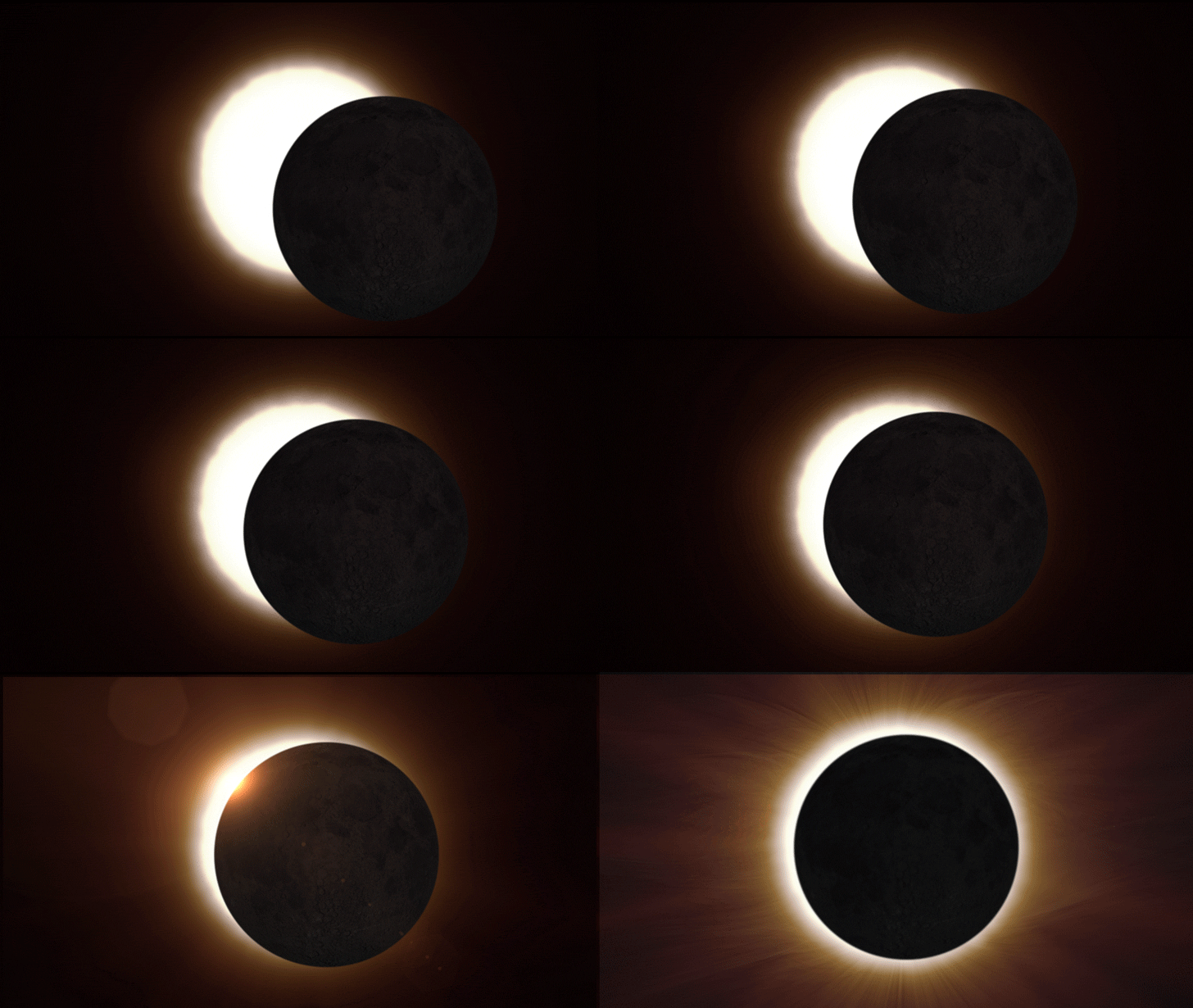
Sorry to our esteemed fans on other continents, but this particular total solar eclipse will cross North America, passing over Mexico, the United States, and Canada. Those guys are going to be plunged into darkness for a whole four minutes. The next total eclipse visible from the UK isn’t for another 66 years, so we’ll just have to think of something else to do at that particular time on Monday.
Scrambled signals
A team from the University of Texas, led by Fabiano Rodrigues, is all set to collect data to see how the ionosphere’s particles change when the moon covers the sun. Rodrigues hopes this research can help improve the accuracy of radio and GPS systems that receive signals sent through the ionosphere. Major events, like a total solar eclipse, alter how signals move through the ionosphere, and so can affect things like your phone receiving location data or distress signals being sent out by radio transmitters.
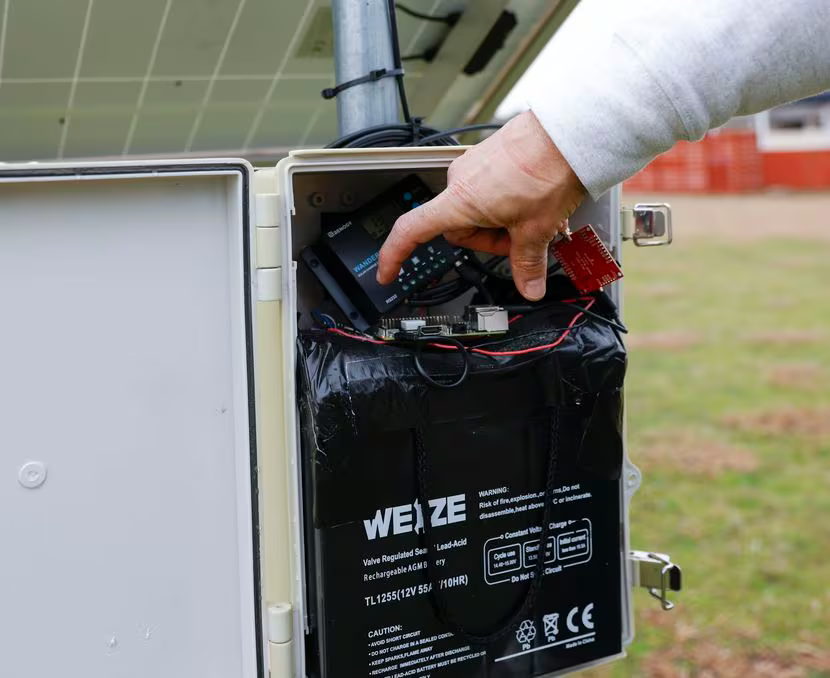
Image credit: The Dallas Morning News
What is being measured and how?
Ionosphere-monitoring equipment will be set up in three locations in Dallas ahead of Monday’s eclipse. They’re using an antenna to receive signals from a satellite, and a Raspberry Pi to collect and store the data. Last I heard, according to this article, Isaac Wright was working on an interface so the team could watch the change in the quantity of electrons flowing (or not flowing) in the ionosphere in real time while the eclipse is taking place.
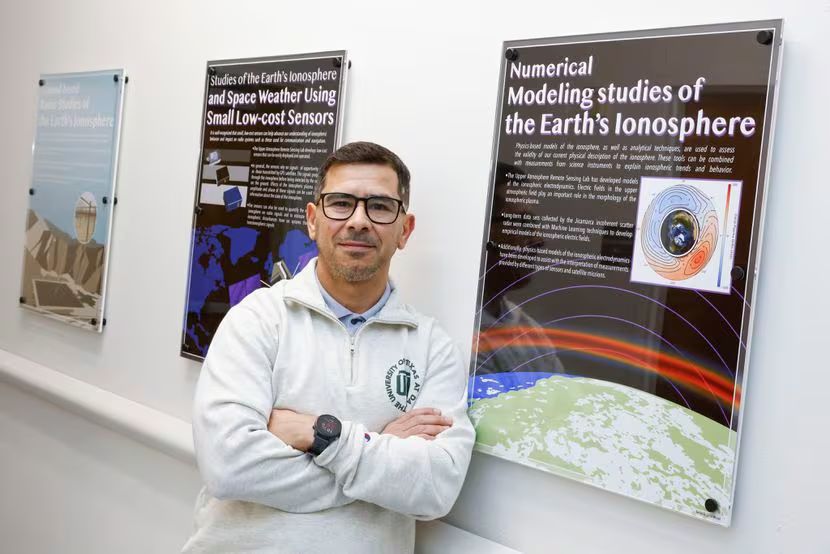
Image credit: The Dallas Morning News
The primary question the team hopes to answer is whether electrons in the ionosphere drop off steeply at the exact moment the moon has got the sun entirely covered, or whether they peter out gradually and slowly come back as the sun starts to peep out from behind the moon again.
This isn’t Rodrigues’ team’s first rodeo. During October 2023’s partial solar eclipse, they dotted receivers across Utah, Colorado, Costa Rica, Brazil, and Texas, as these locations were all in the eclipse’s path. Data is still being analysed to determine whether each location was affected in the same way, but they did notice some differences in the ionosphere during the eclipse.
Also, is it just me, or did Blue Peter do an episode every time there was a solar eclipse showing you how to use a cereal box to make something you can safely watch it through? My retinas are intact so I must’ve had something between them and the sun’s surface. Let’s all watch 1999’s Blue Peter Eclipse Special to reminisce.
No comments
Comments are closed