Dr. Love: a pocket-sized love tester arcade game
Who remembers those dubious love tester machines from the dustier corners of seaside arcades? They were enticingly large and glitzy things with some highly suspicious science behind them. Couples took one of the machine’s two handles each and gripped it, then the device seemingly just measured how sweaty your palms were and decided on that basis whether the two of you were a good match or doomed to failure.
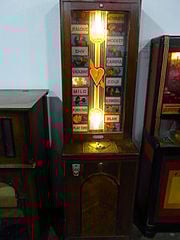
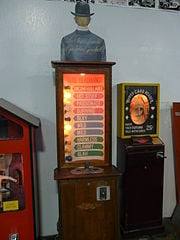
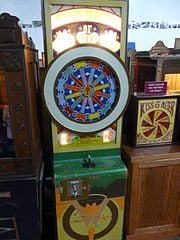
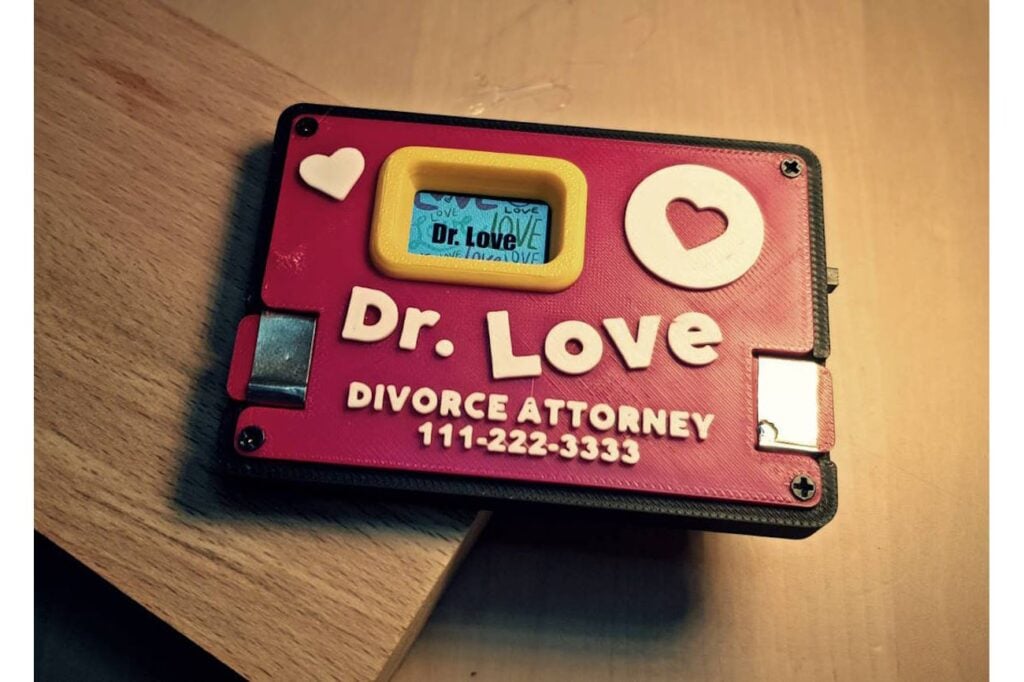
But what do you do if you need to quickly check your compatibility with someone and you’re not in a dusty corner of a tired arcade? Developer Un Kyu Lee has fixed that problem by creating a pocket-sized version. He cheekily designed it to look like a divorce attorney’s business card. I take it he never had much luck with the old-fashioned arcade love tester machines, and assumes most people won’t have a positive outcome with this mini version.
How does it work?
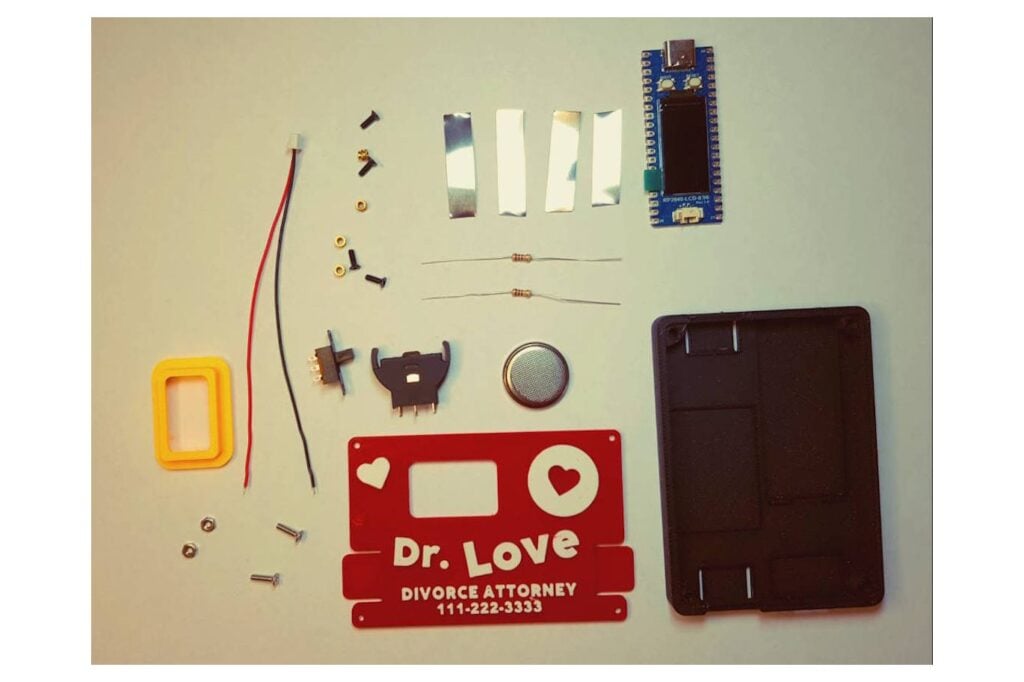
An RP2040-powered microcontroller board featuring a tiny 0.96-inch screen from Waveshare is running this pocket-sized project, and a coin-sized lithium battery keeps the love alive. Two 8mm nickel strips provide contact points for human fingers. Using a CircuitPython library running on the RP2040 board, the device measures changes in the skin’s electrical resistance, which can be caused by emotional arousal.
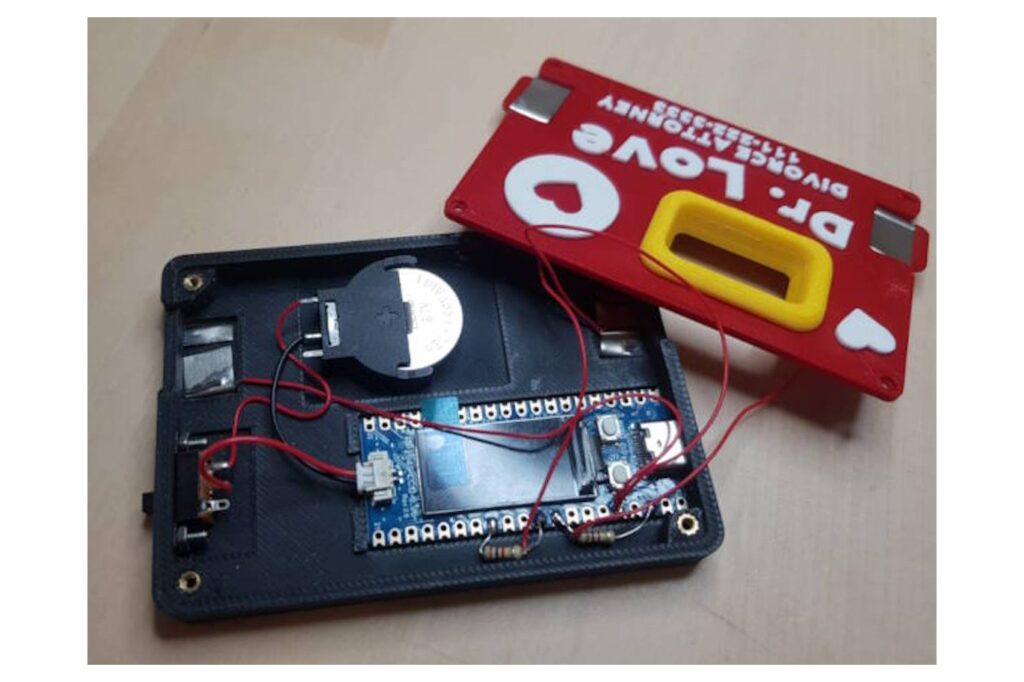
Just as with the original janky arcade cabinet versions, you can definitely rely on this love tester. It will certainly give an incredibly accurate estimate on its LCD screen of how compatible two people are, based on how sweaty their fingers are the time.
You can buy a do-it-yourself kit to build your own Dr. Love machine. The maker has posted a comprehensive step-by-step guide on how to assemble it. The guide includes some background about the Galvanic Skin Response (GSR) that these types of games read and explains why you probably don’t want to reach for the divorce lawyers if your and your partner’s measurements are a mismatch.




No comments
Comments are closed