Curiously minty Raspberry Pi Zero cyberdeck
The Raspberry Pi community has been squeezing our hardware into Altoids tins since the beginning times (still not sure why), and the cyberdeck renaissance continues apace, so this Maker Monday, we thought we’d share a project by Excercising Ingenuity which marries the two.
Altoids tins — they’ve been used for sewing kits, guitar effects pedals, and containers for the papers for hand-rolled cigarettes. They’re cheap, malleable, and thanks to the proliferation of US sweet shops adorning the UK’s high streets, they’re easily available even on Albion’s blessed shores.
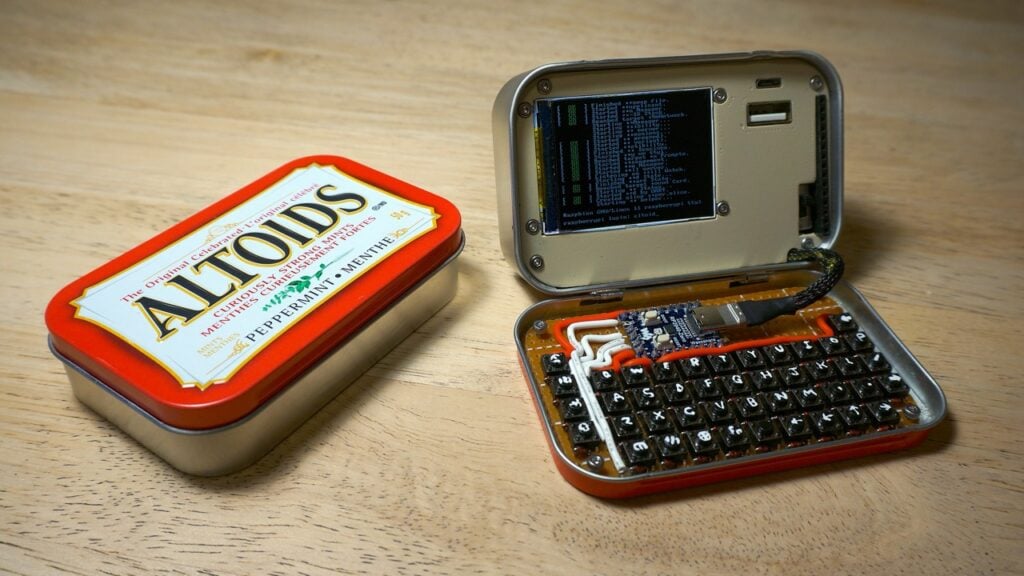
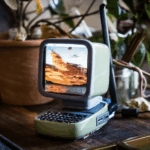
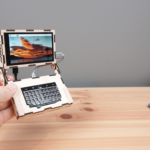
This deceptively complicated build by Exercising Ingenuity features a tiny custom keyboard, a display, a Raspberry Pi Zero, and a 2-inch LCD display left over from another project. This screen didn’t work with the latest version of Raspberry Pi OS, so Mason (he of Exercising Ingenuity fame) had to drop back a couple of software versions and make some changes to the settings in raspi-config.
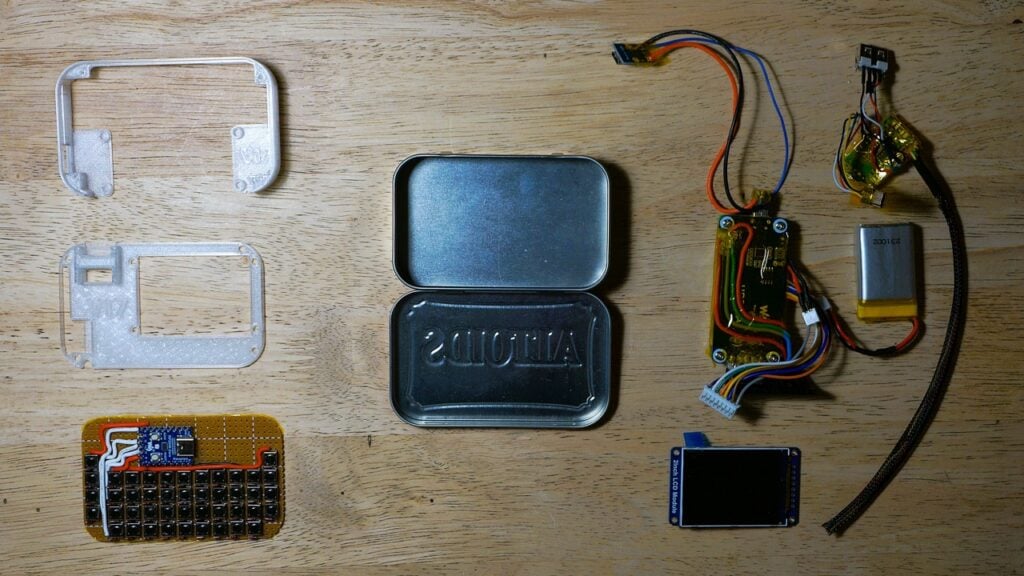
Also crammed into the tin is a UPS HAT and a battery for the Raspberry Pi Zero, plus a handmade protoboard dot-matrix keyboard, with a Waveshare RP2040 Zero to act as the keyboard’s microcontroller. Mason saved space by removing some unused components from the RP2040 Zero and Raspberry Pi Zero, and by soldering components directly together rather than using wires. He even found room for a USB hub so he could add an external USB port.
Holding the electronics inside the tin required a spot of 3D printing — this took several design iterations, resulting in a mount printed out of a flexible filament that would bend to fit inside the tin (the rolled metal edges are slightly thicker than the rest of the material in the tin, so if you want an insert to fit flush, you can’t just slide it in from the top down).
Finally, 15 GPIO pins are broken out, so you can use the device for a bit of hardware hacking. Labels for the ports and the GPIO pins are engraved into the tin, and in a nod to the olden days, the 3D-printed faceplate has been painted a lovely shade of beige.
Find more projects like this in Raspberry Pi Official Magazine
You won’t find this build in the latest issue, however. It first featured in Raspberry Pi Official Magazine #167, which you can now read online for free.
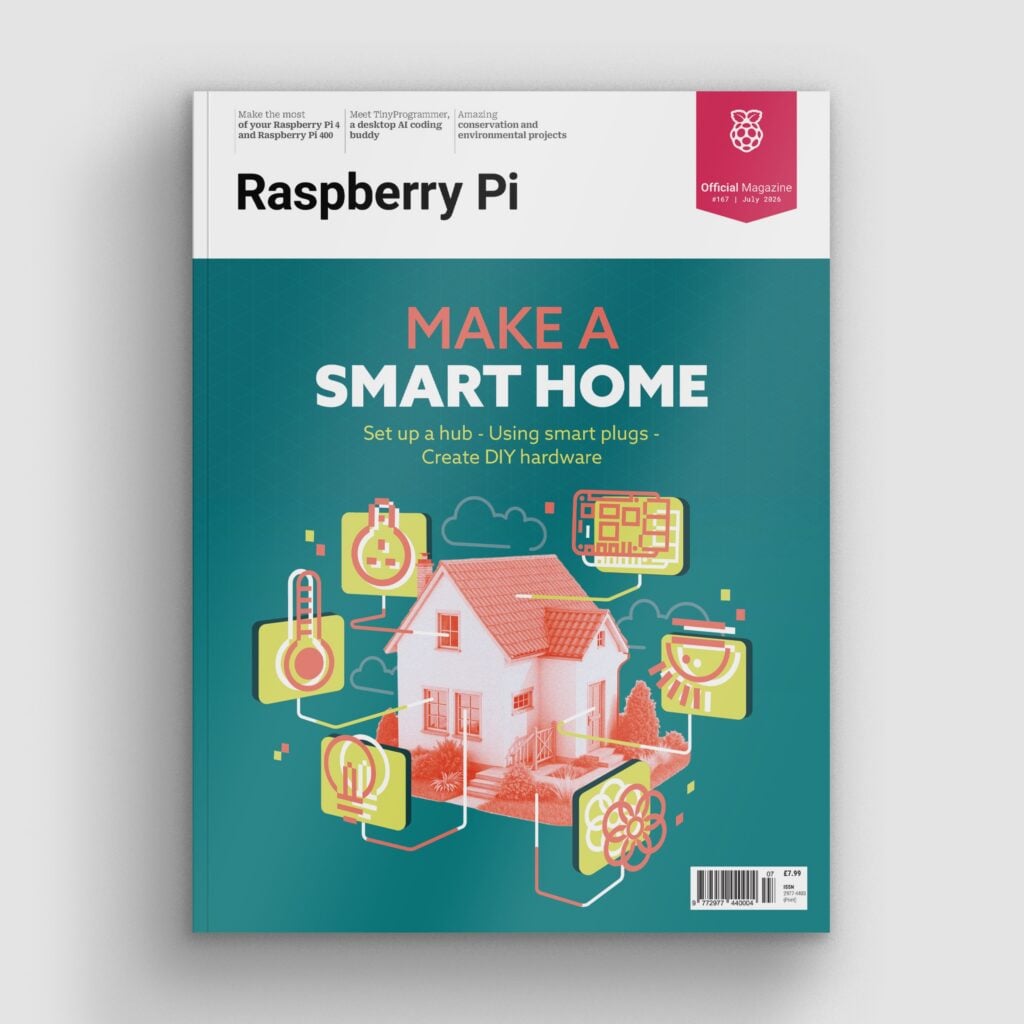
You can also subscribe to the print version of our magazine. Not only do we deliver worldwide, but those who sign up to the six- or twelve-month print subscription will receive a FREE Raspberry Pi Pico 2 W!
You can find Raspberry Pi Official Magazine on Facebook, X, Threads, LinkedIn, and Mastodon. You can also contact the team via email: [email protected]


5 comments
Jump to the comment form
Victor Grösser
This is such a brilliant build! Fitting a Pi Zero, custom keyboard, display, UPS, and even a USB hub into an Altoids tin is next-level ingenuity. The beige faceplate is a perfect retro touch too. Massive respect to Mason / Exercising Ingenuity for the clever engineering and persistence with the tight space constraints. Love seeing these classic tin projects still going strong!👌
Niall
The custom keyboard brings me so much joy
RClark
That is really neat. And a lot of work. Fitting a SBC in a tin is easy, but adding screen, keyboard, battery, etc…. That’s over the top. Kudos.
codr1-1
cool i want to make somthing like that
Kody Brown
“The Raspberry Pi community has been squeezing our hardware into Altoids tins since the beginning times (**still not sure why**), and the cyberdeck renaissance continues…”
In your very first paragraph, the summary and description of the article, you are minimizing and perhaps even offending at least half of the people who helped make the Raspberry Pi such a huge success. And it doesn’t really matter whether the fan builds cyberdecks or just absolutely loves reading and talking about them.
I don’t really think that was your intention, but you probably shouldn’t do that.