YAFC Flux Capacitor | #MagPiMonday
This #MagPiMonday, a classic time travel film prop brought about via Raspberry Pi caught the eye of Rosie Hattersley, a sucker for all things 1980s.
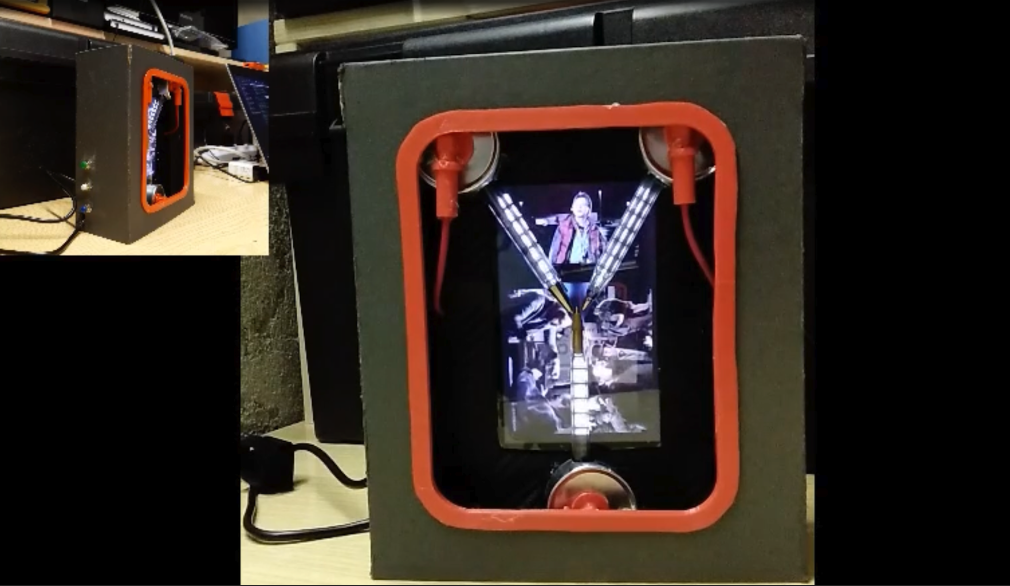
There’s plenty of interest in the 1980s: from Ghostbusters, The Goonies, to Back to the Future; whether riffing on cultural references and storylines a la Stranger Things or recreating props and costumes for cosplay and Halloween. In fact, so prevalent are such remakes that creator Ambrogio Galbusera named his Marty McFly and Doc Brown prop YAFC (yet another flux capacitor).

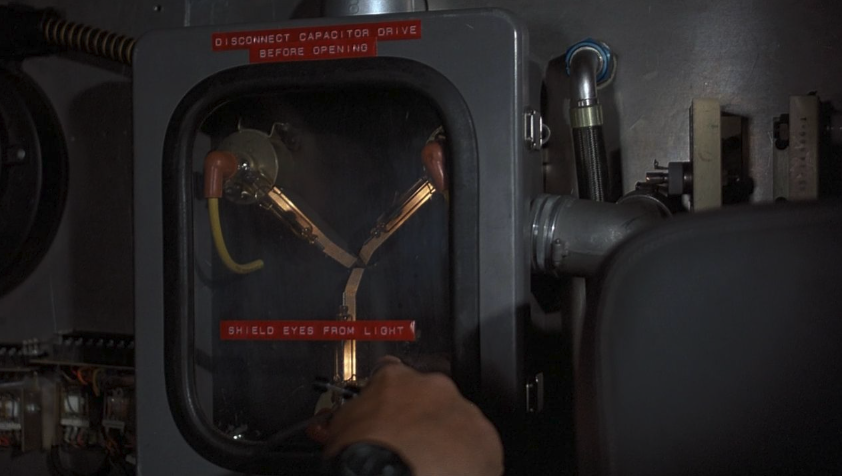
Ambrogio was keen to create a replica of the iconic flux capacitor that appeared in the Back to the Future film series and which Doc Brown reveals to Marty “is what makes time travel possible”. However, he wanted to design something other than the replica props made from LED strips he’d seen online. Bizarrely, the idea to focus on the visual and audio effects of Back to the Future’s flux capacitor came to mind when he was frying food and the sizzles triggered a memory.
Time flies
Ambrogio’s idea was to reproduce the “energy flow” effect in the flux capacitor by means of a video created with a video editor with which “you are free to create any special effect you may think of”. He typically uses VSDC, which he finds an extremely powerful tool despite being free. He created an energy flow animation in which three streams all move into the centre and added a lightning effect by stripping out part of a thunder chroma clip from Pixabay.
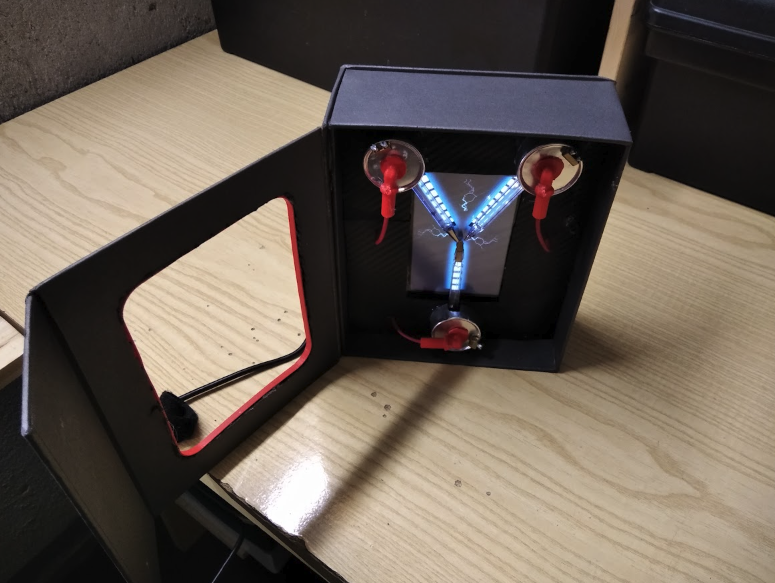
There are “plenty of LCD screens that connect to Raspberry Pi through its display interface. Not having the extra cabling required by a standard HDMI screen makes the final build more compact and cleaner,” Ambrogio reasoned. As a maker, he regards Raspberry Pi as “a must-have, because it gives you all the capabilities of a fully fledged Linux system in a fanless, low-power, tinkerable package”. He also notes that Raspberry Pi comes with a preinstalled VLC media player – “a great player that can be controlled from the command line”. This appealed because he wanted to control the volume and the clip being played by means of push buttons. Ambrogio is also a big fan of Python. “From a maker point of view, [Python] is a great language since it does not require complex environment setup.”
Reuse and reduce
Alongside Raspberry Pi 4, Ambrogio used a 7-inch LCD display and a Pimoroni Automation HAT mini board. Ambrogio wrote a Python 3 script to read the status of the buttons and control the VLC media player. He also designed and printed some 3D parts. The other components for his YAFC Flux Capacitor were largely assembled from leftovers hanging around in his lab, such as the buttons and wires. He recycled and spray-painted a cardboard box as a case for the screen, then repurposed candles and used clear plastic pen cases for the lighting and flow effects.
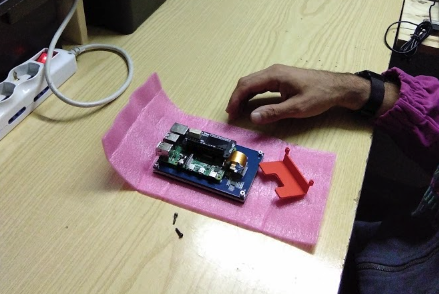
In comparison to Ambrogio’s other makes – among them a Rube Goldberg machine to increase your self esteem and an automated crop grower – the YAFC Flux Capacitor project “was not particularly complex”, turning out as expected from the outset without the need for multiple iterations. Having tweaked the VLC media player commands, Ambrogio solved everything in maybe a couple of hours, thanks to the great resources available on the web.
The availability of inexpensive displays that work with Raspberry Pi and relatively low overheads for the project makes it fairly easy to replicate. Ambrogio used Raspberry Pi 4, “but even an older version should be fine for this project since there are no strict requirements in terms of computing power.



No comments
Comments are closed