Welcome to the Raspberry Pi Podcast
Surprise! We launched a podcast. We’ll be sharing the inside scoop on how we design our products and what they’re capable of, direct from Pi Towers.
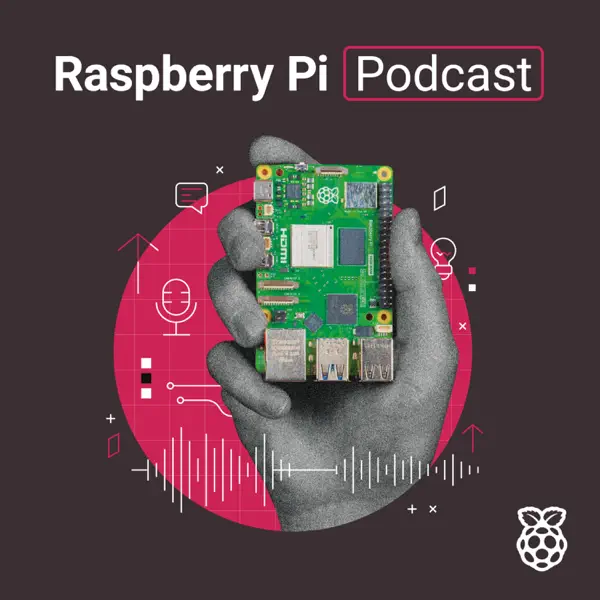
Our inaugural episode takes a close look at Raspberry Pi’s next-generation microcontroller, RP2350. Paul Sherry and Chris Boross from our commercial team walk us through Raspberry Pi’s second franchise, our silicon products, and in particular the RP2350 chip that succeeded RP2040.
Wait, Raspberry Pi designs its own silicon?
Raspberry Pi is probably still best known for our single-board computers and modules, but for over half a decade we’ve been a chip developer too. That journey began when we couldn’t find an off-the-shelf microcontroller that hit the right price and performance for our earliest Raspberry Pi Pico products. We built one of the most talented in-house ASIC teams in the business and designed RP2040 with the aim of using it just for our own products, but other companies soon took an interest. Fast forward to 2025 and we found ourselves, for the first time, selling more microcontrollers over the year than “big” (well, relatively speaking), board-level products like SBCs.
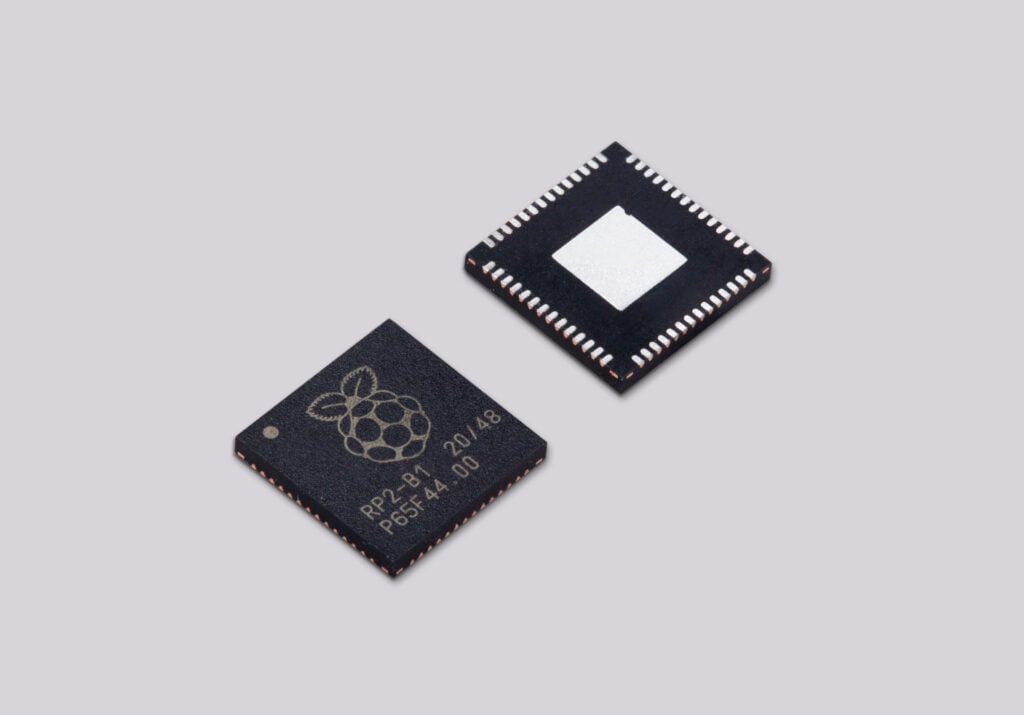

What changed between RP2040 and RP2350?
RP2040 launched in 2021, sold millions of units, and, perhaps most valuably, generated loads of customer feedback. Three areas claimed our attention: a lack of super robust security features, which worried some of our commercial customers, together with a demand for more CPU and memory headroom as well as more I/O. We listened and designed RP2350 – secure, powerful, and peripheral-rich – specifically to address this feedback.
A major focus was keeping the new product affordable, at a “disruptive” price point, if you will, and this was probably the biggest ask for our chip architects. RP2350 retails in reels at around 80 cents per unit, only 10 cents more than RP2040, despite roughly doubling the compute on offer.
Chris and Paul get into all the details in the podcast; thank you to the hosts of our first episode! By way of a super tease to encourage you to listen, here’s one of our favourite bits: Chris and Paul call the RISC-V cores in RP2350 “a love letter to CPU enthusiasts,” giving the community a low-cost way to experiment with the architecture. What’s not to [nerdily] love?
Watch and subscribe
Subscribe to the Raspberry Pi Podcast on Spotify, Amazon, or Apple podcasts. We’ll also be releasing each episode on our YouTube channel, where you can watch for free. (Here’s a handy RSS feed for those asking!)
Request a podcast topic and Ask Us Anything!
What would you like to listen to next? Leave us a comment requesting a topic and we’ll try to lure the appropriate Pi Towers-dweller behind the microphone for you.
If you’re a Redditor, our upcoming AMA might be worth a look. You can ask our CEO Eben Upton and our CTOs Gordon Hollingworth and James Adams [almost] anything this Thursday 21 May from 3pm UK time until about 5pm, or whenever the comments descend into people telling Eben how much he looks like Jason Statham. Then we will stop.


12 comments
Jump to the comment form
Paul Hutchinson
Off to great start, thanks for spinning this up.
For other podcast clients use this RSS link.
https://anchor.fm/s/11214d4e0/podcast/rss
Raspberry Pi Staff Ashley Whittaker — post author
Thanks Paul! I’ll add that to the blog. (Oopsie forgetting that one)
Olydnad_SWE
I followed the YouTube channel a week or so ago. I like to listen to podcasts. Personally, I hope you go into depth on hardware and also software.
Thank you for the podcast!
Anders
I’m going to stamp my feet if this is geo-locked again ;)
nafanz
Hello, could you please tell me if you have any plans to expand your product line?
For example, a car system (various sensor readings, media center, navigation, etc.) or a digital photo camera.
That is, a fully-featured product that can be connected and used immediately.
If you don’t have any such plans, perhaps you could recommend ready-made solutions from other manufacturers that don’t require any specialized knowledge to launch.
Raspberry Pi Staff Bianca McLean
Hello!
This question has been added to our Reddit AMA here: https://www.reddit.com/r/engineering/comments/1tcyfvk/comment/on038as/?utm_source=share&utm_medium=web3x&utm_name=web3xcss&utm_term=1&utm_content=share_button
Simon FD
I saw this on YT a few days ago. It seemed a bit too scripted for me but did contain a lot of info on the RP2350. However if you’ve already read the docs and blogs for the 2350 when it came out then there’s no new information here. I do look forward to more though :)
Shalom
Do u have a contest like the Arduino tech master
Elliott Braith
same also wanted to know
PeterF
Bit puzzled at 10:51 – “We’re very different. We make all our security hardware completely opaque…”
Look forward to more podcasts…
PeterF
Raspberry Pi Staff Helen Lynn
I think there’s a missing “the total, complete opposite of” there :-)
Anders
Just read “transparent” instead. Native English speakers frequently misuse opaque in this way.