Self-sufficient mobile weather station
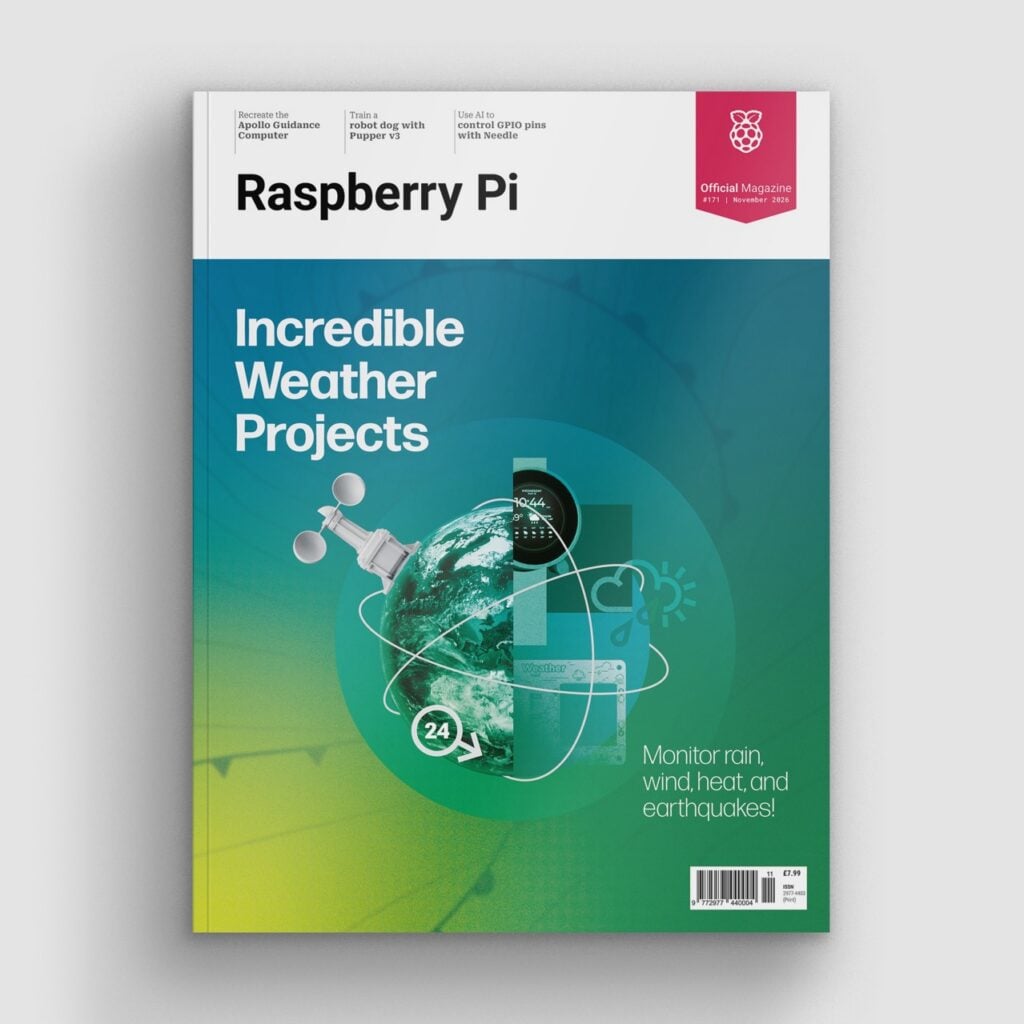
The latest issue of Raspberry Pi Official Magazine is an “Incredible Weather Projects” special and is now available to download in PDF format for free!
As Andrew Scott reminds us in the movie Pressure, the weather is not boring, so we were quite interested to hear about this mobile weather lab that is also completely self-powered.
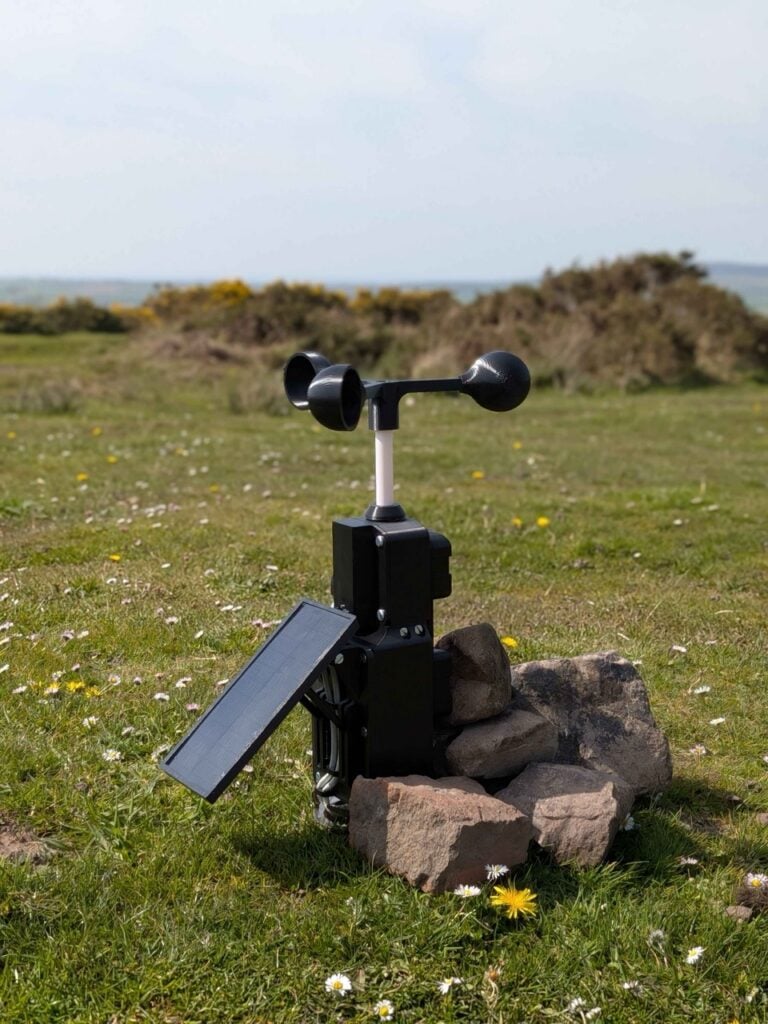
“The fundamental idea of a self-powering weather station was one proposed by my supervisor Dr Will Harrison for my year 3 dissertation project,” creator Jack Young tells us. “But the idea of it being mobile and easily transported was one that came about when I was researching what was lacking in the current weather station market – there weren’t any existing products that could provide hobbyists, students and researchers alike an easily accessible, mobile and cost-friendly device, whilst still producing a full dataset of local atmospheric conditions that could be used for data analysis.”
To keep the cost down, of course Jack eventually settled on a Raspberry Pi to help power it.
“After researching microcontrollers and small-scale computers, Raspberry Pi Zero W was the most cost-effective, low-power-consumption choice, and the impressively small form factor meant that the size of the weather station could be reduced by a large amount,” Jack explains. “The 1GHz clock speed and in-built network capabilities also allowed for fast data collection and transfer rates to the external web server, resulting in a smooth user experience.”
Everywhere you go
As well as your usual temperature and humidity sensor, along with an anemometer for wind speed recording, the solar panel used to power it allows for the station to also measure light intensity in the location where it’s set up. Of course, being used to measure weather also means it needs to survive said weather while using those sensors.
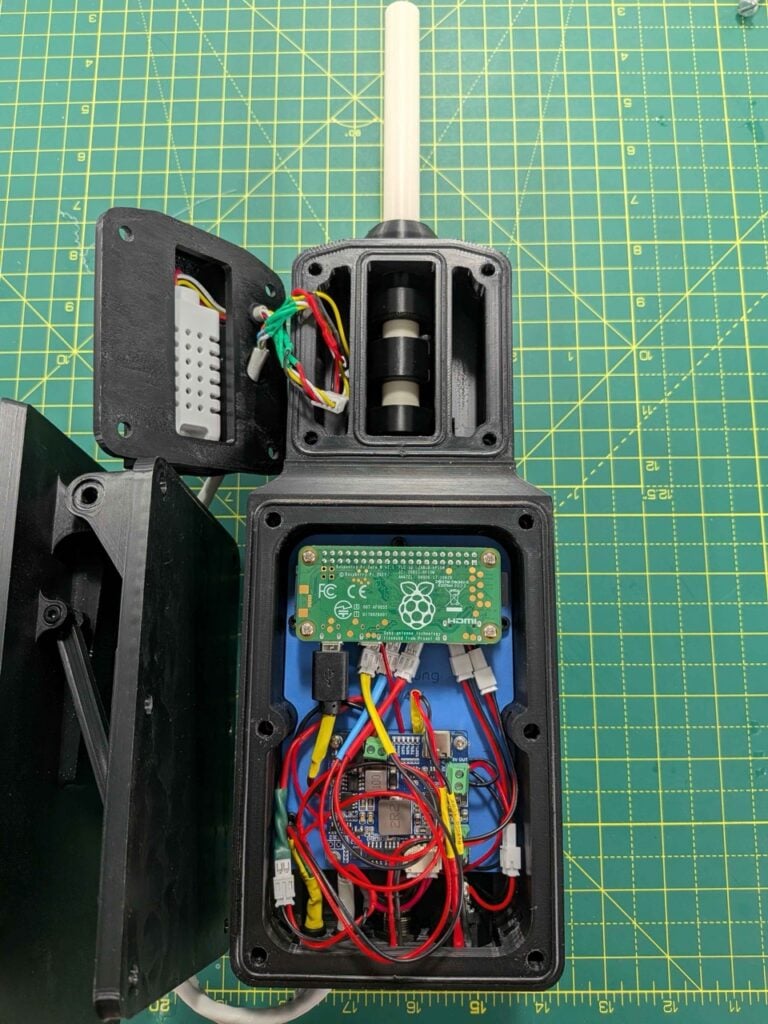
“To keep to an IP rating of 65, allowing for continuous usage in harsh weather conditions, all the internal electronics needed to be completely sealed from water,” Jack says. “To achieve this, the enclosure of the device went through many iterations, and much time was spent tweaking the tolerances of its dimensions and printing parameters to ensure an airtight fit for the lid gaskets and cable grommets that housed the power and data cables. Planning the layout of the electronics and PCB was also a difficult process, having many iterations before finally being soldered, and at times I would only find out if there was a dodgy solder once the full device had been assembled! The most satisfying part of the build process was when Raspberry Pi was finally installed into its header, the power was turned on, and the blue LED fitted to the enclosure – indicating that the code was running smoothly – was blinking as intended.”
Take the weather with you
Back in April, the full kit was tested in realistic conditions on the Gower Peninsula near Swansea.
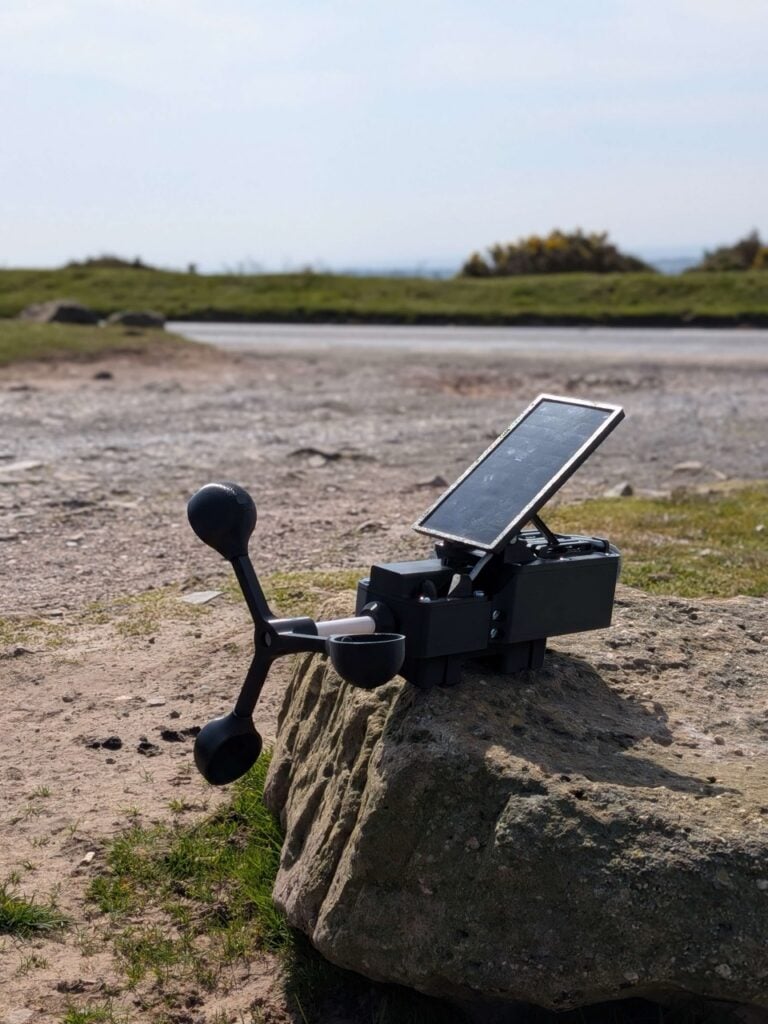
“The wind up on the open hill provided the anemometer with ample wind speed for testing the Hall effect sensor, measuring rpm via a magnet,” Jack details. “It was found that at slower wind speeds the bearings had enough friction to stall the rotation and cause the device to read 0, so the bearings were lubricated and it performed much better. The temperature sensor consistently sampled at roughly 1–2°C above what was expected, and this was found to be due to the sensor head trapping heat, possibly because the sensor was producing its own heat via electrical resistance with no way for that heat to escape. Even up in the hills of the Gower [in Wales], the device successfully established a web server and stored the data it had sampled, so despite the few inevitable issues, I would say the field testing was successful!”
There are several improvements Jack wants to make for future iterations – fix the trapped heat issue, add an easier way to adjust the sampling rate, streamline the modular nature of the station, etc. – but his ultimate goal is to market it to the real world. Hopefully soon you too can do your own Raspberry Pi-powered mobile weather research.
Issue 171 of Raspberry Pi Official Magazine is out NOW!
This article appeared in issue 171 of Raspberry Pi Official Magazine, which you can access online. You can also subscribe to the print version of our magazine. Not only do we deliver worldwide, but those who sign up to the six- or twelve-month print subscription will receive a FREE Raspberry Pi Pico 2 W!
You can find Raspberry Pi Official Magazine on Facebook, X, Threads, LinkedIn, and Mastodon. You can also contact the team via email: [email protected]




No comments
Jump to the comment form