Raspberry Pi Pico 2, our new $5 microcontroller board, on sale now
We’re happy to announce the launch of Raspberry Pi Pico 2, our second-generation microcontroller board, built on RP2350: a new high-performance, secure microcontroller designed here at Raspberry Pi.

With a higher core clock speed, twice the memory, more powerful Arm cores, new security features, and upgraded interfacing capabilities, Pico 2 delivers a significant performance and feature uplift, while retaining hardware and software compatibility with earlier members of the Pico series.
Pico 2 is on sale now, priced at $5.
RP2040: the engineer’s microcontroller
Back in January 2021, we surprised everyone with the launch of the original Pico, and our RP2040 microcontroller. In the three and a half years since, we’ve sold nearly four million units of Pico and its wireless-enabled sibling Pico W. RP2040 itself has found a home in countless third-party development boards, and in OEM products from pinball tables to synthesizers.
We’ve used a lot of other microcontrollers over the years, and we built RP2040 to be the microcontroller we’d always wanted: two fast 32-bit cores, lots of on-chip RAM, and flexible interfacing – courtesy of our programmable I/O (PIO) subsystem – all tied together by deterministic bus fabric which lets the best developers squeeze every drop of concurrent power out of the system. We’ve seen some amazing demonstrations of that power: from our very own Graham Sanderson’s port of DOOM; to Dmitry Grinberg’s port of PalmOS; to Kevin Vance’s “CPU-less” Commodore 64 cartridge.


But while RP2040 has succeeded beyond our wildest dreams, we always knew we could do better. There were features on our own list that didn’t make the cut first time round: on-chip storage; lower-power idle states; package options. And there were new features requested by the army of RP2040 users: faster cores; more RAM; code protection.
Enter RP2350
So, two years ago, with the RP1 I/O controller for Raspberry Pi 5 in the bag, the Raspberry Pi chip team started work on what would become RP2350. This is a vastly more sophisticated design than RP2040, featuring:
- Two 150MHz Arm Cortex-M33 cores, with floating point and DSP support
- 520KB of on-chip SRAM in ten concurrently accessible banks
- A comprehensive security architecture, built around Arm TrustZone for Cortex-M, and including:
- Signed boot support
- 8KB of on-chip antifuse one-time-programmable (OTP) memory
- SHA-256 acceleration
- A hardware true random number generator (TRNG)
- An on-chip switch-mode power supply and low-quiescent-current LDO
- Twelve upgraded PIO state machines
- A new HSTX peripheral for high-speed data transmission
- Support for external QSPI PSRAM

Where RP2040 provides only a single 7×7mm, QFN56 package option, this time we’re offering a choice: a 7×7mm, QFN60 package (RP2350A) with 30 GPIOs, or a 10×10mm, QFN80 package (RP2350B) with 48 GPIOs; and variants of each with 2MB of stacked-in-package QSPI flash (RP2354A and RP2354B).
And we’ve stayed true to our affordable roots: although our silicon die now measures an extravagant 5.3mm2, versus 2.7mm2 for RP2040, RP2350A will be just ten cents more expensive, costing $0.80 in 3,400-unit reels, or $1.10 in single-unit quantities. RP2350B will cost ten cents more than RP2350A, while the RP2354 variants will cost just twenty cents more than their flashless brethren.

RP2350 will be generally available in volume before the end of 2024. To register your interest, and to participate in our samples program, head over to the product page.
Board games
Pico 2 pairs RP2350A with 4MB of external QSPI flash, up from 2MB on the original Pico. It is form-factor and electrically compatible with the original Pico design.

While there is relatively little stock in channel today, Pico 2 is in full-rate production with our friends at Sony. Many of our Approved Reseller partners are operating backorder and reservation schemes, and we will be shipping units to them on a regular basis over the next few weeks.
Before the end of the year, we expect to ship a wireless-enabled Pico 2 W, using the same Infineon 43439 modem as Pico W, and versions of both Pico 2 and Pico 2 W with pre-installed 0.1-inch headers.
Software and documentation
Raspberry Pi is as much a software company as it is a hardware company: developers experience our hardware products through the lens of our software platforms, and we spend an enormous amount of time and money on polishing those platforms.
As you’d expect, the launch of Pico 2, and RP2350, is accompanied by an updated release of the Pico SDK, and by new MicroPython and CircuitPython images. And Jonathan Pallant and his co-conspirators have been working to bring the Rust language to our new platform.
We’ve been collaborating with the Trusted Firmware project to establish RP2350 as the reference hardware platform for the Trusted Firmware-M 2.1.0 Long Term Support release. TF-M provides a reference implementation for PSA Certified on Arm v8-M chips, providing developers with an easy route to secure devices against common attacks. RP2350 will be laboratory tested by a certified, independent lab, with the goal of achieving PSA Certified Level 2 ahead of a release in October.
Finally, we’re pleased to be teaming up with Google to launch the Pigweed SDK with native support for Pico 2. Pigweed’s middleware libraries have shipped in millions of devices, including Google’s own Pixel devices and Nest thermostats. Now, the Pigweed SDK makes it even easier for you to use these components when building your projects for Pico 2. Head over to Google’s announcement page to learn more!

As with all our silicon products, RP2350 is accompanied by a comprehensive datasheet. We’re also providing a tutorial showing you how to get started with C/C++ development using the newly updated Raspberry Pi Pico Visual Studio Code extension.
Painting a target on our backs
The cornerstone of the RP2350 security model is signed boot. If security is enabled, it is only possible to boot a binary if it has been signed using a private key, with a hash of the corresponding public key stored in OTP. Preventing an attacker from running arbitrary code greatly complicates the task of extracting OTP contents, including cryptographic keys used for code protection.
Other vendors’ track record in implementing boot security is pretty dismal. Broad-market microcontrollers often lack effective countermeasures against modern fault-injection attacks, such as those employed in LimitedResults’ Debug Resurrection attack on Nordic nRF52 devices, and Chris Gerlinsky’s work on bypassing Code Read Protection in NXP LPC family devices.
While RP2350 uses several techniques, including hardware fast glitch detectors and our patent-pending redundancy coprocessor, to protect control flow and data integrity against fault-injection attacks, we fully expect to find, and fix, flaws in our boot process. And we want to find these flaws early, before RP2350 is deployed in critical applications.
Ahead of launch, we commissioned NewAE and Hextree to audit our security architecture. And now we’re offering a $10,000 bounty for the first confirmed break of our signed boot process. This will run for a month in the first instance: we may extend the window if no flaw is found, or offer further bounties for further distinct flaws. Full details of the bounty program can be found here.

To get RP2350 hardware into the hands of the engineers most likely to find these flaws, we’ve partnered with the DEF CON hacking convention, which starts today in Las Vegas. This year’s badge is powered by RP2350, and makes a great platform for experimenting with our security architecture. And for anyone who wants to participate, but doesn’t want to risk bricking their badge, Hextree have produced a limited number of boards intended specifically for supply-rail and electromagnetic glitching.

Our team will be camped out alongside Hextree in the Embedded Systems Village during the conference: come on down and say hi!
Partners
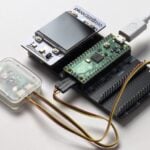
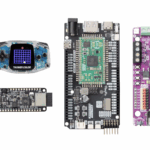
Over the past year, we’ve been working with some of our closest partners to develop products based on RP2350. Many of these are upgrades of existing RP2040-based products, while some are entirely new. Here’s a non-exhaustive list of what we expect to be available today or over the next month.
4D Systems
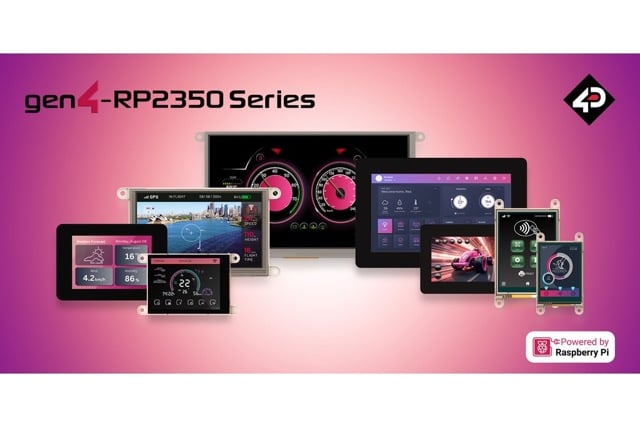
The gen4-RP2530 series comprises high-performance displays from 2.4″ to 7.0″, available with touch and non-touch options.
Adafruit
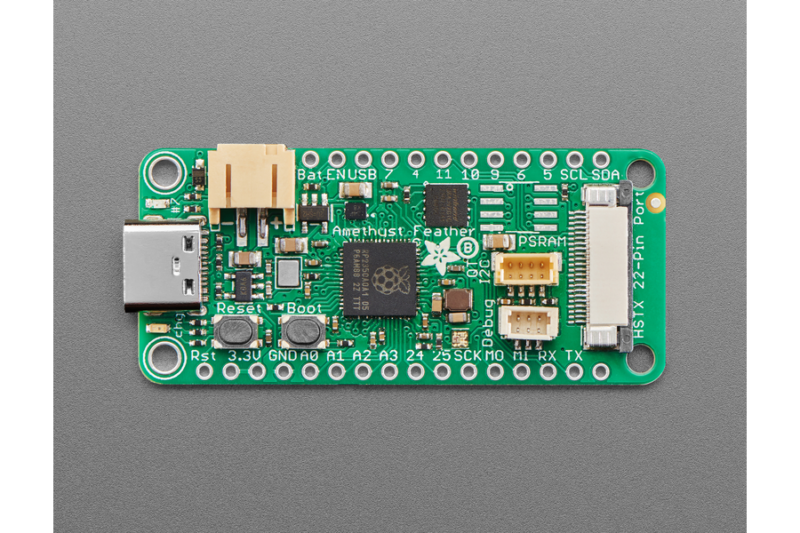
Metro RP2350 lets you use Arduino-compatible shields and accessories with RP2350. Feather RP2350 brings the power of RP2350 to the popular Feather format, including compatibility with FeatherWings.
Bus Pirate
Bus Pirate 5XL and Bus Pirate 6 are RP2350-based open-hardware debugging tools.

Cytron
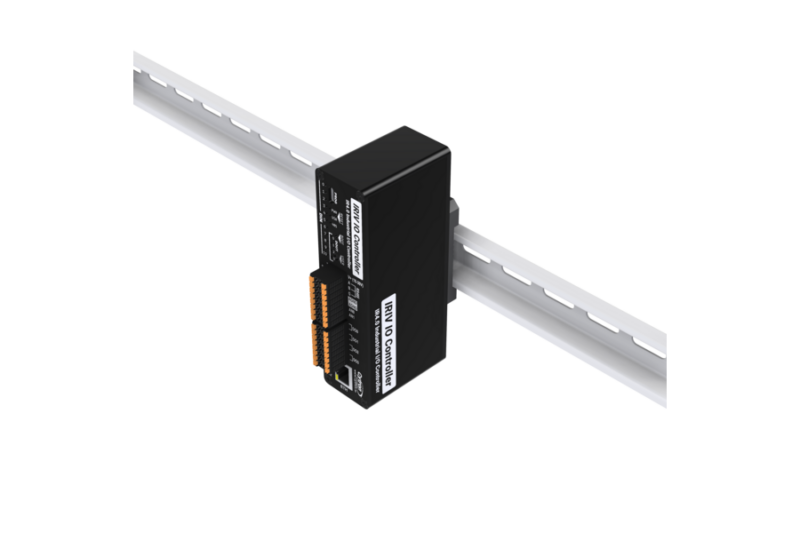
The IRIV I/O Controller is an industrial-grade I/O controller powered by RP2350.
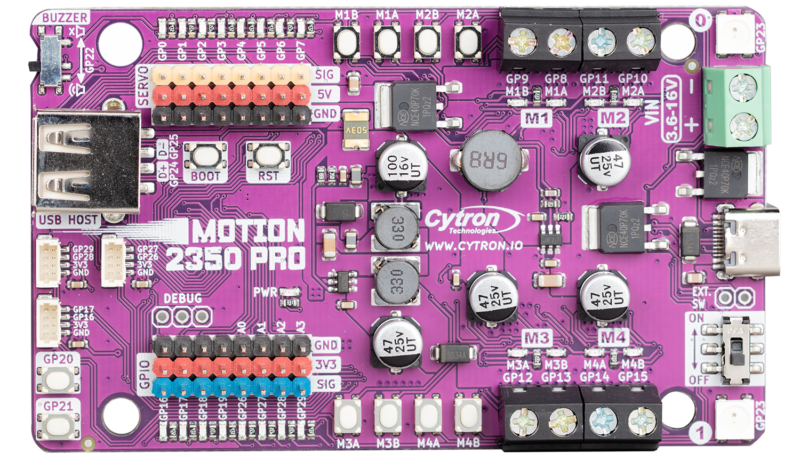
MOTION 2350 Pro is a versatile robot controller powered by RP2350.
Hellbender
The Hellbender Raspberry Pi RP2350 development board is designed to be a general purpose microcontroller and sensor board ready to be integrated into any project.
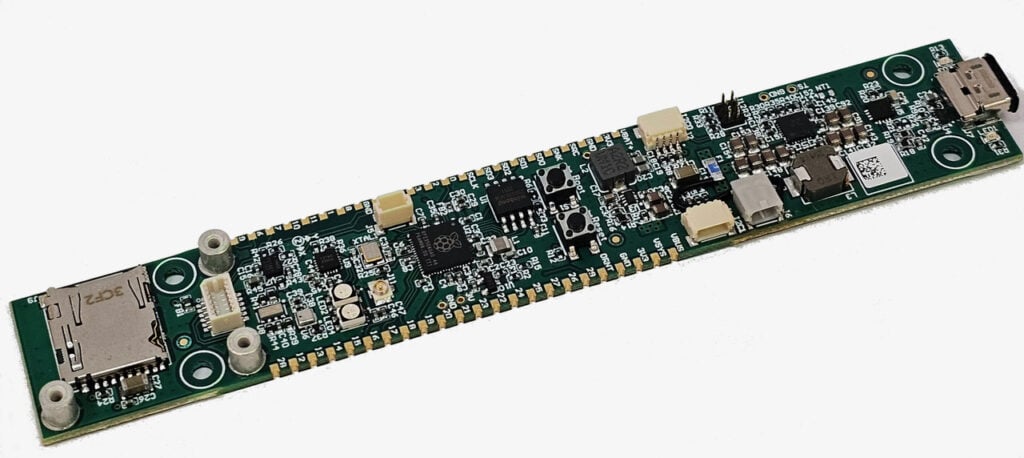
Ignys
Ignys’ RP2350 development board can be powered from battery and solar panels, with a focus on Wi-Fi and IoT.
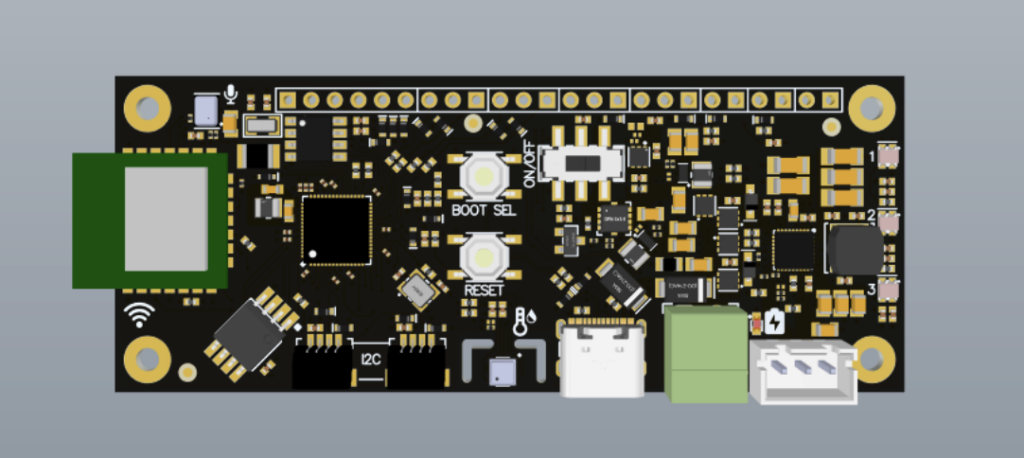
Invector Labs
Challenger+ RP2350 BConnect is an RP2350-based module with 8MB flash, 8MB PSRAM, and dual BConnect.
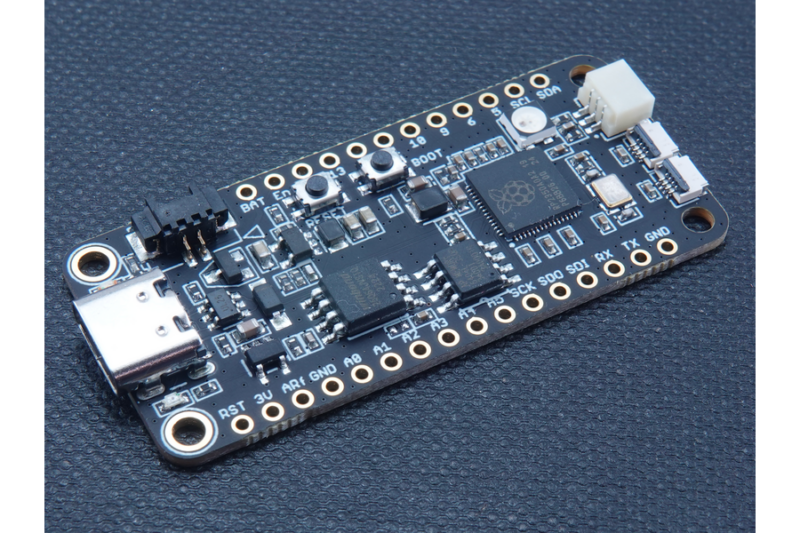
Challenger+ RP2350 WiFi6/BLE5 is an RP2350-based module with 8MB flash, 8MB PSRAM, and an integrated WiFi6/BLE5 module.
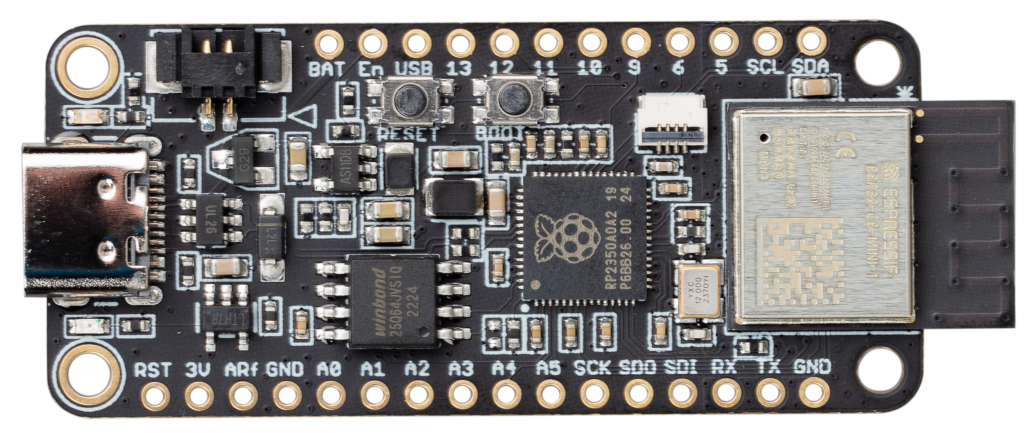
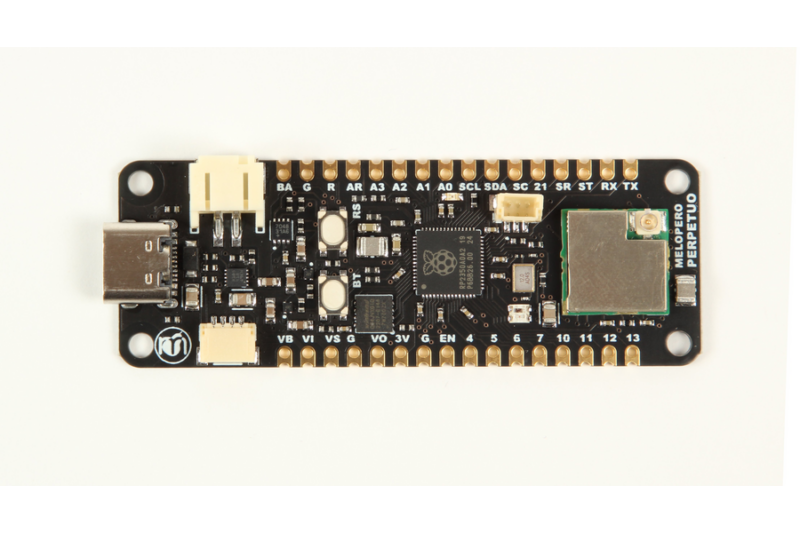
Melopero
Perpetuo LoRa can run on solar power and a compact battery, making it perfect for off-grid projects.
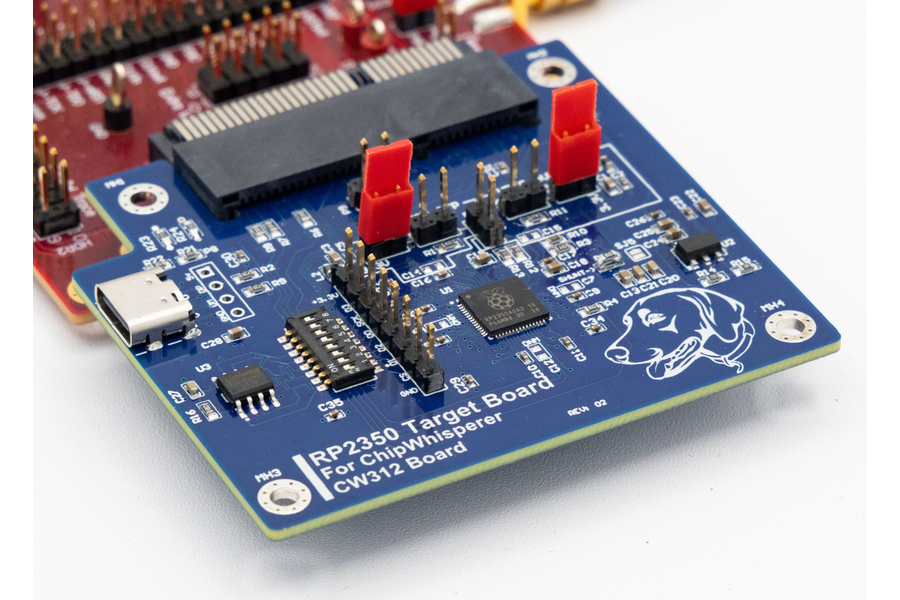
NewAE
This Target Board exposes the RP2350 security features, allowing you to test against attacks like power analysis and fault injection.
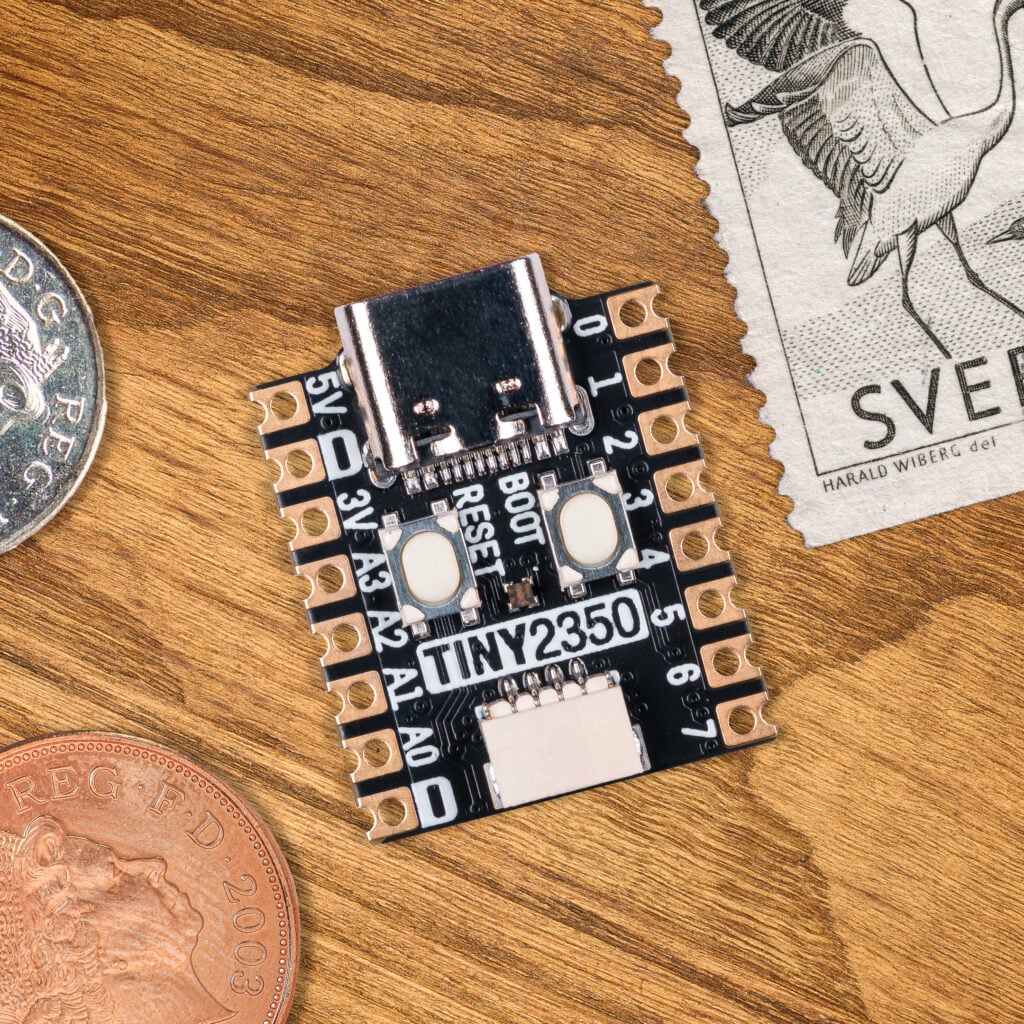
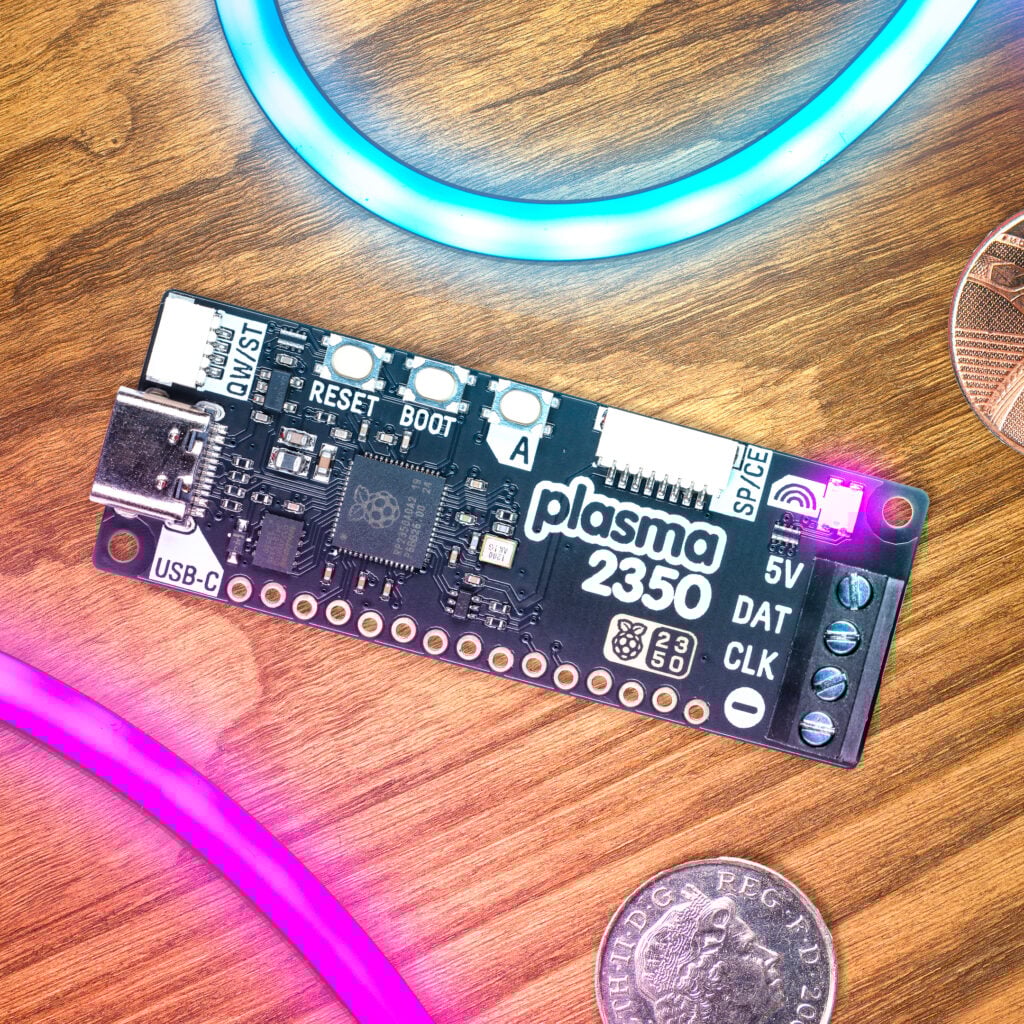
Pimoroni
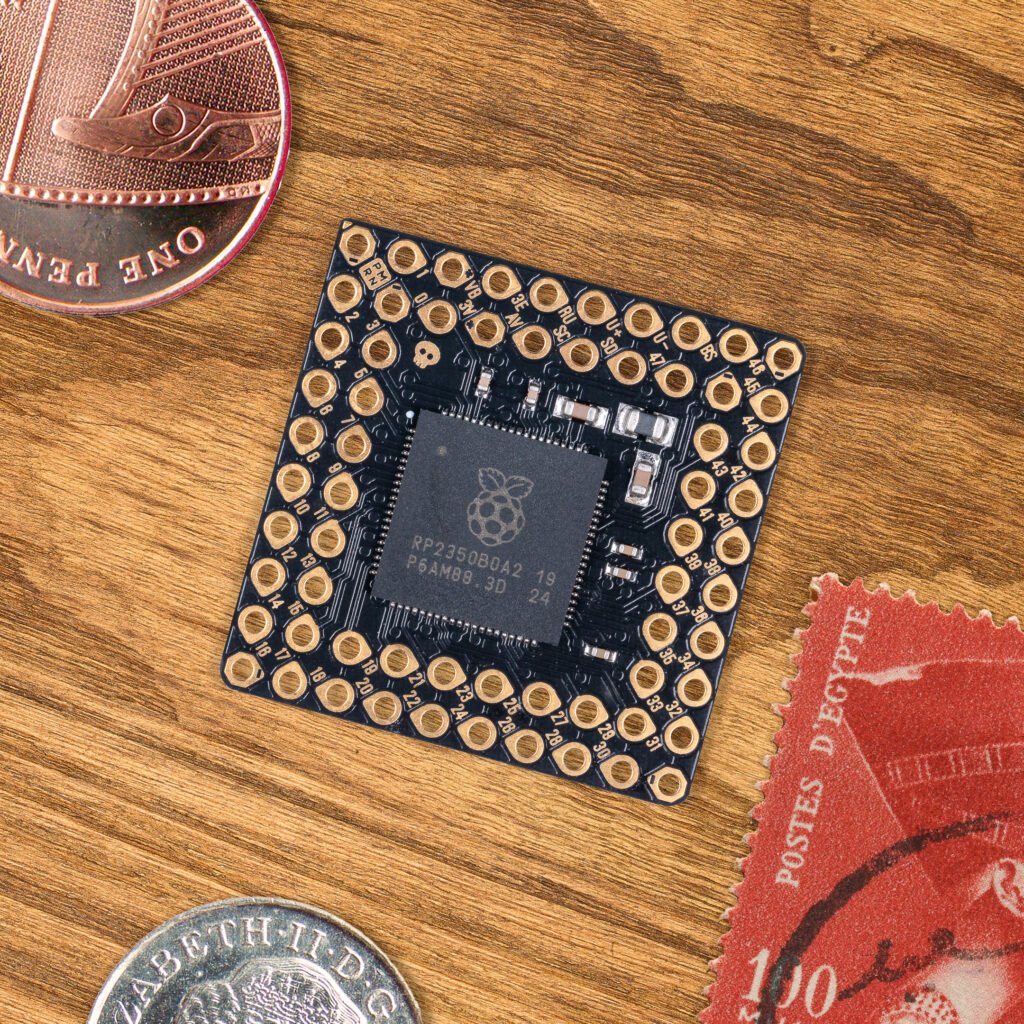
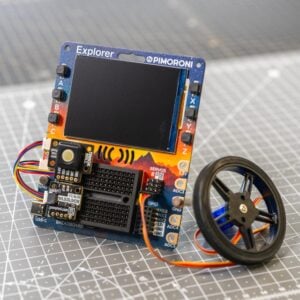
Explorer is an electronics playground with a portable layout. Tiny2350 is a miniature development board based on RP2350A. Plasma 2350 is an all-in-one, USB-C powered controller, and PGA 2350 is a minimal RP2350B breakout board modelled on a Pin Grid Array.
Seeed
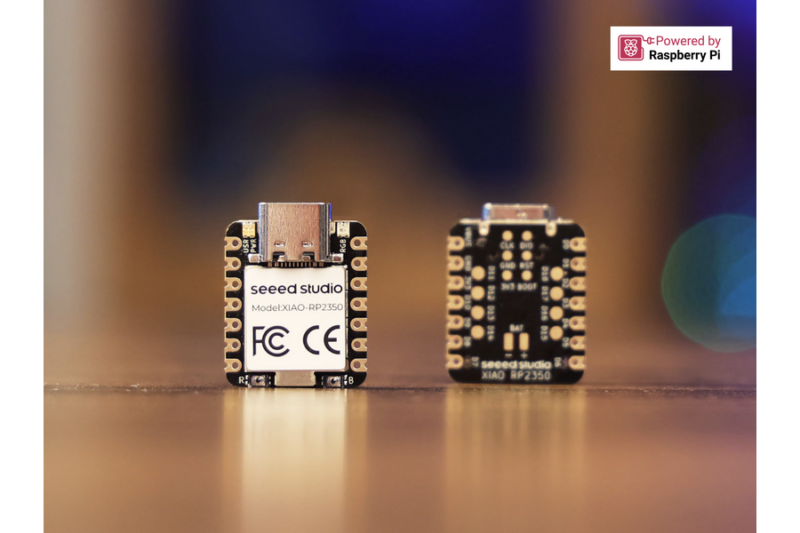
XIAO RP2350 aims to be the smallest RP2350 development board, offering 19 GPIOs, an RGB LED, and an integrated battery management system. It is compatible with all Seeed Studio XIAO accessories.
Solder Party
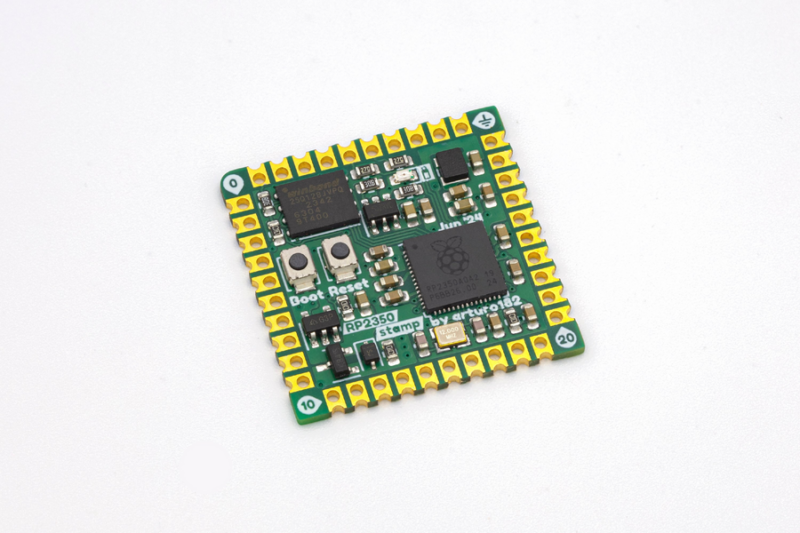
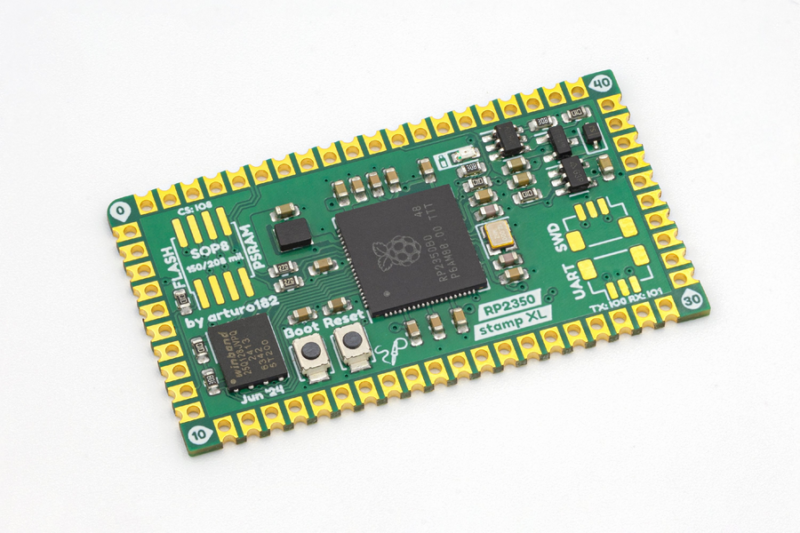
RP2350 Stamp and RP2350 Stamp XL are hand-solderable modules integrating RP2350, 16MB of flash, an LDO, a LiPo charger, a LED, and Reset and Boot buttons.
SparkFun
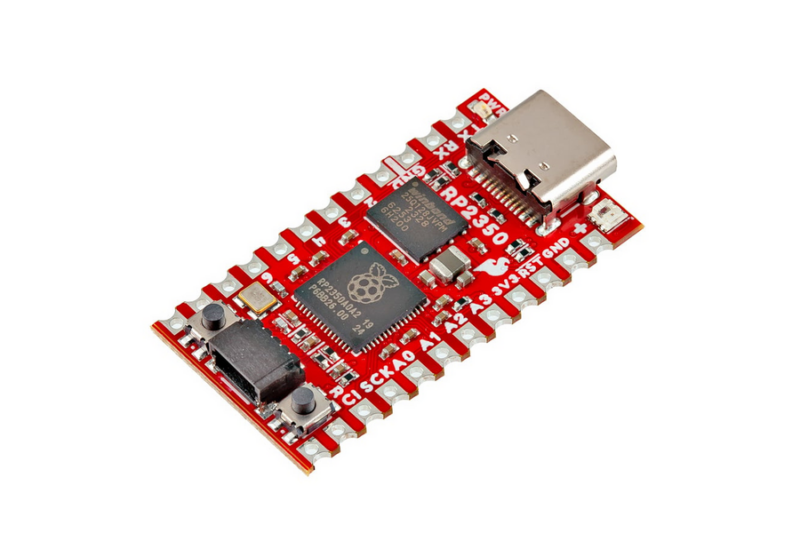
Pro Micro – RP2350 provides a powerful development platform in the popular compact Pro Micro form factor.
Switch Science
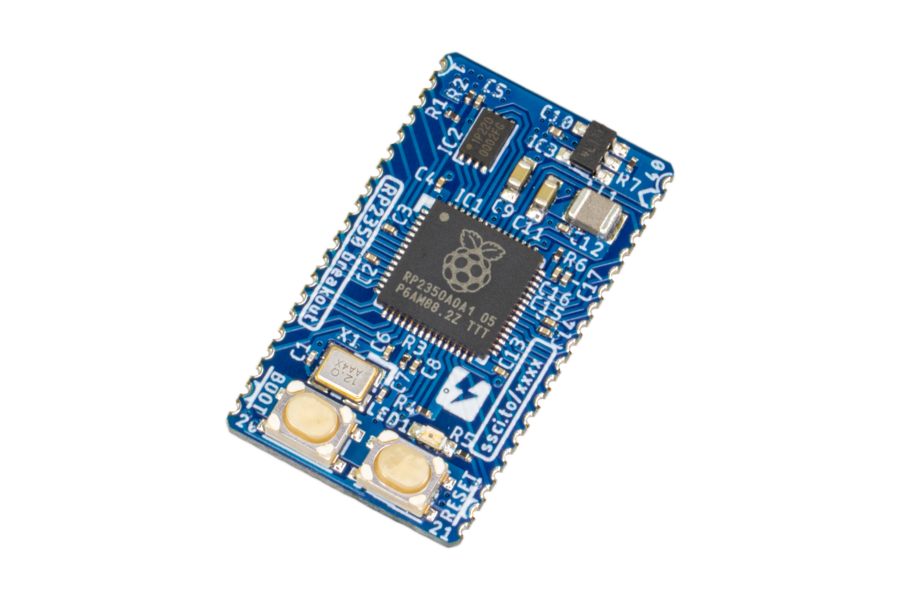
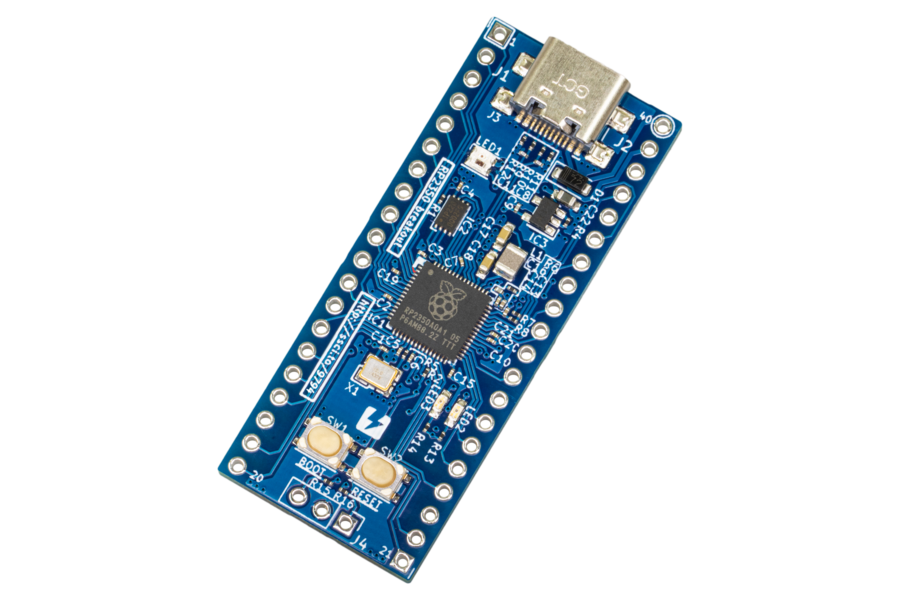
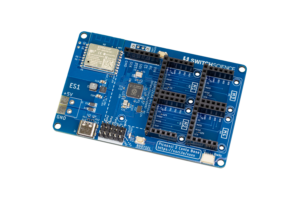
Picossci2 Breakout is a drop-in replacement for Pico 2, with a USB-C connector. The Picossci2 Breakout Module can be mounted on the PCB directly and the Picossci2 Conta Base is an RP2350 microcontroller board to which small boards can be connected without soldering.
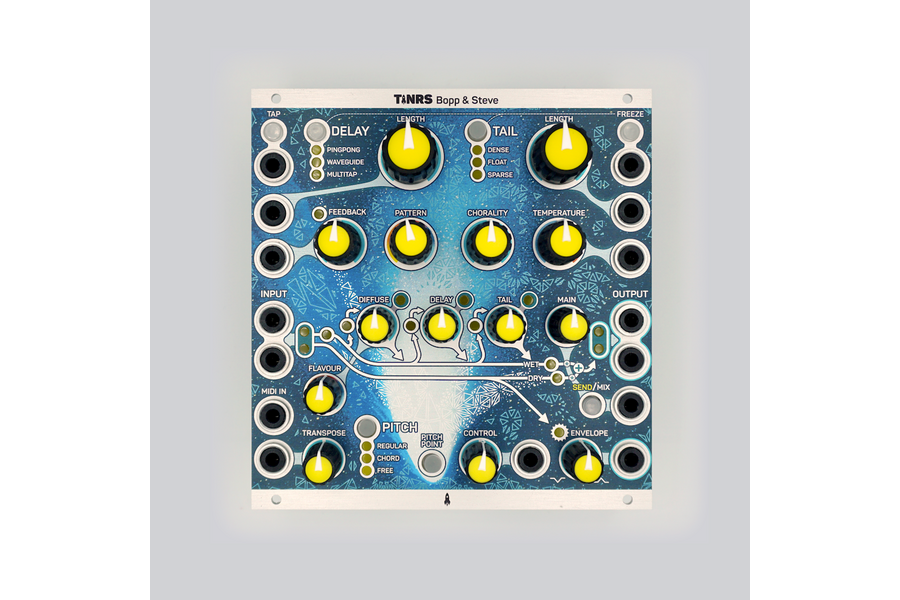
ThisisNotRocketScience
Bopp & Steve is a space effect modular synthesizer. Reverberates, diffuses, delays and shifts pitch based on a deconstructed audio path.
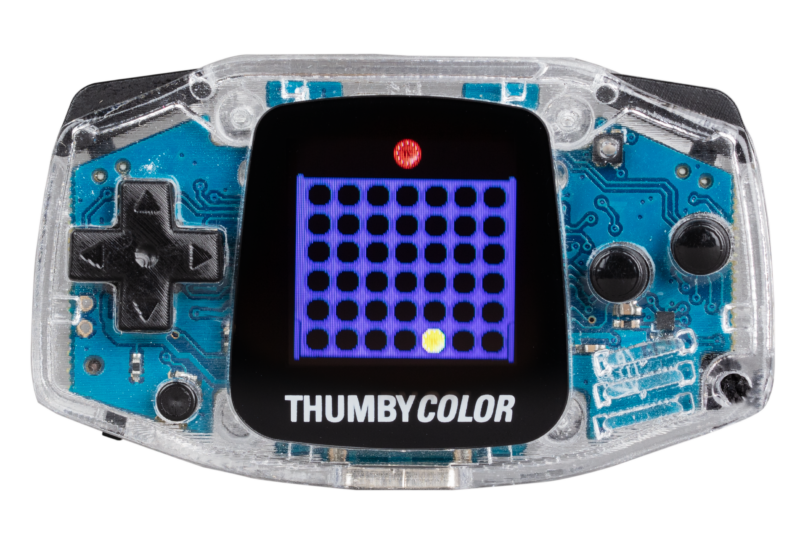
Tiny Circuits
Thumby Color is a tiny playable, programmable, and wearable keychain console.
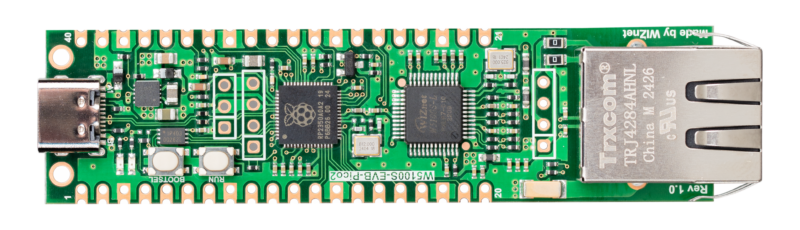
Wiznet
Wiznet are offering evaluation boards for their W5100S, W5500, and W6100 Ethernet chips, based on RP2350.
One more thing
Although we’ve been a member of RISC-V International for many years, we’ve never found an opportunity to ship a RISC-V Raspberry Pi product. But that’s changing today, thanks to a bonus feature of RP2350: a pair of open-hardware Hazard3 RISC-V cores which can be substituted at boot time for the Cortex-M33 cores. Our boot ROM can even auto-detect the architecture for which a second-stage binary has been built and reboot the chip into the appropriate mode. All features of the chip, apart from a handful of security features, and the double-precision floating-point accelerator, are available in RISC-V mode.
Hazard3 was developed by Luke Wren, currently a Principal Engineer in the Raspberry Pi chip team, in his free time. As a solo project, it’s an intellectual tour de force: a highly optimised three-stage pipelined processor, implementing the RV32I instruction set, and a large collection of standard extensions targeting performance and code density. If you’d like to know more, I recommend a browse through Luke’s historical posts on Twitter/X, which cover the development process in considerable detail.
In adding Hazard3 to RP2350, we’re aiming to give software developers a chance to experiment with the RISC-V architecture in a stable, well-supported environment, and to popularize Hazard3 as a clean, open core, suitable for verbatim use in other devices, or as a basis for further development.
Credits
The development of Pico 2 and RP2350 has been an epic, multi-year effort: it is comfortably the second-largest engineering programme we’ve undertaken, behind only Raspberry Pi 5. Its success is a testament to the incredible talents of the team here, and to the world-class partners who have joined us on the journey.
We would like to acknowledge: Aragio Solutions, Arm, Dolphin Design, GF Micro, Silicon Creations, and Synopsys, for semiconductor IP; Cadence for tools; IMEC and TSMC for fabrication; Eurofins MASER for qualification; Innova-Test and Probe Test Solutions for test; Reel Service for tape-and-reel; Abracon, Bourns, Lojixx, Olympic, and Winbond for components; Sony for manufacturing; and NewAE and Hextree for security analysis.
A partial list of individuals who made significant personal contributions follows: Dora Aathmani, James Adams, Alasdair Allan, Derek Annison, Amund Askeland, Michael Baird, Levon Barseghyan, Jonathan Bell, David Bell, Jennifer Blakeman, Mathew Blowers, Chris Boross, Pierre Boyer, Alex Branton, Mike Buffham, Andrew Burge, Thierry Canaud, Randy Caplan, Amy Carter, Leonard Chan, Joseph Chang, Romain Chantre, Wilfried Chauveau, Melvin Cheah, Belle Chung, Nate Contino, Steve Cook, Liam Craig, Alex Dewar, Christian Domingues, Nicola Early, Andrew Evans, Fabian Fäßler, Andras Ferencz, Nick Francis, Liam Fraser, Rita Galambos, Arnaud Garnier, Nicu Gavrilă, Damien George, Sharna Ghosh, Erik Gilling, Carol Grant, Lauren Hancock, Peter Harper, Andy Hawkins, David Henly, Lucas Hoffmann, Gordon Hollingworth, Petr Hosek, James Hughes, Leane Ickes, Caleb Jamison, Richard Jones, Gareth Jones, Tammy Julyan, Thijs Kempers, Vsevolod Kozlov, Eldhose Kurian, Tijs Lammertink, Clarrie Lee, Ian Lesnet, Lestin Liu, ShuChen Liu, Matt Lokes, Chris Lowder, Helen Lynn, Ian Macaulay, Terry Mackown, Peter MacMichael, Christopher Martin, Jon Matthews, Nellie McKesson, Armando Montanez, Paul Mucur, Rob Newbold, Colin O’Flynn, Brian O Halloran, Paul Oberosler, Rod Oldfield, Mark Owen, Phil Packer, Jonathan Pallant, Mike Parker, Sara Parodi, Bastien Patoux, Billy Phillips, Dominic Plunkett, Prabhu Karthikeyan Rajasekaran, Kim Rasmussen, Haifa Redissi, Toby Roberts, Thomas Roth, Graham Sanderson, Andrew Scheller, Vinaya Lakshmi Puthur Sekar, Alex Selby, Scott Shawcroft, Mark Sherlock, Paul Sherry, Matias Silva, Sam Snyder, Mike Stimson, Raymond Szkornik, Jean-Pierre Thibault, Diya Thomas, Roger Thornton, Mark Timmons, Aref Trigui, Utku Turker, Nat Turner, Rachit Upreti, Liz Upton, Andreas Vanduran, Tomas Vanek, William Vinnicombe, Marco Vrouwe, Micke Wersall, Simon West, Andrew West, Tom Westcott, Richard White, Rachel Whitehead, Ashley Whittaker, Alex Whyte, Jack Willis, Jim Wilson, Luke Wren, Dave Wright, Haowei Wu, and Romona Wu.
69 comments
Andy
Pico 2 W when? ;)
Dennis
It’s in the article.
“Before the end of the year”
Raspberry Pi Staff Ashley Whittaker
YOU READ IT?!!?! You win the internet today, Dennis.
Tony Abbey
Presumably you have fixed the ADC DNL problem in addition to all the lovely upgrades?
rclark
When I read the above article, I was on the lookup for a statement on a fix to the ADC issue as well :) .
Cool new capabilities with this chip. And a chance to test the RISC-V world as well… Also, security isn’t a big concern here and it sounds like you can use it, or not. So all good. Will look forward to getting my hands on a board or two in the future.
Phil Atkin
I have the same question – the ADC page in the new SDK document only refers to the old silicon’s ENOB. I imagine there will be a decent flow of documentation updates in the next few weeks.
Trystan Jones
From the RP2350 datasheet:
-Removed spikes in differential nonlinearity at codes 0x200, 0x600, 0xa00 and 0xe00, as documented by erratum
RP2040-E11, improving the ADC’s precision by around 0.5 ENOB.
-Increased the number of external ADC input channels from 4 to 8 channels, in the QFN-80 package only (poster’s note: e.g RP2350B only)
Phil Atkin
Yes, excellent news.
Paul Webster
Wow!
That is a lot of stuff for very little cost (to the purchaser). The RISC-V announcement at the end was a big surprise.
Mike Bryant
Has JLCPCB in China been told about these ICs in advance and have they ordered any reels so we can get prototypes using them made ASAP ?
Alan
“on-chip storage”; you mention this up the top (5th paragraph) as something missing from the RP2040, but then don’t go on to mention it again? Do you mean non-volatile on-chip storage? Does the new chip have some?
Darren
The next paragraph mentions “8KB of on-chip antifuse one-time-programmable (OTP) memory”
Barryhunter
Think that referring to “and variants of each with 2MB of stacked-in-package QSPI flash (RP2354A and RP2354B). ”
… not technically ‘on chip’, but has RP2354 has variants with the Flash in the same package; wheras RP2040, always needed an external flash chip to use.
Raspberry Pi Staff Gordon Hollingworth
Eben did mention the 8KB OTP memory, there is an OTP option which will copy the contents of OTP into SRAM and execute it.
Also there are two packages mentioned RP2354A and RP2354B which contain 2MB of flash in package.
Robert Wiltshire
I think this must be THE biggest launch by Raspberry Pi since the Pi1. So much to take in and so much had been happening behind the scenes.
Shame I’ve only just ordered today 20 Pimoroni Plasma 2040s! I wait though.
Richard Goodhand
Well done team. A great update to the Pico form factor. Can’t wait until the W version is released.
David Drake
This is a fabulous and very encouraging announcement. It also shows a top level engineering and management team behind the architecture. There s a lot to learn about an hoping for an upgrade to the IDE space to make it all possible.
Paul Vollebregt
Great finally internal Flash, but still not clear if the complete chip can be reset and you can replace the ROM code too
Ken Hansen
By “ROM” do you mean the “8KB of on-chip antifuse one-time-programmable (OTP) memory”? Cause that doesn’t sound erasable…
See: https://ntrs.nasa.gov/api/citations/20190002597/downloads/20190002597.pdf
Paul Vollebregt
I do mean the ROM code, OTP will be blank on new chips. But OTP can be modified even after they have been programmed but that’s not what I am referring too. I want to replace the ROM code with my own code.
James Hughes
ROM is ROM, Read only memory. It cannot be changed. Do you mean you want to change the bootloader which is built in to the chip? That’s not possible. Second stage can be changed AFAIK, it’s part of the SDK. The OTP stands for one time programmable – which means you can change each bit once only.
Helen McCall
If you were able to defeat the One Time Programmable coding, then that would completely defeat all the secure boot feature.
stan423321
Very interesting launch. Break your keyboards!
I am a bit “skeptical” about the “secure” boot features. Will there be an option to “secure” an “insecure” chip with some permanent unlock flag?
James Hughes
No need for scepticism, the security improvements are extensive, and you can lock the device down thoroughly via the OTP and signing keys. It’s all in the datasheet.
Bigboy James
188uW is still pretty high power for the lowest power state.
The ESP32 can manage ~40uW in deep sleep. I was really hoping for you to compete with this in low power states.
Salman Sheikh
I think it will have dual core dual architecture i.e. two ARM core and two RISCV cores and your can switch. Too cool. I don’t think above piece mentioned that or are unaware.
Laurent
Great job! Thanks for this awesome upgrade. Huge surprise with the RISC-V additional core.
Any improvements in low-power capabilities to mention?
James Hughes
Absolutely- take a look at the RP2350 datasheet for whole chapters of low power stuff
Magnus
Why use micro USB? Everything else about this is cool and innovative. But not using USB C in 2024 is disappointing.
Does USB C add some complexities that would stop it from being $5?
thagrol
A couple of guesses:
1. To maintain footprint (and other) compatibility with the original Pico.
2. Yes, I’d expect additional complexity and therefore cost. Things like sensing cable orientation, suitable resistors for e-marked cables/PSU, lack of an ID pin (which the micro USB has) so no way to easily determine if it should be a USB host or device…
Ken Hansen
I suspect the issue is same as with the Pi Zero 2 W retaining hardware compatibility with its predecessor – remember, there are OEM/Industrial customers that may rely on the micro USB connector, and the designers wanted ‘plug compatibility’.
Mike
Cool, but…
Please update USB PHY to USB 2.0 and High Speed. We’re in need of lower hostdevice latency and 1ms doesn’t cut it anymore.
Also, please change the connector to USB C.
George
There are multiple vendors offering RP2350 boards with USB connections. They all cost more than five bucks, but that’s what you get when you ask for products that have more
expensive components.
Venkat
Will the debug probe be upgraded with the new RP2350?
James Hughes
I doubt it – the RP2040 works fine as the core in the Debug Probe, no need to change it.
Ralph Corderoy
Was CAN bus considered this time around? It’s widely used in industry, not just in the automobile sector.
Paul Vollebregt
CAN requirements are expensive and using RS485 in combination with an UART at 1 MBits or even 8 MBits is a much better choice. Faster, cheaper and more range. RS485 is also widely used in industrie.
Marco
I don’t understand what you mean with “CAN requirements are expensive”. All you need is an external transceiver, like RS485, which you would only fit if needed. Then, twisted pair and termination resistors are the same as RS485.
RS485 might be a simple choice for basic applications where data always goes from one node to another, or where there is a single “master” node that can interrogate other nodes with polling. But, for multi-master applications or, in general, when you want a reliable communication network without worrying with the low level details of dealing with the RS485 communication in software (timeouts, retransmissions, arbitration, etc) then CANbus is far superior. I know because I’ve spent a lot of time implementing a few communication systems on top of RS485. Never again. There’s a reason why they developed CANbus. You just pass it the data you want to transfer and it does everything for you, reliably and deterministically.
As for implementing a CANbus controller with PIO, I’ve seen there’s a project on GitHub, but it’s not fully compliant and I would much prefer to use a proven, hardware-based, one instead.
Ekholm
The Transfer layer is at least partly implemented in silicon. This makes it appear from a software point of view that CAN bus is a simple
AndrewS
Other people have got CAN bus working with PIO https://www.google.com/search?q=pio+can+bus
And also RS485 https://www.google.com/search?q=pio+rs485
Richard
Why is the USB still 1.1? Is there a technical or cost issue with USB 2.0? The RP 2040 is very successful as an upgrade card for retro computers. Having USB 2.0 support would have made it epic good.
James Hughes
The die area for USB2 is huge, and then you need to add even more space for the phy at the edge of the chip. So the cost in silicon area is large. It also takes up more GPIO. Technically feasible (although needs a lot of work), but the cost in die area is prohibitive.
adrian godwin
Bigger than two RISC-V cores ?
Raspberry Pi Staff Eben Upton — post author
Absolutely!
LM
Thank you, thank you, thank you! This was what I expected all these months. More SRAM, PSRAM support, more PIOs (although I expected more instructions per PIO but anyways…), 2 different cores to experiment with and hardware FPU and DSP support!! Wonderful!! Excellent for computer and console emulation development! And for new VGA-HDMI graphics projects!
Ed
Congrats, it looks great. I see one feature in the docs that seems to be RP2040 specific, unavailable in the RP2350: rtc_hardware. What is the alternative now, an external RTC solution via GPIO?
Barryhunter
The datasheet says
“Instead, RP2350 has a timer in the Always-On power domain
which is used for scheduling power-up events and can also be used as a real-time counter”
Ed
Ah, thanks. I must have overlooked that, sorry.
Rob
My only question is will I be able to use 16 bit 44.1k sound samples in on the pico two / python rather than the current 22k limit which is imposed on the pico one?
Gareth
But what is the deep sleep power draw?
For me the 2040 was never an option because it was way too thirsty on the mW, even when sleeping, so battery power just wasn’t going to happen, so I just did not bother at all.
Paul Vollebregt
Hi Gareth, RP2350 is less thirsty compared to the RP2040 but still about 10x more than what you would wish it to be. I think they focus to much on speed, also nice, but don’t realize that power is at this level more important. I also wished they included a small 8 bit CPU core like PIC16 to support ultra low power operation (<400nA) while active at 8000+ instructions/ second. With a combination like that you can do magic.
rclark
No RTC onboard on the Pico 2? Someone mentioned that on another forum… I do use that with the current 2040 board for time-stamping.
Ed
I mentioned it here, just a few comments above you. And someone replied with an answer.
Christopher Hunt
Nice release.
To be fair though, I understand Nordic fixed the injection attack you mentioned by revving hardware. Please remove your reference to this outdated flaw.
More info:
https://infocenter.nordicsemi.com/pdf/in_150_v1.0.pdf
Welsh Charles
Hyped about the release, but surprised that just months before “Get Started with MicroPython on Raspberry Pi Pico – 2nd Edition” was released. Any idea when the book is updated for the Pico 2, preferably directly with chapters about the W variants.
Brian Jepson
Thanks for asking this question; I have good news. Although this book was published in the UK before the announcement of the Pico 2 and RP2350, the author and editor both had access to prerelease versions of the board and MicroPython firmware.
As to why we did not wait until the Pico 2 was released to publish the book, we did not want to wait any longer than necessary to publish the new edition: it was over three years old, and lacked coverage of the Pico W, so it was severely out of date and no longer served the needs of readers.
Fortunately, the book is based on MicroPython, which is intended to remain source-compatible with the original Pico’s MicroPython, so we anticipate no need to update anything in the example code. The Pico 2 is pin-compatible, so the circuit design remains the same.
However, as of the date of the Pico 2 announcement, MicroPython for the Pico 2 is a preview release. As the MicroPython firmware moves from preview to final release, we will test the examples with the new Pico 2, under both ARM and RISC-V firmware, and will issue errata if the need arises. If you find an issue related to Pico 2, or any issue at all, please open an issue here.
We also have a note on Pico 2 compatibility in our GitHub repo and will keep that up to date.
ardencaple
I think I may have been the first person in the UK to buy a pico2 over the counter yesterday morning in the Pi shop.
Just bragging.
Raspberry Pi Staff Ashley Whittaker
Brag away! 🎉
Elouan Grimm
I just think this was a wasted opportunity to add USB-C. That was the one thing I wanted, and it makes it much worse.
DrDnar
It looks like the RP2350 is also 5 V tolerant now! After IOVDD has 3.3 V, digital (non-analog-capable) GPIOs (and the RUN and SWD pins) can accept up to 5.5 V.
NOTA BENE to anyone skimming: Digital GPIOs are spec’d to 3.63 V max when IOVDD is unpowered, so the Pico must come online before any 5 V logic. ADC-capable, QSPI, and USB D+/D- are still limited 3.63 V max.
I’d like to know how much additional engineering when into 5 V tolerance. Is it the same pad design as the RP2040 with additional verification performed, or were upgrades made to the pads to expand the limit to 5.5 V?
Helen McCall
You mention “12 upgraded PIO State Machines”. What is “upgraded” on them?
rclark
Go to the datasheet and read about the changes in the PIO section. ‘11.1.1. Changes from RP2040’
AndrewS
See section 11.1.1. in https://datasheets.raspberrypi.com/rp2350/rp2350-datasheet.pdf
Laurence Tyler
Wot still no reset button?? ;-)
Dante
Just wondering,
Wouldn’t a USB C connector be better?
Jörg Starkmuth
It was a cost decision already for the first Pico. I assume that they now kept it also for reasons of full hardware compatibility.
Nicholas M
Exciting news whenever new hardware is announced!! I am hoping that in the near future there will be a Raspberry Pi Zero 3 W in the pipeline! Will there be any developments in the months?!
pjaro77
As for you sentence – … wireless-enabled Pico 2 W, using the same Infineon 43439 modem as Pico W, and versions of both Pico 2 and Pico 2 W with pre-installed 0.1-inch headers.
I beg the designers to upgrade the modem in. In my projects i need to connect also to the zigbee/openthread mesh network. Please add the modem chip with 802.15.4 network abilities into pico 2 W board.
Jörg Starkmuth
Hello, is there any information available about how the TRNG works in detail? What is the actual source of entropy and can it be accessed directly in some sort of “raw” mode?
Comments are closed