Meet Michael Omotosho and his Mindful Droid robot
Sometimes data isn’t enough. Sometimes we need a little robot that tells us what to do!
Michael Omotosho is a design engineer. He’s currently working at Jaguar Land Rover, but he’s worn several hats in his career, working on projects to help elderly people retain their independence for longer, providing solar power to communities in Tanzania, and judging the V&A Innovate National Schools Challenge 2022–23. Like any good designer, when he sees a problem, he wants to fix it. That goes for invisible problems too, like air pollution.
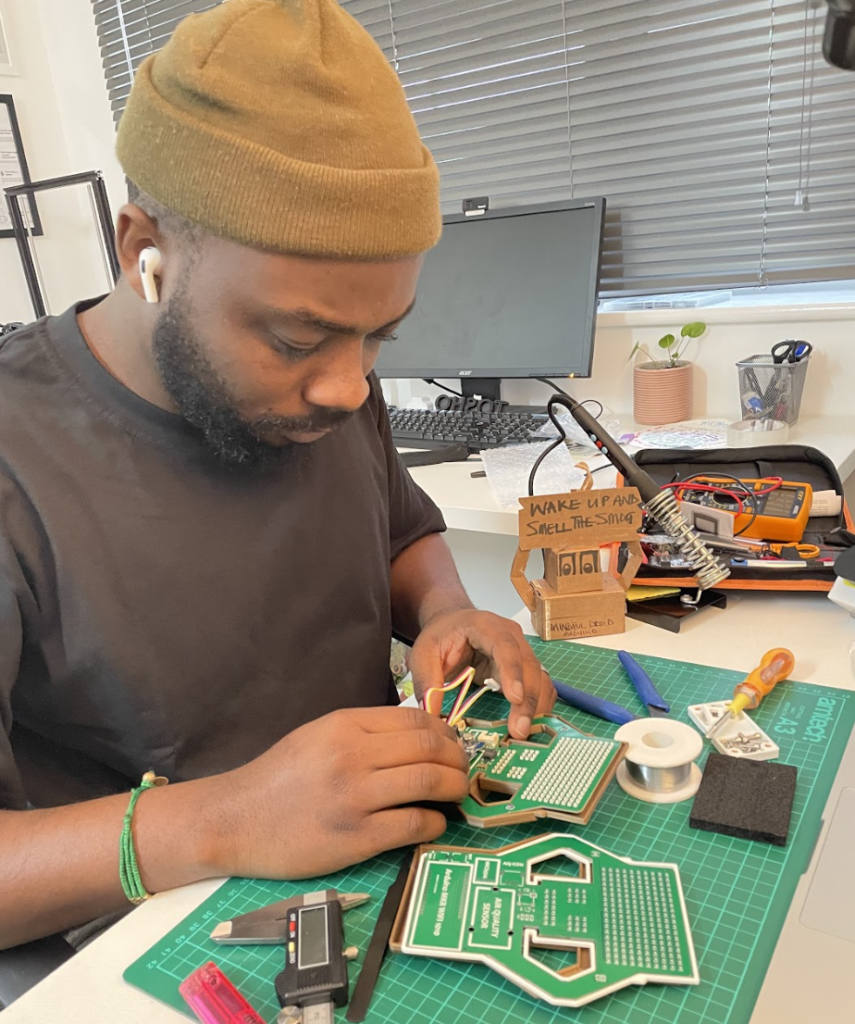
The statistics around air pollution are shocking. 44,000 deaths a year in the UK have air pollution as a contributing factor. Worldwide, that figure rises to seven million. Air pollution leads to children growing up with asthma, reduced brain development, and a whole host of other complaints. We need to make the invisible visible, and to do that, we need an engineer.
HackSpace: Morning Michael. First thing’s first: who are you?
Michael Omotosho: I’m a design engineer by profession. I studied automotive design at university. I’ve always had a mindset for solving problems regardless of how big or small they are. It started with tinkering at home when I was a kid, and breaking things most of the time, and from there it’s just evolved into my passion. To see ideas come to life better than what’s already existing… I don’t want to use the analogy of making the world a better place, but that’s the kind of motto I go with.
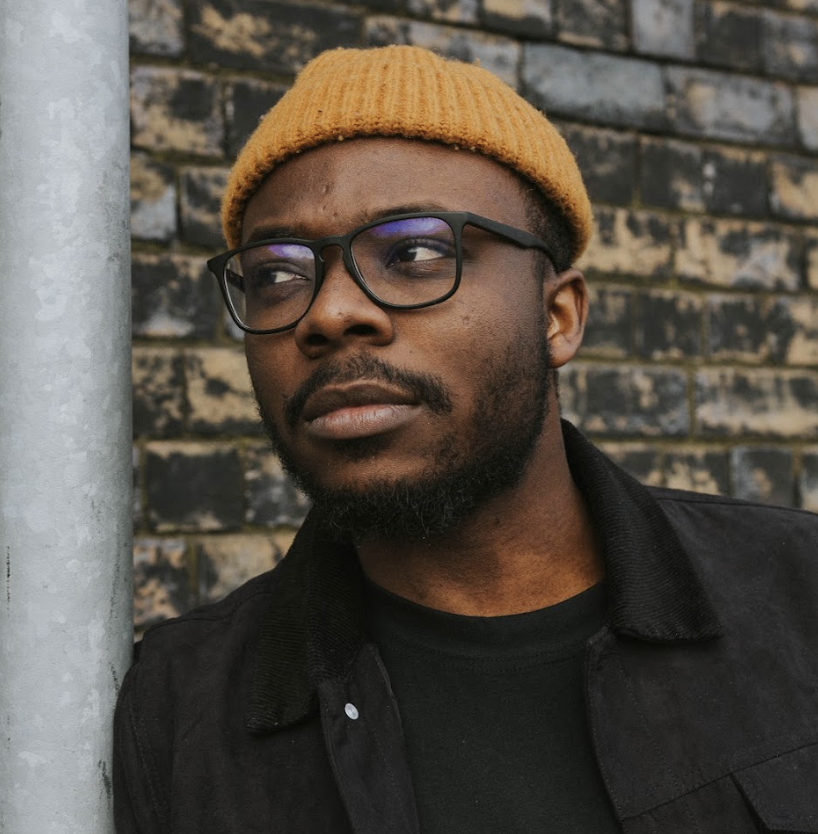
From there, I’ve just spiralled into coming up with various random things that probably don’t even make sense. Think of something better, that was my mindset. From there, I went on to work in engineering and had the chance to start my own company as a design engineer and industrial designer. I used to consult for NGO-related companies looking to enhance local communities that were lacking in some way, like creating solar power hubs for use in communities and local businesses in Tanzania, for example: community-focused, and helping to improve people’s way of life. That’s kind of my passion project. That and questions around disabilities, like how can we make $50 prosthetics with additive manufacturing? Right out of university, those were the projects that I wanted to involve myself in. That’s where my passion grew to helping people and doing something purposeful.
I currently work for Jaguar Land Rover as an innovation and technology lead. And that’s an interesting space to be in as well. In relation to moving from internal combustion engines to electrical vehicles. How do we enhance that? How do we meet our sustainability goals, and so on?
HS: To borrow a phrase, that sounds very much like you’re an activist engineer.
MO: Yeah, pretty much. I am an activist engineer – I’m constantly trying to try to be doing something. And that leads into the Mindful Droid and all the things that I’m looking into with that.
I came across an opportunity thanks to a colleague of mine, Jude Pullen. He pointed me in the direction of an environmental challenge organised by RS Components, after the COP26 conference (the 2021 United Nations Climate Change Conference, which was held that year in Glasgow, Scotland).
I have to be honest, I was quite ignorant and naive about air pollution. I knew it existed, but I didn’t know how bad it was in day-to-day life. And I was introduced to this project with a brief to take the air quality data that we already have and make it more meaningful. And I came across an article about Ella Kissi-Debrah. At that moment, I thought to myself, wow – this goes further than I realise. It takes a huge percentage of lives, and there’s no real awareness or action about that. [Ella was a nine-year-old girl whose death was the first in the UK to be officially attributed to air pollution, after a long fight by her mother, Rosamund Kissi-Debrah, to increase awareness of the health impacts of air pollution and what we can do about it].
I stopped there and thought about the companies that I’ve worked with, and I realised that I have a chronic cough, which is occupational asthma. I realised that I’ve actually been inhaling the fumes from cooking oil, because one of the industries I was able to work in was food manufacturing, and we used to make food machinery. They used to test the machinery, so the cooking oil that came from it used to go up into the air, and I just used to cough a lot.
Once I got into that rabbit hole, I was like – crikey! This thing had a big impact on my health, and I didn’t think anything of it at the time. I left the company, and then my cough reduced. At that moment, I started to wonder what else is out there that’s killing us slowly that we don’t know about.
Taking my kids to school, I realised that there’s something out here during the high traffic times, and I should validate the notion in my head that this is actually an issue. So I went to the school and start asking questions and asking parents, and I started seeing the vehicles idling and traffic jams and so on.
I tried to have conversations with parents, but most of them just didn’t know anything about it.
So I put a survey out to the schools to understand what they knew about air pollution, and the result was quite shocking. No one really cared about it.
I had to find a way to bring about change. How do we get more Greta Thunbergs out there but in a passive way?
How can we make them be passive activists? As a parent, I’m doing my best within citizen science to bring that awareness. Once I finish talking, nothing happens in the morning, but the kids can carry on and push this further than I can.
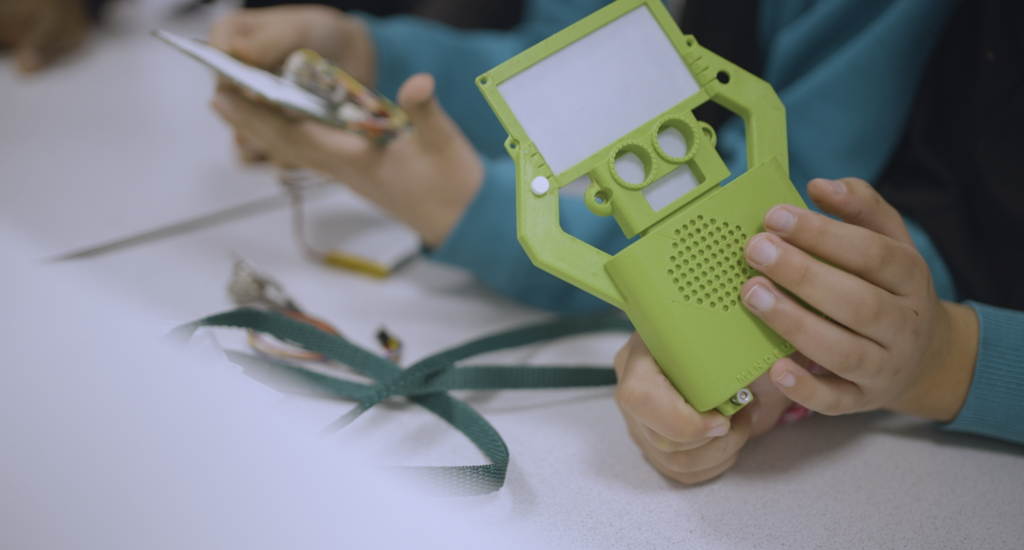
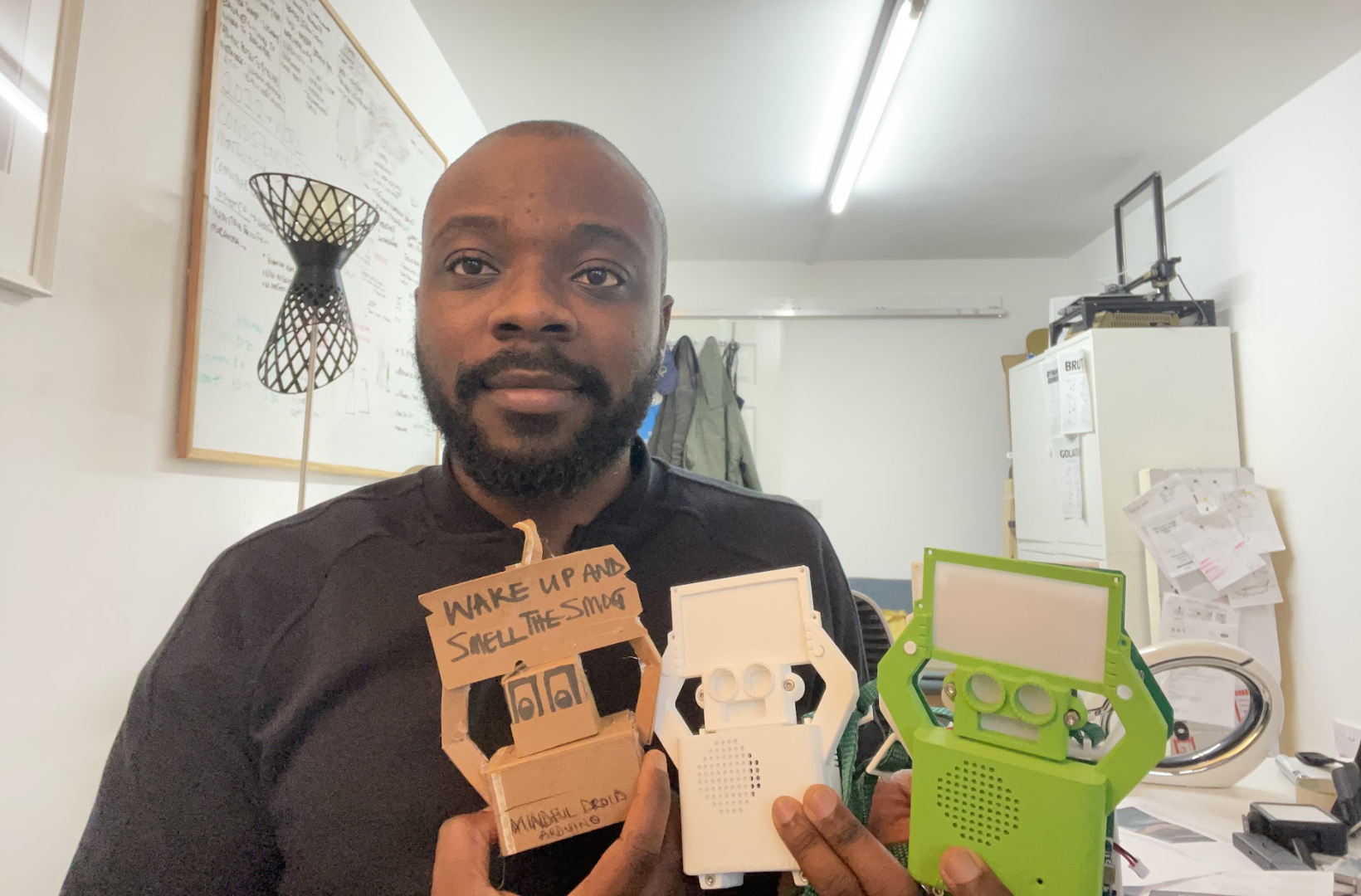
That’s where the idea for the Mindful Droid came about. I wanted to get kids involved in making and building something and actually understanding what the benefits are.
HS: So, what does it do? Are there sensors onboard the Mindful Droid? Or does it pull data from other places?
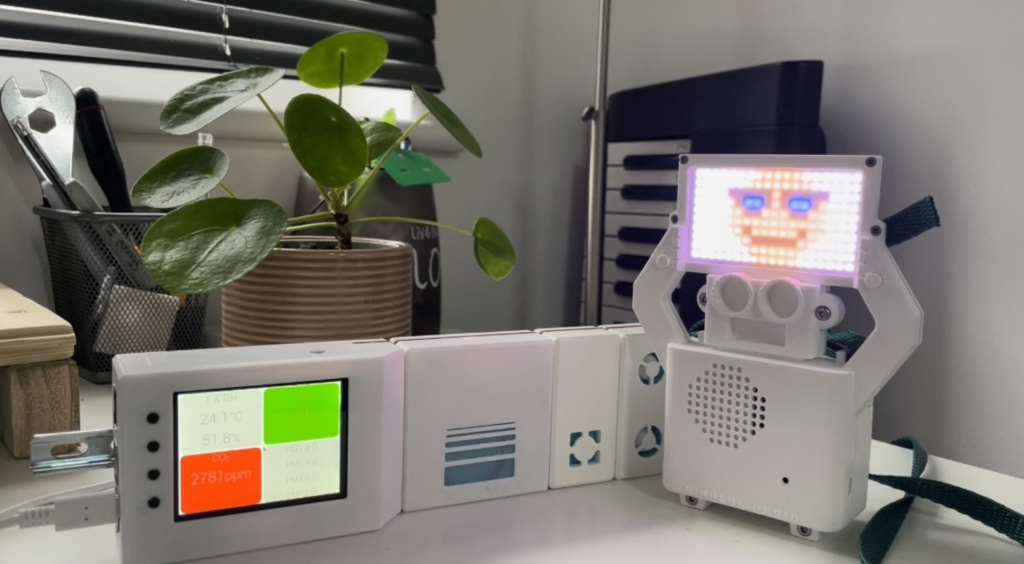
MO: The idea for the Mindful Droid is to be a mobile air quality monitor. But it’s not just that. It also displays readings from existing outdoor air quality monitors.
The company that sponsored me, RS Components, created an outdoor air quality monitor. So the goal was to be able to pick up the API data from its readings and also be able to – let’s say you are within school premises, for example, and you’ve got your Mindful Droid with you, it should be able to get the exact reading of what’s going on around the school.
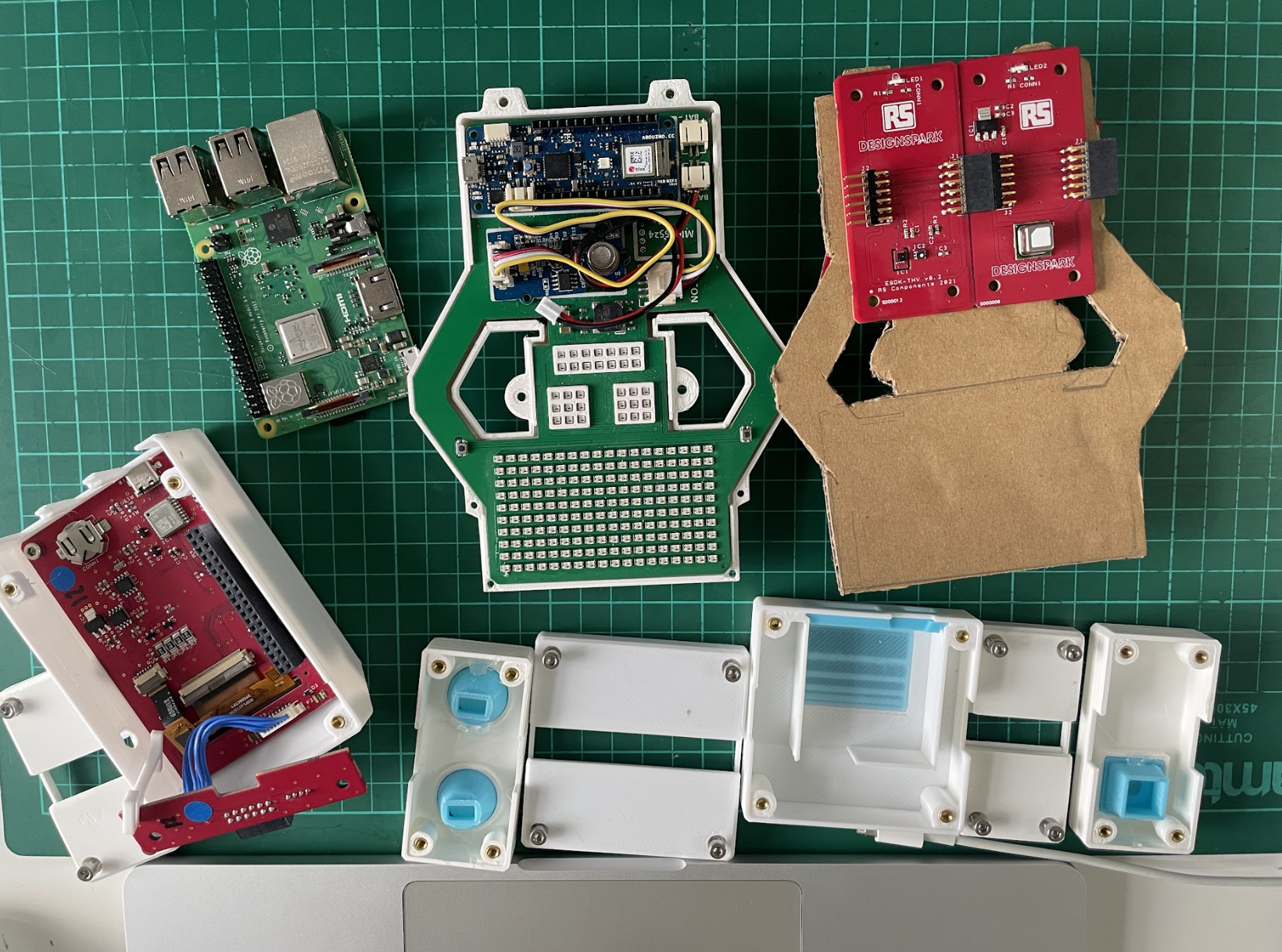
Then if you were to go away from the school, you can tune into the Mindful Droid’s standalone sensors, which are VOC and carbon monoxide sensors.
The aim of this is to collect data. It’s logging data in order to send that data to the local authorities where the action is being taken.
You push it to the people higher up, the policymakers. We can send them a constant stream of emails around the level of pollution around local schools, which probably isn’t very nice for them, but that’s the power of being a passive activist: you’re not screaming in people’s faces, but you’re passively sending emails and getting the information across.
For now, we know that kids are actually learning, they’re bringing awareness and they’re letting people know that air pollution is killing us.
HS: So you’ve managed to get the Mindful Droid into schools?
MO: We did a demo with a school in Bradford, which is still in progress. The plan is to have the Mindful Droid be a free source of data collection for kids to have so that they can go beyond just what I have scoped for in my head. There’s an opportunity there to go into the Internet of Things and hack it – that’s the goal. Obviously it comes with a cost as well. So far, one school has the Mindful Droid and the outdoor monitor, but the hope is for every child to be able to build their own Mindful Droid from their home or from their classroom, and push it beyond its limits.
HS: You designed it with the intention that it would be built by children; did that present you with any challenges?
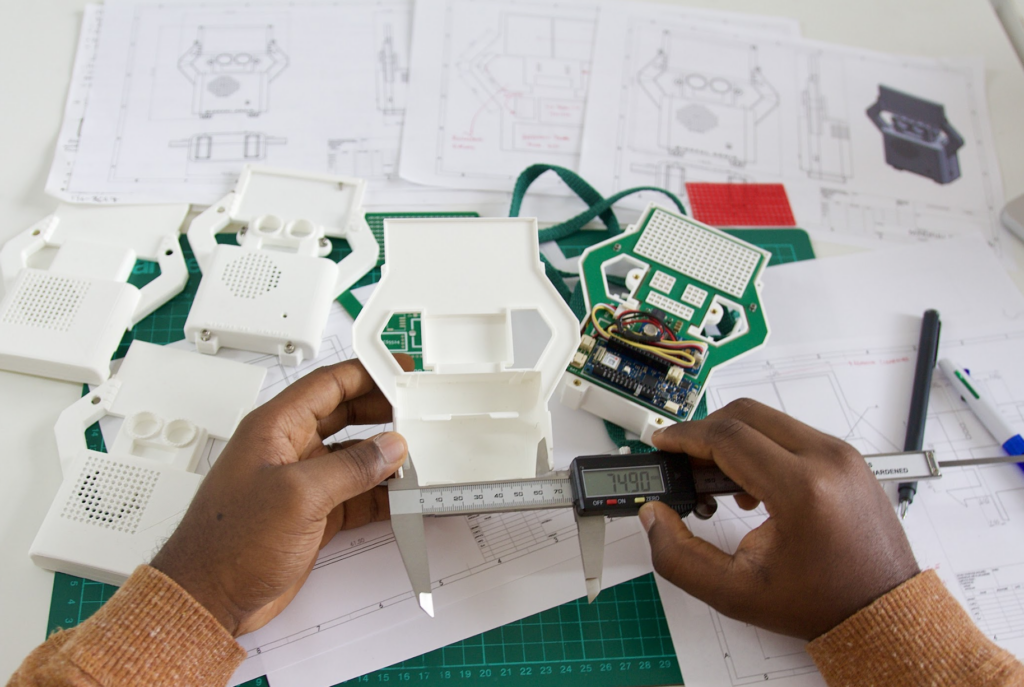
MO: Big time! At the moment, the challenge is with the PCB and the sensors, being able to put everything together. I’m trying to make it as simple to put together as possible, rather than presenting children with the technical challenges of let’s say, soldering. How can we create something that’s as easy as Lego for kids to put together?
So that’s the vision; that’s also been the challenge, to be honest. Because the next stage for the Mindful Droid is the independence of actually building one without going through the extensive work of learning how to solder, and splicing of wires and whatnot.
HS: That’s quite a barrier, isn’t it?
MO: It is. I haven’t soldered since I was in sixth form. Then I picked up a soldering iron when I started working on this and was like: wait a second, it’s not the same as it was before. There are so many things that should have been obvious to me, but I didn’t realise until I went on that journey myself. If it was a challenge for me, then I could imagine what a challenge it would be for children as well. So that’s where it’s like we need to make this simpler.
HS: For anyone who doesn’t know the topography of West Yorkshire, Bradford’s quite hilly. Does that have an effect on pollution levels?
MO: Yes, 100%. Bradford does have high pollutant levels. There’s an organisation called Born in Bradford which monitors children, newly born kids and their growth levels and how pollution is contributing to their health. One of the areas of research is how air pollution is affecting children’s brain development.
Another aspect of air pollution is that it’s usually the more economically deprived areas that are the most polluted.
Bradford’s a great place to be – there are so many things happening there right now, but we have to realise that this is a problem, and this is what they’re doing to solve the problem.
HS: OK, so what would success look like for Mindful Droid?
MO: That’s a very, very good question. And it’s still something I’m figuring out. I think success for me is having children being able to build a Mindful Droid by themselves, and using it so stories like Ella Kissi-Debrah’s doesn’t come back to bite us again. That’s what success looks like to me.
It’s more about – I wouldn’t say acceptance, but the will for people to have the awareness that this is what the dangers are, and this is how to do it. Rather than going out there to spend money to save yourself and keep yourself in better health, why not use these tools in the education system, in institutions, and say this is an opportunity for you to live better.
I want every child to understand the effects of air pollution and knowing that we’re taking preventive measures. Informing people, and having the social responsibility to make things better. And like I said, the Mindful Droid is a template to just start something; if you want to put more activist information on it to make people stop doing what they’re doing, then by all means, hack the life out of it and push it out there. That’s the goal.
HS: There’s a phrase that keeps popping up in your video series about the development of the Mindful Droid: “validating the decision-makers”, or rather, giving them the information to validate their choices. I guess the people in charge of city councils know that pollution is bad. But unless they can see how bad, it’s not a priority.
MO: 100%. It’s making the invisible visible – we can all have debates in high places where they’ll just move on to the next one after the allotted 30 minutes of council time or whatever. But if you constantly have your own children screaming at you saying this is bad, and we have data to show that it’s bad, then in the back of your mind you’re going to feel bad for not taking action.
So validating it from their own source is what matters. Rather than making it look secondary, it’s primary to them. And that’s where the action happens.
I feel like in the space of air pollution, there is no validation. Ella Kissi-Debrah’s mom – she went through that experience. And she’s done a lot in terms of Ella’s Law and so many [other] things that she’s doing to bring awareness. But she had to go through all that validation for herself to be able to bring that law to life.
It’s a similar situation for all the policymakers out there – they need to go for that validation process as well. And if Mindful Droid gets into a household, then it can speak louder than just the words we say, because having a physical device giving you sensor readings is relatable.
HS: Have you spoken to Ella’s mum as part of the Mindful Droid development process?
MO: Yes. And this feels great. She is looking into it further than I am because she’s asking how we can actually eradicate air pollution, not just monitor it. She played a big role persuading the Mayor of London to introduce the Ultra Low Emissions Zone (ULEZ).
She’s been very supportive of Mindful Droid – seeing that people outside of my bubble relate to it means it’s going beyond just my passion project.
HS: I’ve looked at scientific data that’s come out of initiatives such as Bradford Clean Air Day, and I think I saw one statistic saying that 1 in 20 deaths in West Yorkshire is linked to air pollution, which is unbelievable.
MO: Yes. It’svery strange. And sometimes I don’t understand how it’s still so big. When I was in the thick of it before, I was so enraged by what was going on. And I think that’s what got me into the Clean Air Day opportunities, because I was super-frustrated with the fact that, besides the ULEZ in London and a few clean air zones in other cities, in reality, nothing has actually been done to take action.
The frustrating part is that while we’re moving to electric vehicles, it’s really hard to justify why parents should stop driving their internal combustion engine-powered vehicles and switch to EVs, because again, the cost of it is not cheap.
From my point of view, the action is driving further away from school and walking in a few minutes to school, even when I’m late, because I know what I know about the effects of cars around schools. I’m trying to do better, and I think that’s what really matters. Smaller levels, smaller changes, that’s where the differences come in. And I think that’s where it gets better for all of us.
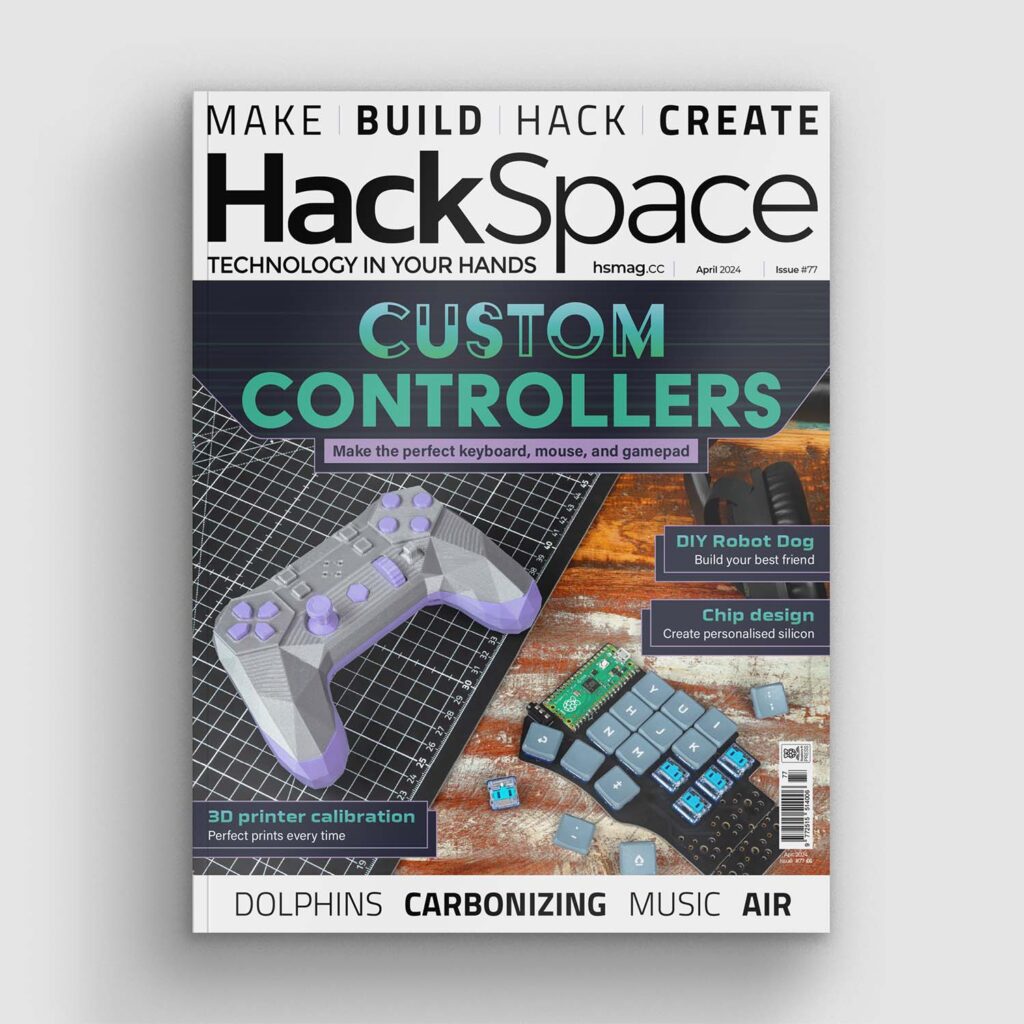
HackSpace magazine issue 77 out NOW!
Each month, HackSpace magazine brings you the best projects, tips, tricks and tutorials from the makersphere. You can get HackSpace from the Raspberry Pi Press online store or your local newsagents.
No comments
Comments are closed