M.I.S.C.H.I.E.F smart home system
Kelvin Carrington Tichana designed a low-cost, AI-powered smart home system for his senior engineering project at Ashesi University in Ghana. One Raspberry Pi 3B+, a Raspberry Pi Camera, and an ESP32 microcontroller later, and Project M.I.S.C.H.I.E.F was born.
It’s not the glossiest of setups, but I do like that the shoebox full of wires and low-cost hardware shows off just how accessible this kind of technology has become. When you see what M.I.S.C.H.I.E.F can do, the aesthetics won’t matter at all – sometimes, functional is all you need.
What is this mischief you speak of?
While I enjoy enigmatic project names, it’s helpful to know that M.I.S.C.H.I.E.F stands for ‘Modelling Intelligent Systems for Computer-Human Interaction Effort Free’. Kelvin deserves an extra few marks from his supervisor for this stellar acronym work.
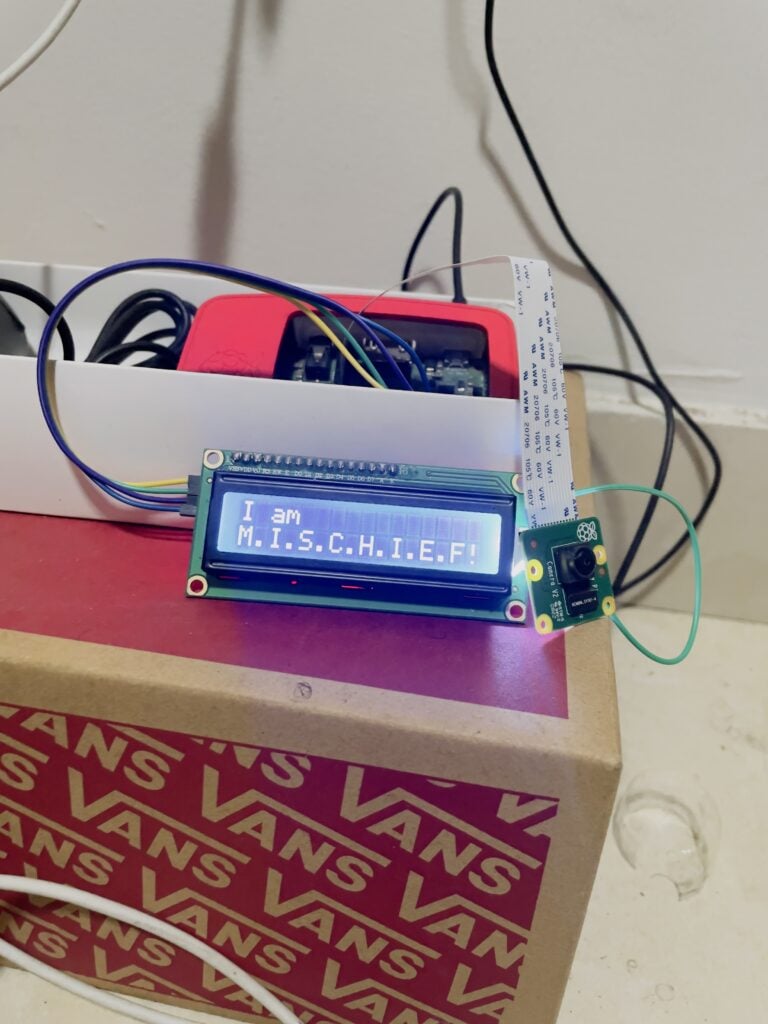
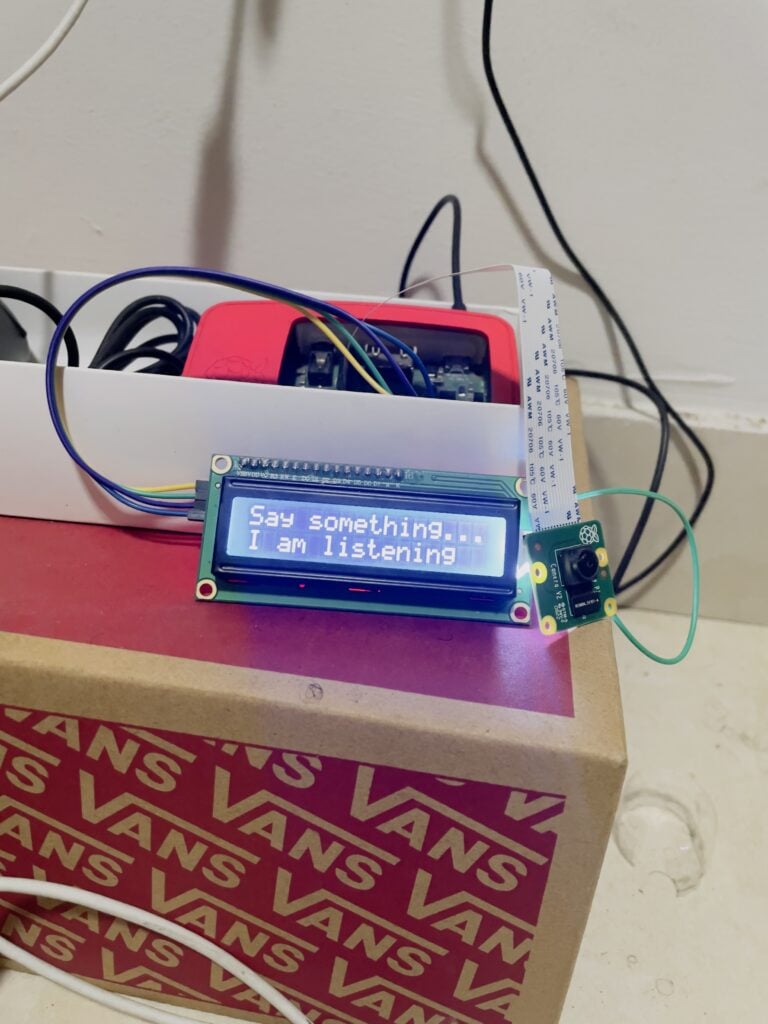
How does it work?
Raspberry Pi runs M.I.S.C.H.I.E.F’s voice assistant function. The voice assistant was built by Kelvin from scratch using a few Python libraries, including Speech Recognition, NLTK, gtts, and pymame. The Speech Recognition library takes care of speech-to-text conversion, leaning on PocketSphinx for offline processing of voice commands. Giving M.I.S.C.H.I.E.F voice assistant capability means it can make calls, send WhatsApp messages and texts, control lights and fans in the home, and access OpenAI to process queries and answer general knowledge questions.
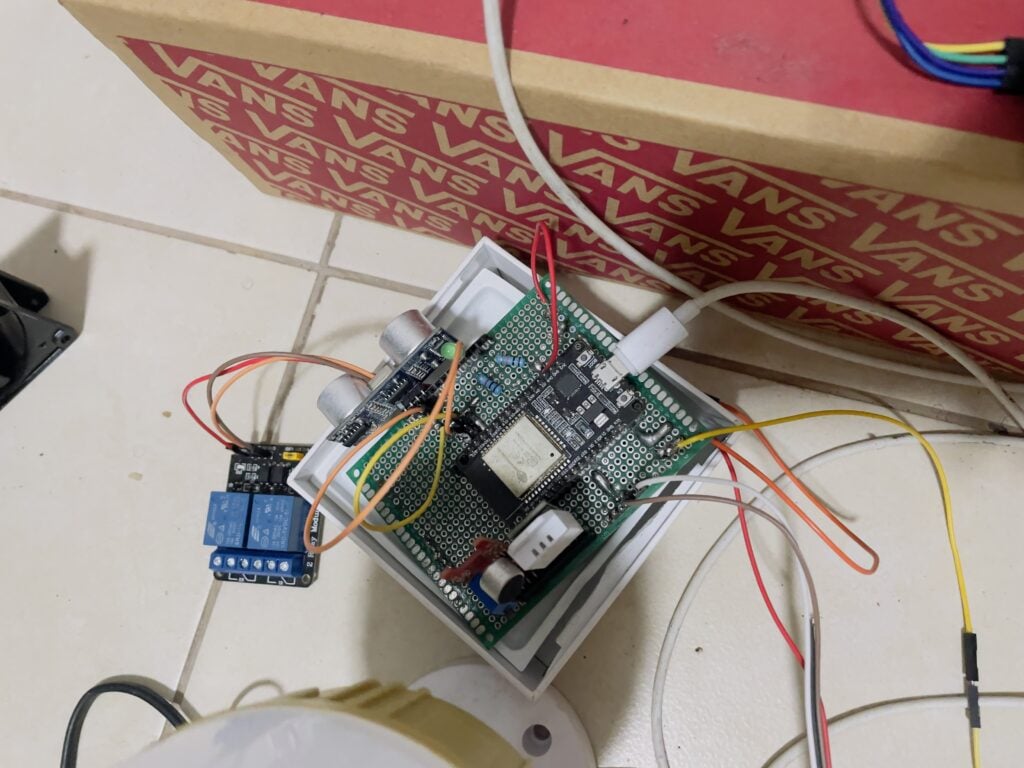
TensorFlow Lite provides M.I.S.C.H.I.E.F with its object detection smarts, which give it facial recognition ability, and also allow it to sound alerts when the home surveillance system picks up activity.
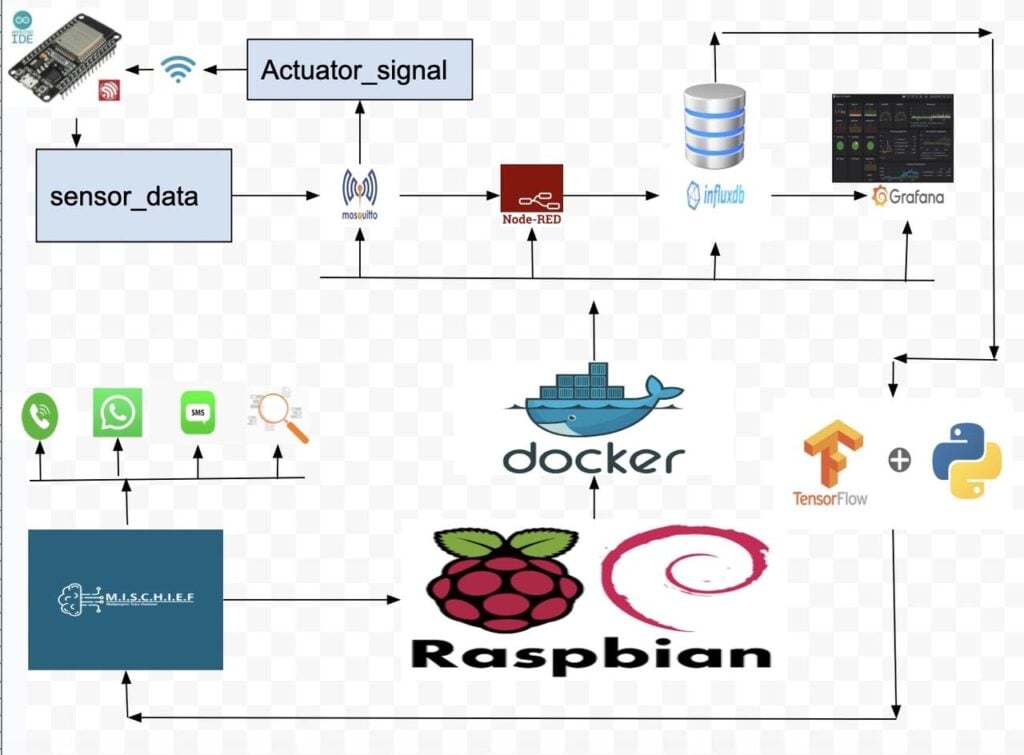
The ESP32 board in this build relays data to the Raspberry Pi over Wi-Fi. The code for the ESP32 was written using the Arduino IDE, but also makes use of FreeRTOS, a real-time operating system that helps with scheduling, concurrency, and prioritisation of tasks. It’s the ESP32 that lets Raspberry Pi facilitate multiple activities at once — like picking up on humidity levels, as well as the temperature, and keeping an eye on the surveillance camera.
Hardware
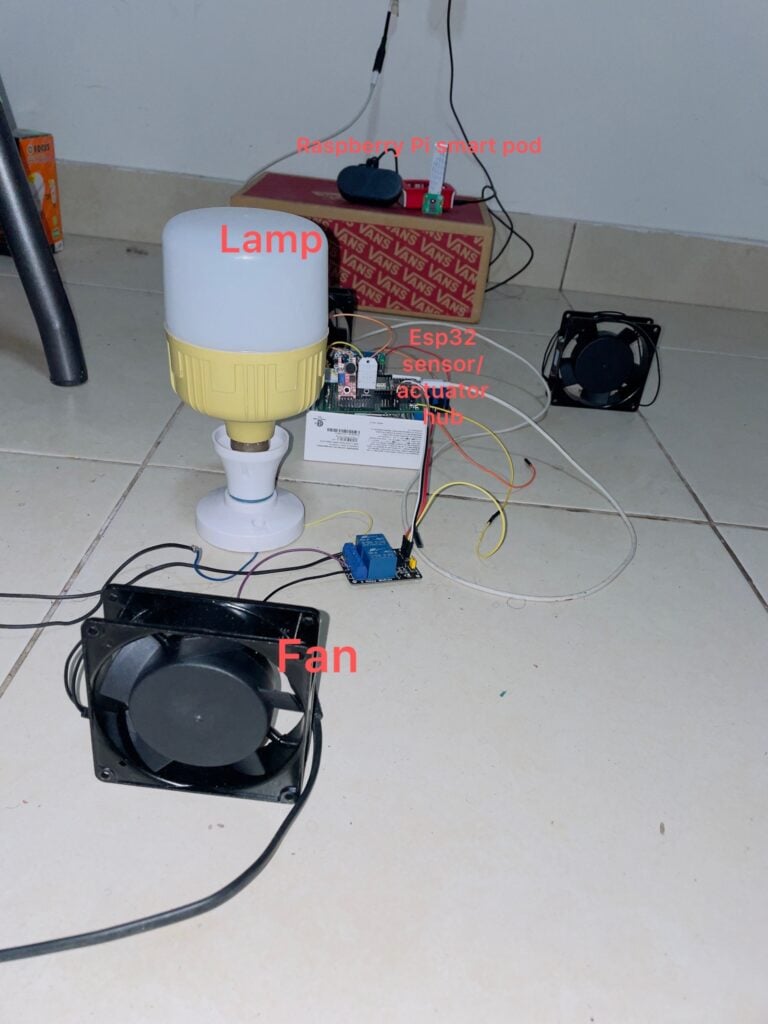
Let this be your cue that, no matter how rough around the edges you think your build is, we’d still love to hear about it! Kudos to Kelvin and his shoebox of secrets. Let us know in the comments what bits of household paraphernalia you’ve buried tech inside. This motor boat made out of contact lens solution bottles was a recent personal fave.



6 comments
Munashe Nyazenga
Great job, Kelvin! Your M.I.S.C.H.I.E.F smart home system is an impressive example of accessible and functional technology. Your creativity and technical skills shine through in this project. Well done!
Kelvin Carrington Tichana
Thank you
Frank
Interesting Project. M.I.S.C.H.I.E.F all the way. Nice one Kelvin🔥🔥
Stuart
Well done Kelvin! This is super inspiring. Your speech recognition is really impressive! Keep going
Gaurav kumar
Nice job man. May you provide tutorial for whole system.
Kelvin Carrington Tichana
I am in the process of recording a series of how I did it, and possiblyy how to improve it.
Comments are closed