DivingBoard: a homemade MIDI controller for synth lovers
Oliver Hagen built the DivingBoard MIDI controller to make it easier to control synthesisers with hectic user interfaces. Powered by Raspberry Pi Zero 2 W, it cuts through the noise of the bajillion knobs, buttons, and faders that can clutter synth keyboards and makes your editing more streamlined.

Keeping the merriment in synth music making
If you’re into synths, you might have experienced the frustration of menu diving to access and tweak the aforementioned bajillion parameters of your instrument. Navigating tediously through multiple layers of menus and submenus on a small screen is time-consuming, confusing, and a vibe killer during what should be a joyous exploration of the last great decade of music to have ever existed. I’m leaving that comment vague so as not to light the pitchforks.
Happily, Oliver’s creation takes much of the menu-diving misery out of editing on any type of synth. You can build your own DivingBoard for around £65. It requires a bit of soldering and gluing, but needs no programming by the end user; the latest version of the DivingBoard software can be downloaded here. The user interface is a simple-to-use 20×4 LCD screen, along with eight potentiometers and four rotary encoders, all powered by a Raspberry Pi Zero 2 W and an Arduino Nano. You can also tweak the layout of the controls to suit your own playing style.
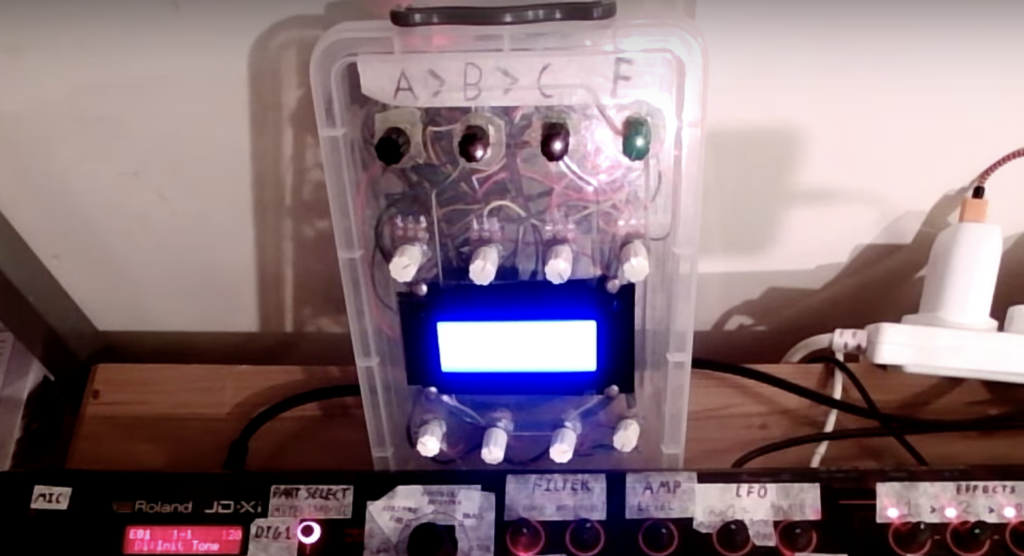
What does it do?
The DivingBoard lets you customise and organise the parameters you use most often into a simpler three-layer-deep folder system. You can scroll through the folders using the encoders and adjust the parameters using the potentiometers. The LCD screen displays clear labels for each knob, along with the location of the current folder. You can also use the “learn” function to program the DivingBoard without connecting it to a computer — the DivingBoard will listen to the MIDI messages sent by the synth when you change a parameter, and then store them for later use.

Oliver has stashed tons more information on how to create your own DivingBoard, plus a download link for the software, on his project page. Have a go at building your own and make sure to come back and tell us how does it feel.


4 comments
Raspberry Pi Staff Liz Upton
Bip-bip boop-boop bi-bip!
Simon Martin
This looks like a nice addition to the Synth6581 I made. I will look to make one Pi run both the Synth and the DivingBoard so the Midi is “internal”. https://www.raspberrypi.com/news/commodore-64-raspberry-pi-4-synth6581/
Raspberry Pi Staff Ashley Whittaker — post author
This remains my single most favourite video our Brian ever made.
Sapphyr
At last, some music with the Pi :)
Comments are closed