Citizen science with Raspberry Pi
Science is all about taking an interest in the world around us and sharing our findings widely. This Maker Monday, we look at ways environmentalists are using Raspberry Pi to understand the world around them…
Environmentalists make good use of Raspberry Pi cameras, sending back photos from remote locations in a bid to manage livestock and crops and ensure food security and sustainability in the face of earthquakes, deforestation, and floods. Meanwhile, there’s also plenty of enjoyment for us hobbyists in monitoring natural phenomena as well as animals and plants, noting what thrives and where. Whether you want to tick off an unusual species or are simply curious about the great wide world, there’s plenty of reason to record and photograph what your Raspberry Pi rig can see. With Raspberry Pi AI Camera smarts or High Quality Camera imaging, you can snap photos and videos and potentially identify what’s in shot too.
And it’s not just about imaging. Raspberry Pi can connect to a wide range of sensors to detect an array of things: temperature, humidity, light, audio, water quality, soil quality; even the presence of humans.
Space projects
Science United
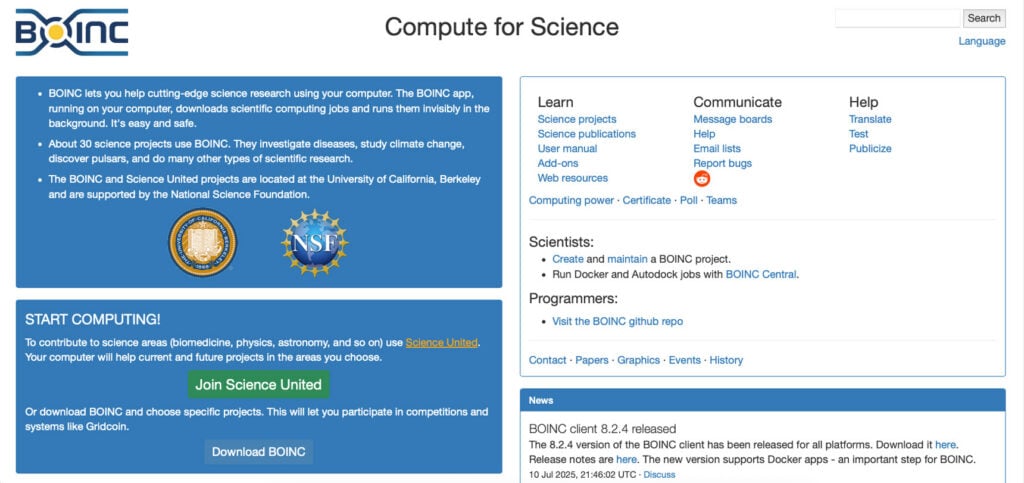
You may have heard of SETI@home — the search for extraterrestrial intelligence project that you could “loan” your computer to in the interests of international research. SETI is no longer actively looking for participants, but there are other projects that could benefit from your Raspberry Pi’s passive computing power. Many of these are also based around University of California, Berkeley’s BOINC software. Choose the area of research you would like to support, from astronomy to AI, chemistry to Earth sciences, and Science United attaches your computer to related projects. Simply create an account, choose your area of interest, and specify whether your computer offers low, standard, or maximum computing power. Rosetta@home is another distributed computing project you can join and run through 64-bit Raspberry Pi OS. It also uses the BOINC app or platform.
NASA Science
NASA’s website has details of nearly 50 citizen science projects that involve counting and identifying specific objects and which can be done from any internet-connected device. Lunar Melt and other space-based projects involve tagging photos of rocks, craters, and boulders on the surface of the Moon and then submitting findings via the project portal. The project looks at the impact of asteroids hitting the Moon’s surface, creating craters and sometimes melting rocks to cause lunar melt flows.
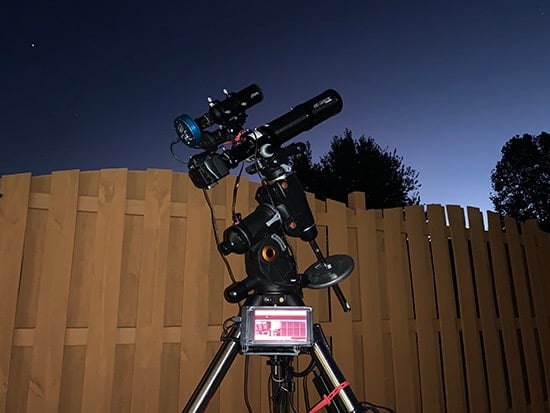
Other NASA Science projects include options to study high-altitude clouds to track how they have changed over time. While this can be done with a smartphone, it’s more fun to use an All Sky Camera and your Raspberry Pi. We’ve featured several All Sky Camera builds over the years, including this autoguider one.
UK Fireball Alliance and Global Meteor Network
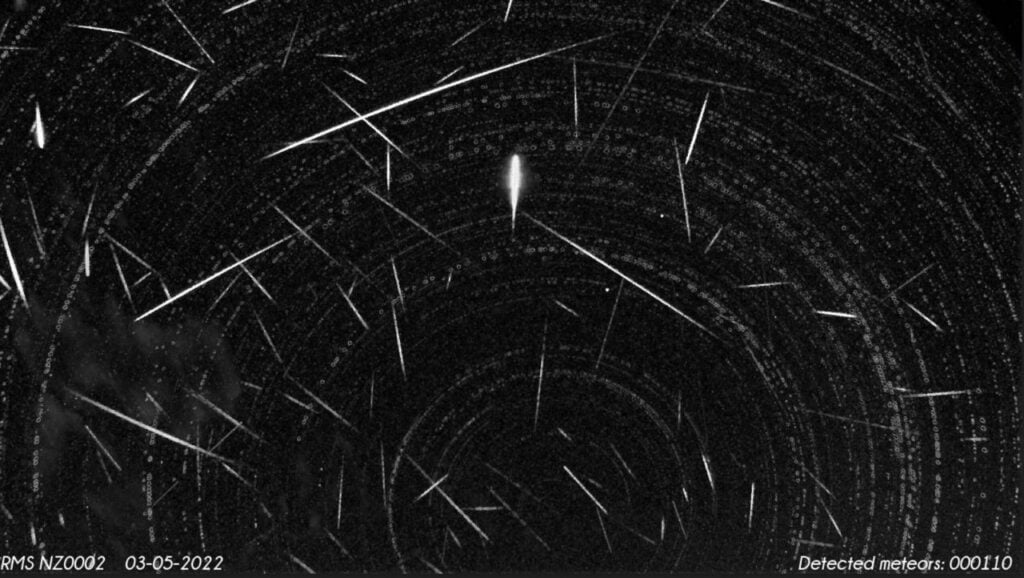
Astrophotography is a perennial favourite Raspberry Pi project and lends itself well to citizen science. Although many thousands of celestial objects are tracked and regularly photographed, meteors and shooting stars are less predictable. We’ve covered projects by both the UK Fireball Alliance and Global Meteor Network, which have locked on to, and traced, meteorites and the places they fell to Earth, including the fairly famous Winchcombe meteorite. The UK Fireball Alliance keeps enthusiasts up to date and explains how to build your own meteor camera. You can also view a world map of meteor sightings. An example from 2024 in New Jersey saw a meteor crash-land in someone’s bedroom. The fragments were able to be collected and studied thanks to contact with the American Meteor Society: amsmeteors.org. Should you happen to see a fireball (a meteor burning up on encountering the Earth’s atmosphere), you can report it.
Radio astronomy
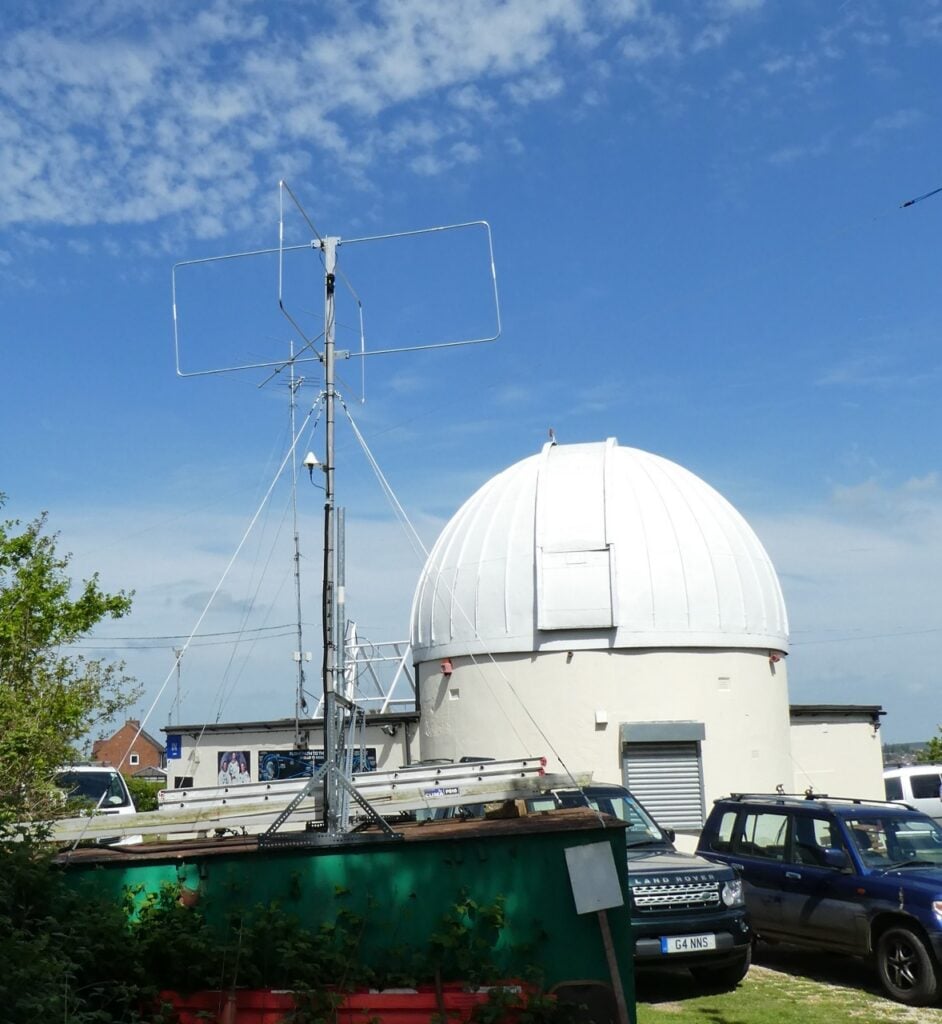
Radio astronomy can be used to spot and track celestial objects and phenomena that might otherwise be invisible or go undetected. If it gives off radio waves, it can be detected using Raspberry Pi (or another approach) and a software-defined radio (SDR). It’s a lot less weather-dependent than other forms of stargazing and noctilucent cloud observing. This is a great option if you don’t want to go to the trouble and expense of an astrophotography setup, but like the idea of seeing — and hearing — meteors via an amateur radio network.
Keep an eye on critters
Pick up a penguin
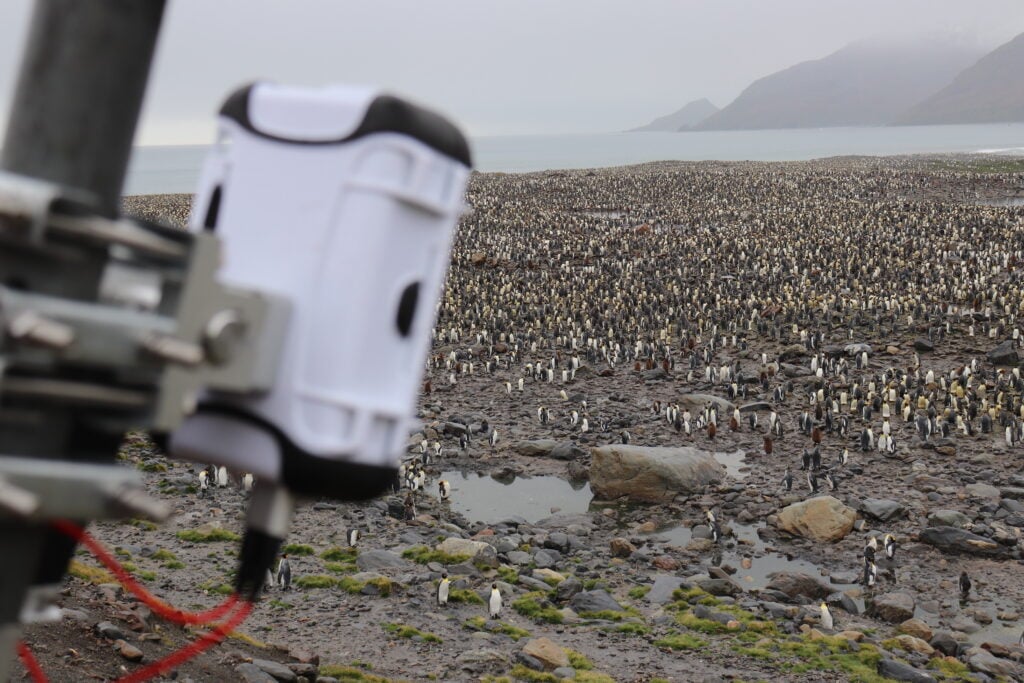
Lots of citizen science involves counting and logging numbers of a specific species, also known as biologging. Zooniverse has been running projects of this sort for more than a decade, most notably PenguinWatch, in which citizen scientists counting penguins from their own computer or Raspberry Pi screens directly helped evidence the number of penguins. The ruggedised cameras were designed by Arribada, an environment technology non-profit that fitted them with Raspberry Pi Zero computers. By recording penguin numbers, Zooniverse’s citizen scientists were able to measure the fishing impact on penguin numbers around the Antarctic’s South Sandwich Islands and South Georgia, persuading the governments of the islands to designate them and the surrounding seas as protected marine sites.
While penguins can still be counted, other current Zooniverse projects you might like to join include marmots and mammals on the Mont Blanc massif. This is a more advanced identification project than the penguins one, since there are a lot of possible creatures to identify and tag. However, there is a detailed identification guide along with tools to enhance and zoom in on the on-screen animals. This helps you narrow down the options and exclude any birds or animals that it can’t be, based on whether the creature in the photo has wings, horns, and so on.
Ornimetrics AI-powered smart bird feeder
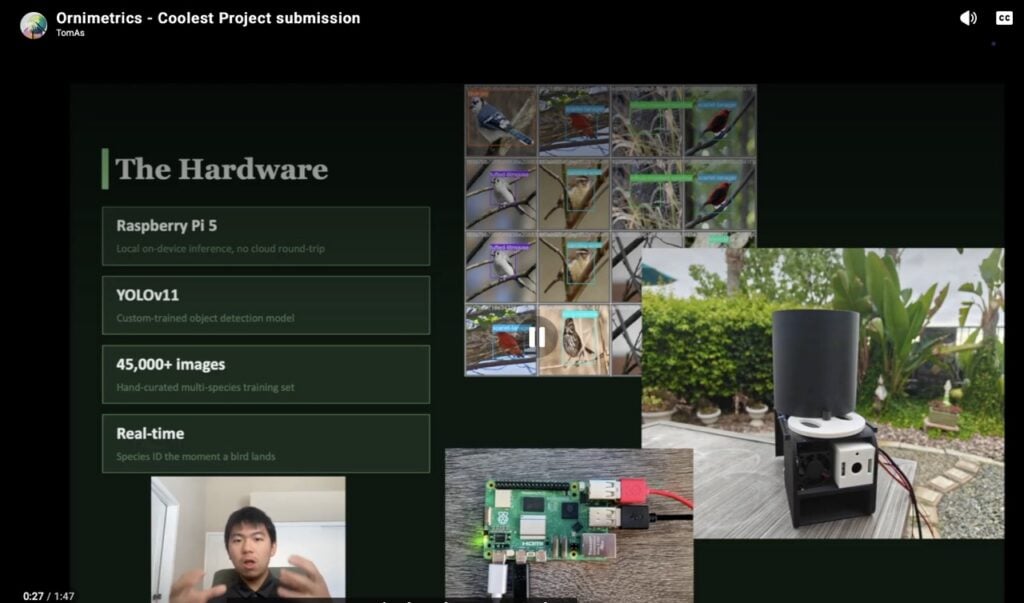
Audubon’s bird surveys encouraging ornithologists to submit sightings are among the earliest examples of the public being asked to contribute to wildlife surveys. The National Audubon Society was set up in 1905 and has been recording birds in the US since the Christmas Bird Count in 1900. These days, you can take part in the annual RSPB Big Bird Watch or simply log sightings using a phone app such as BirdNET. We particularly like the acoustic-based bird identifier and applaud this fun project that seeks to feed only specific bird species, not the greedy ones that ruin bird table feed-times for everyone else.
AI plant disease detection
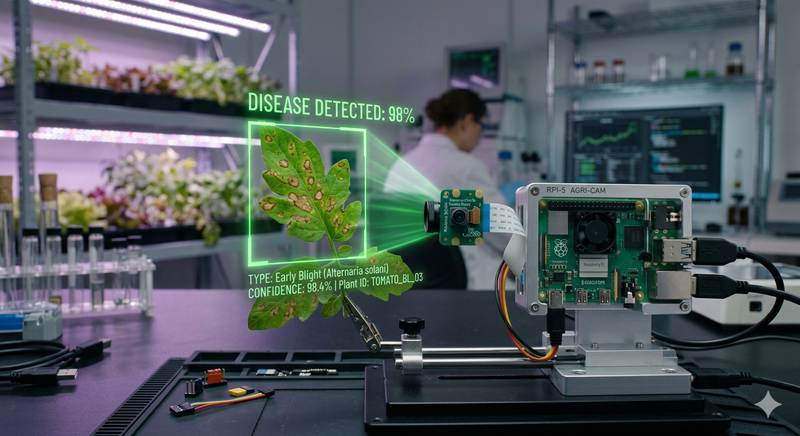
This guide from Let’s Learn IOT uses a Raspberry Pi 4 and a Camera Module to build a real-time plant disease monitor that classifies 38 plant diseases. It uses live camera images and pushes the results to a Node-RED dashboard via MQTT. It makes use of the Kaggle PlantVillage dataset.
Data capture
Pimoroni Enviro+
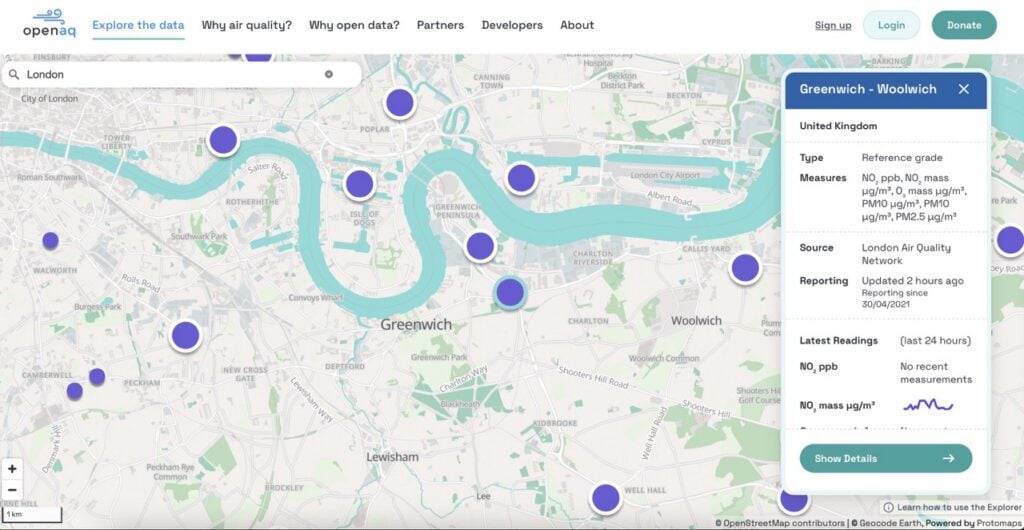
With rising temperatures and climate change come issues over air quality, pollution, and health. Since young people are more susceptible to poor air quality, it’s a sadly apposite idea to get them to measure their immediate environment and then report their findings.
Developed alongside researchers at the University of Sheffield, this excellent HAT enables you to monitor the air quality in your home with sensors for humidity, temperature, and air pressure as well as particulates and pollutants.
By following Pimoroni’s instructions, you can use the Enviro+ to create an outdoor air quality sensor using Raspberry Pi Zero WH or another Raspberry Pi model, and there’s an option to submit data to an online community.
Indoor air quality asthma monitor

Some of the most interesting citizen science projects have been done by younger Raspberry Pi users keen to find out about issues that directly affect them. Teenagers Katerina and Leonides decided to measure the impact of everyday pollutants in their home, which was especially important because Leonides has allergic asthma. A Fermion ENS160 air quality sensor helped them establish a five-point scale of total volatile organic compounds and CO2 levels in their home over a four-month period.
Cleaning products came a close second to perfumes and cosmetic creams as key asthma triggers, but most of the issues were resolved by improved ventilation in the house. Since submitting their experiment to Raspberry Pi via Coolest Projects, they have been working on a bracelet-worn version that can trigger an alert when airborne pollution rises.
Raspberry Shake
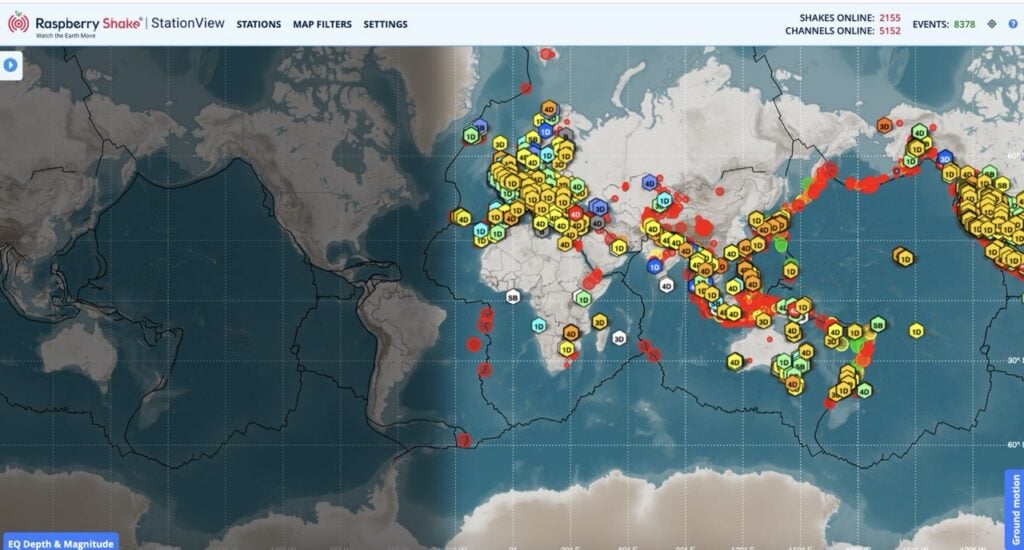
Raspberry Shake offers a fantastic way to learn about seismic events, pretty much as they happen. There is a worldwide network of seismographs tracking volcanic eruptions, explosions, tsunamis, and earthquakes as well as other ground-shaking events like elephant stampedes. These are logged on a publicly accessible map, complete with locations, the size of the seismic event, and which type of Raspberry Shake captured the data about it.
Schools, scientists, and hobbyists can all view and contribute data. Based around Raspberry Pi, the first Shake model was created in Panama to measure tremors on the slopes of Volcán Barú. Subsequent models have added extra features. A Raspberry Pi 3 or 4 computer oversees the geophone, accelerometer, and infrasound sensors to keep track of tremors.
Read more like this in issue 169 of Raspberry Pi Official Magazine
This article appeared in issue 169 of Raspberry Pi Official Magazine, which you can access online for free! You can also subscribe to the print version of our magazine. Not only do we deliver worldwide, but those who sign up to the six- or twelve-month print subscription will receive a FREE Raspberry Pi Pico 2 W!
You can find Raspberry Pi Official Magazine on Facebook, X, Threads, LinkedIn, and Mastodon. You can also contact the team via email: [email protected]

No comments
Jump to the comment form