Bechele 3.0 puppet | #MagPiMonday
Keen to delight family members, maker Rolf Jethon used Raspberry Pi to animate a puppet. This #MagPiMonday, Rosie Hattersley listens in.
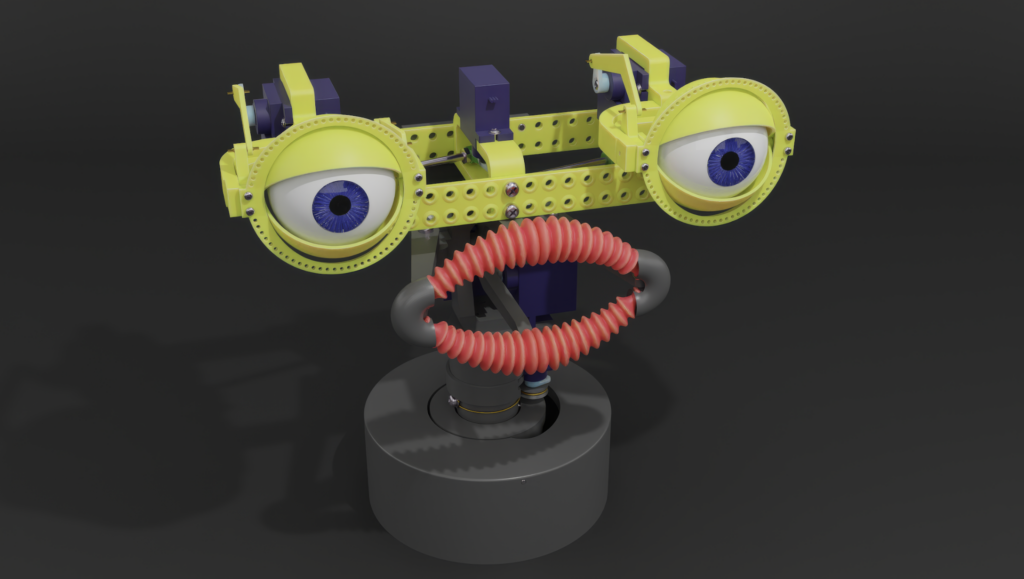
Puppets and play are always popular at children’s parties, and the concept struck maker Rolf Jethon as an equally fun diversion for his father’s birthday celebration. The hand puppet he made for the occasion was a hit, but Rolf found himself tongue-tied, somewhat muting his own experience: “Though I thought I was prepared well, I forgot part of the text, couldn’t master the ventriloquism and the performance stuck several times.” As a technical engineer of many years, Rolf decided to use Raspberry Pi to add motion and speech to the existing doll, named Mr Bechele, and have it make another appearance, this time at his mother’s 80th birthday party. Although he still had performance issues, things went better once Rolf mechanised some of the actions. Over the subsequent years, he has refined both Bechele’s 3D-printed design and the software used to animate him and has just launched Bechele 3.0.
A well-rehearsed speech
A precision mechanics degree followed by a technical career meant Rolf soon encountered and embraced Unix, and latterly Raspberry Pi, both of which came in useful in his free time in which he enjoyed both hardware and software design challenges. “I felt familiar with Raspberry Pi from the beginning: it came with all the well-known tools of Linux, but also provided a cheap, space- and resource- demand reduced way of realising projects.”
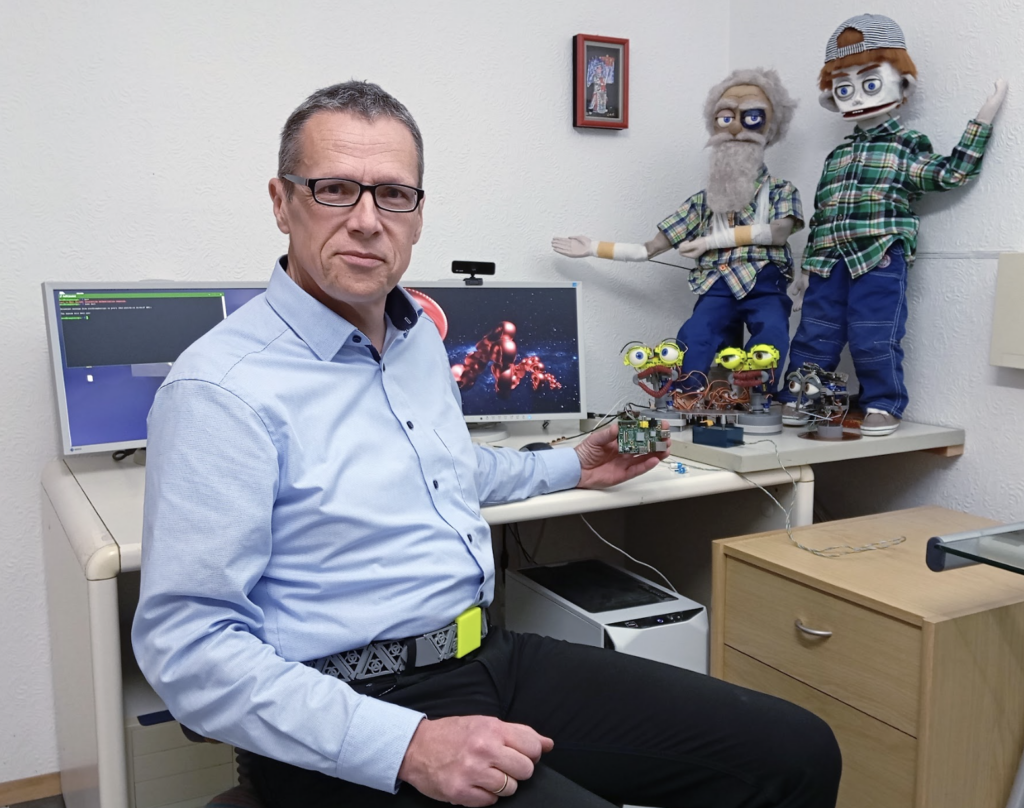
Rolf particularly likes using Raspberry Pi headless and getting it to run things as a ‘sophisticated worker’ in the background. Using a Raspberry Pi-based setup to turn his hand puppet into a ventriloquist’s dummy seemed a natural extension of this idea. The audio outputs, GPIO connections and the conveniently compact size that meant Raspberry Pi could fit inside the puppet’s head were all compelling. “The idea was to build a puppet that talks to me and does the face movement on its own. The whole thing should work mainly fully automated [with the] eye, mouth and face movements recorded before, and following a prepared conversation. My task was finally just to ask the puppet the right questions.”
Resourceful approach
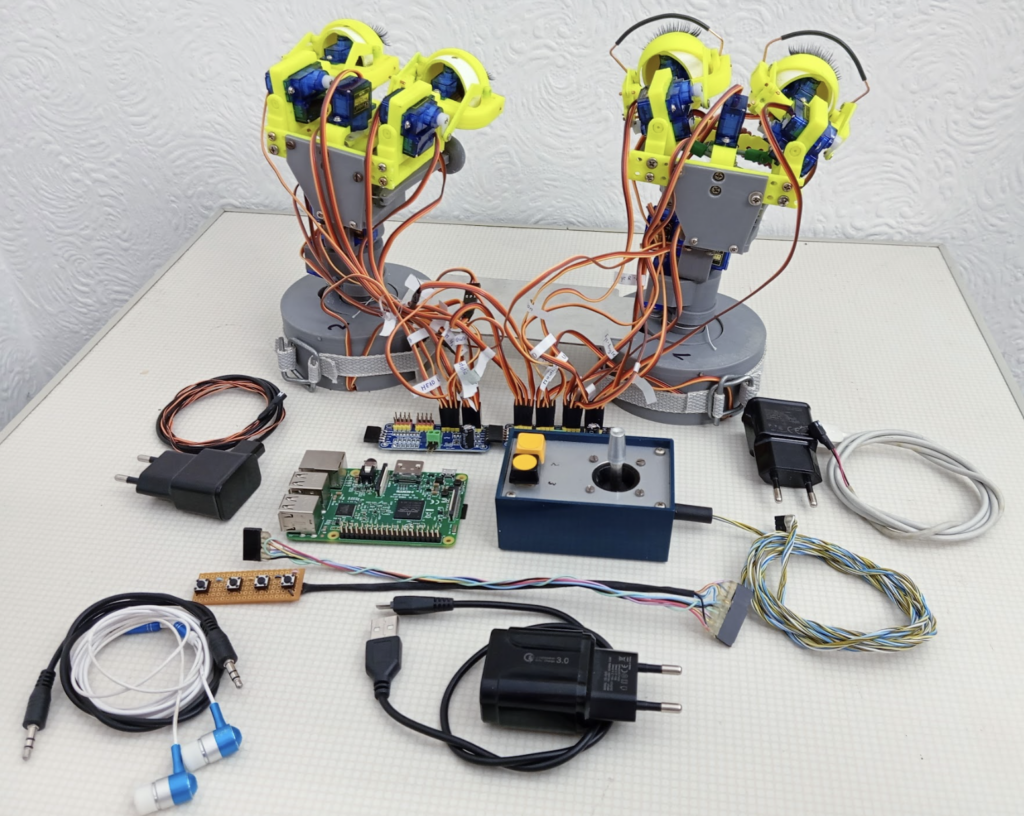
Rolf designed and made any hardware for the Bechele puppets that he couldn’t readily source. The eyes are balls from roll-on deodorant sticks with eyelids and sockets, and the control mechanisms are designed in Rhino CAD and then 3D printed. These can be downloaded from Thingiverse.
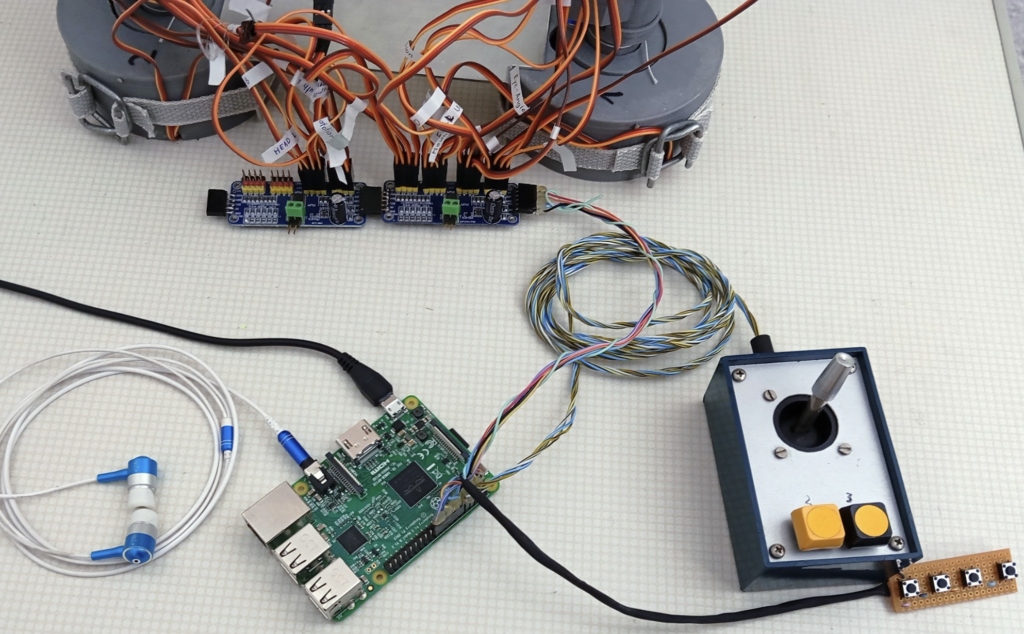
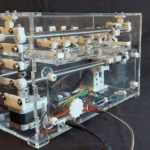
However, it was servos that gave Rolf the biggest headache: Bechele uses 24 SG90 servos, so there were challenges to controlling them all, which Rolf partially solved by using PCA9685 PWM circuit boards he’d used successfully in Arduino projects. Resource overheads meant it was very slow driving these using the existing Perl script and the Raspberry Pi i2C connection, but Rolf overcame this by writing his own Perl driver. His code meant the Raspberry Pi could theoretically control up to 64 servos at once.
Getting the most from his chosen hardware involved careful and time-consuming calibration of the joystick and recording the movement parameters for each of the servos, but having optimised them, Rolf was then able to swap out any servos as needed easily. He explains that the Bechele software “is fully written in Perl and can be used headless. It loads quickly and has a graphical interface for the teaching process”. The number of devices and interfaces involved make installation a challenge, Rolf warns, but he’s created a SD card image that anyone can download.
The MagPi #141 out NOW!
You can grab the brand-new issue right now from Tesco, Sainsbury’s, Asda, WHSmith, and other newsagents, including the Raspberry Pi Stores in Cambridge. It’s also available at our online store which ships around the world. You can also get it via our app on Android or iOS.
You can also subscribe to the print version of The MagPi. Not only do we deliver it globally, but people who sign up to the six- or twelve-month print subscription get a FREE Raspberry Pi Pico W!


No comments
Comments are closed