Supersense SenS2 dementia aid
Benignly tracking someone’s activity levels using radar and a Raspberry Pi could give families peace of mind. This #MakerMonday, we’re sharing a project from Raspberry Pi Official Magazine with heart: the Supersense SenS2 dementia aid.
Many readers will recognise the dilemma of an ageing parent or family member who is determined to stay in their own home, maintain their independence, and not be a burden to others. Cost, convenience, and quality of life for them and those providing care is a difficult balance all round. Cambridge startup Supersense’s Matt Ash and James Brown have direct experience with this precise scenario and used their knowledge to create a Raspberry Pi–controlled hub to support the families of those living with dementia.
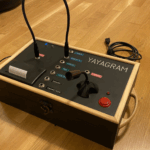
SenS2 uses radar to check unobtrusively for routine activity. It features several different sensors and uses machine learning to plot the person’s usual routines and flag up deviations that may signal something’s wrong. Crucially, it also sends daily messages to confirm that all seems well, so contact from the service becomes second nature.

Sensitive subject
Medical experts and families recognise that patients with dementia should ideally continue to live in their own homes and be in familiar environments for as long as possible. Three quarters of GPs report that those who do tend to lead longer, more enriched lives, prompting calls for technology to identify issues that might crop up.
The Supersense team’s own experiences showed that family members living some distance away often understand the problems their loved ones face, but need to be forewarned of emerging issues. “With dementia, it’s difficult for people to explain the problems they are having day to day, because they either forget or they just can’t find the words,” suggests Matt, recalling his and his siblings’ experience of caring for their mum.

“It wasn’t quite clear what was wrong if she was sounding anxious, because she just couldn’t explain herself.” Visiting could often involve a kind of detective work to discern the underlying problem, since their mother could not articulate what was wrong. Supersense set about using technology to help families in that situation, “giving family carers a bit more information about how their loved ones are doing when they can’t be there, but also guidance on how their loved one is progressing in terms of their symptoms and what they can do about it.”
Matt observes that “people with dementia struggle with wearable technology”, and with adapting to new technology. This Raspberry Pi 4–based radar hub can recognise movement through two or three walls of a home and monitors temperature levels to ascertain whether the heating has come on. “It just sits in the living room and quietly collects information about their loved ones and their pattern of life. Are they up and about in the morning, have they had a bad night’s sleep?”
Less intrusion
Using radar is considered to be less intrusive than having cameras or motion sensors placed strategically around the home. “The person moving just looks like a block moving around,” says Matt. “You can’t see what they’re wearing or what they’re watching on TV. It really respects the privacy of the individual.” SenS2 does not directly act as a fall detection device, but it will send out a WhatsApp to the family if movement is not detected for a while or is out of character.

James says feedback from families affected by dementia has shaped both what the system does and how it works, “from avoiding the need for wearables or cameras to testing ideas quickly in real homes”. Building SenS2 around Raspberry Pi 4 has been “a big help in making that possible, [letting] us move fast, learn from real situations, and build something that can flex as we go”, and that provides “simple, helpful updates for families”.
Reassuring presence
Supersense builds a model of the individual’s pattern of life and how it’s changing over time. For those who like graphs and data, there’s a dashboard showing longer-term trends that reveal changing daily patterns such as spending less time in the kitchen or sleeping more this month than last. Increased restlessness at night could prompt the family to take the individual out more during the day to help regulate diurnal patterns.

The simplicity of using a family and carer WhatsApp chat for updates, rather than yet another app, has proven popular with early testers who were given demos in carer cafes. “You don’t need the latest smartphone. You don’t need to download anything. You can just use WhatsApp and use natural language.” Most people just want a thumbs-up emoji to say everything’s normal.
Quick FACTS
- WhatsApp messages and emails provide daily updates — most reassure family members that the dementia patient is up and about as usual
- Trends over time identify longer sleep patterns or reduced activity (changing patterns may suggest the disease is progressing or more help is needed)
- Supersense intends to add extra sensors based on trial feedback
Raspberry Pi Official Magazine #157 out NOW!
You can grab the latest issue right now from Tesco, Sainsbury’s, Asda, WHSmith, and other newsagents, including the Raspberry Pi Store in Cambridge. It’s also available from our online store, which ships around the world. And you can get a digital version via our app on Android or iOS.

You can also subscribe to the print version of our magazine. Not only do we deliver worldwide, but people who sign up to the six- or twelve-month print subscription get a FREE Raspberry Pi Pico 2 W!



4 comments
Leon Matthews
What a lovely, thoughtful project. I’m sure that many of us that grew up in the 8-bit micro world now have parents that are starting to require a little extra attention and care, and this looks to be a nice complement to other approaches. I look forward to reading more about it.
StevenP
Really well thought out project. Love the use of WhatsApp for receiving the messages to simplify usage. We’ve a Mum with dementia but living very happily alone and I can relate to all the problems described. She also can’t explain any problems by phone and also has no idea what her neck pendant is there for. However, we’ve now moved on from the target group of this project, to now visiting daily and having fitted cameras in the kitchen, living room and hallway, which she has not noticed at all fortunately!
Jaime
Me parece muy interesante estos proyectos con la Raspberry para controlar los casos de demencia en casa. Manejo una para mis prácticas, me gustaría saber un poco más del proyecto, para realizarlo en casa. Muchos abrazos y felicidades
KENNETH SMITH
I think this is a fantastic project and perhaps the beginning of a total system to aid, not just dementia patients but other adults living at home where a level of assistance is required.
My aging father lived with us for a while and our greatest concern, besides him falling and injuring himself, was leaving the stove on. So a heat sensor for the kitchen and a “shout out” mechanism for contacting a care giver in emergency seem to be useful additions to this fantastic device.
Comments are closed