Mt32-pi Atari ST | The MagPi #141
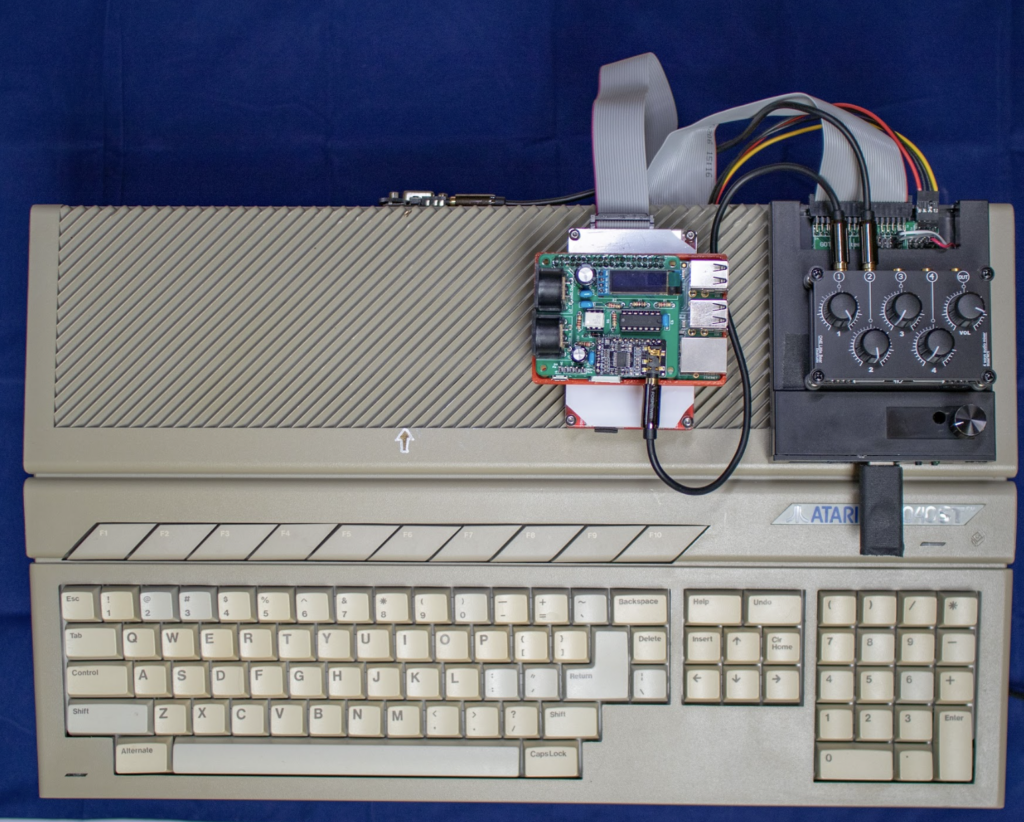
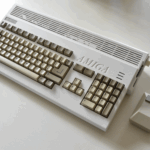
Alongside his day job as The MagPi and Hackspace magazines’ publisher, Brian Jepson likes to track down and restore old computers. As a volunteer at Rhode Island’s Computer Museum, he regularly rescues old computers “from 8-bit on up”. A favourite is the Atari ST line of 16/32-bit computers which launched in 1985, featured Motorola’s 68000 CPU range and, “uniquely, could be used with electronic synthesisers as well as in home computers”. Brian’s mt32pi synth project shows just how well the 40-year-old hardware works with a thoroughly modern Raspberry Pi.
Musical inspiration
Brian used to enjoy playing music (and regrets not having kept it up) and was keen to add a vintage synthesiser to his collection. He observes that the Atari ST’s MIDI ports were notable because certain videogames from the era were capable of producing high-quality background music with a MIDI synthesiser. “There were many music sequencers you could use to compose music with a MIDI keyboard and play it on a MIDI synthesiser. However, the Atari ST was unique in that it had built-in MIDI ports for connecting to electronic musical instruments as well as synthesisers.” There are also several MIDI-capable keyboards that were designed as videogame controllers that, for some reason, include the five-pin MIDI DIN cable, Brian continues. “For example, the Rock Band 3 Wireless Keyboard for Nintendo Wii is a relatively affordable keyboard that works great with this setup! It’s unusual to see the five-pin connector because a lot of modern MIDI stuff uses USB now.”

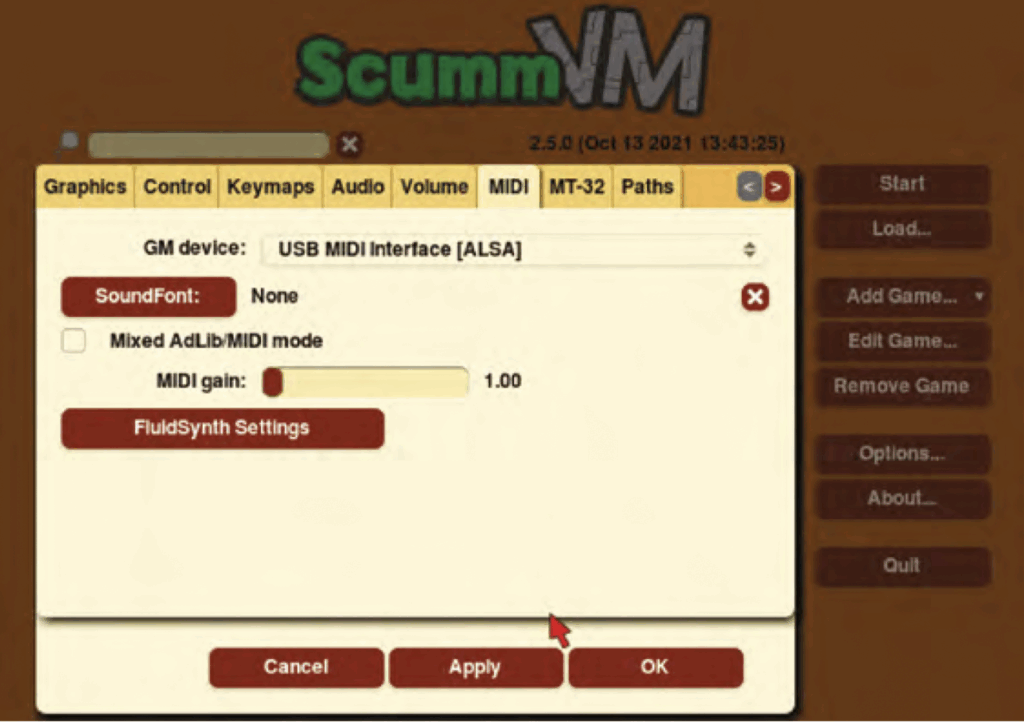
For his own needs, Brian “looked into buying a used Roland MT32 synthesiser, which was roughly contemporary with the Atari ST, but decided the versatility of a Raspberry Pi-based solution was preferable”. For his Atari ST revival, Brian used the ClumsyMIDI board with mt32-pi software – an MT-32 emulator that works with Raspberry Pi 3, 4 and Zero. Developer Dale’s wiki explains the project in detail: it was ready to go and worked well with Brian’s Raspberry Pi 3Bs and “a couple of Ataris I’ve outfitted with mt32-pi synthesisers”.
Fast and affordable
Dale Whinham’s open source mt32-pi software is a bare-metal MIDI synthesiser that operates as a kernel. It boots directly into the mt32-pi software, starts up in seconds, doesn’t mind being unplugged without the usual shutdown process, is extremely fast, and is far more versatile than any alternative Brian could find.

Next, Brian needed to decide which board would work best for the Atari ST rebuild. He chose ClumsyMidi because it is based entirely on through-hole parts which he was able to order along with the Clumsy circuit boards.
Aside from the Atari ST, Brian estimates the project cost roughly $75 and came together very easily. There was one aspect that left him a little dissatisfied though. “If you’re planning to mess around with making music on your Atari, you will have the most fun if you can compose using a real musical instrument rather than just using the software. So you’ll want to build some practice and learning into your time budget. I say this as someone who has neglected that part and regrets it.”
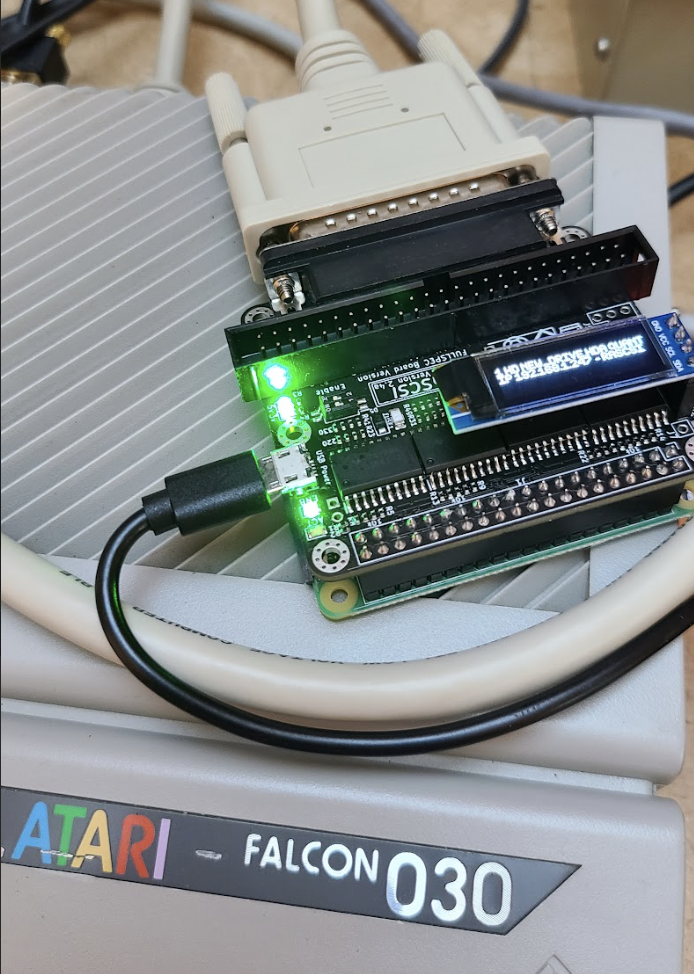
Brian’s Atari ST is used for both retro games and MIDI demos at the Rhode Island Computer Museum, where visitors can connect it to a keyboard and try out different instruments playing the freeware Sweet Sixteen sequencer. “It’s amazing how much fun someone can have switching instruments and banging on keys.”
The MagPi #141 out NOW!
You can grab the brand-new issue right now from Tesco, Sainsbury’s, Asda, WHSmith, and other newsagents, including the Raspberry Pi Stores in Cambridge. It’s also available at our online store which ships around the world. You can also get it via our app on Android or iOS.
You can also subscribe to the print version of The MagPi. Not only do we deliver it globally, but people who sign up to the six- or twelve-month print subscription get a FREE Raspberry Pi Pico W!

1 comment
Isuret Polos
I remember my younger brother using the midi interface and cubase with Atari. I believe it was the Atari 1040ST. Later the Falcon was released and we could only dream to play with that too. Today the Raspberry is my new toy.
Comments are closed