Magical voxel display captures Doom characters in a crystal ball
Maker James Brown (no, not that James Brown) doesn’t want to see the future, but he is partial to a crystal ball. Rather than showing you the face of your true love or predicting your elaborate demise, this one displays Doom characters.
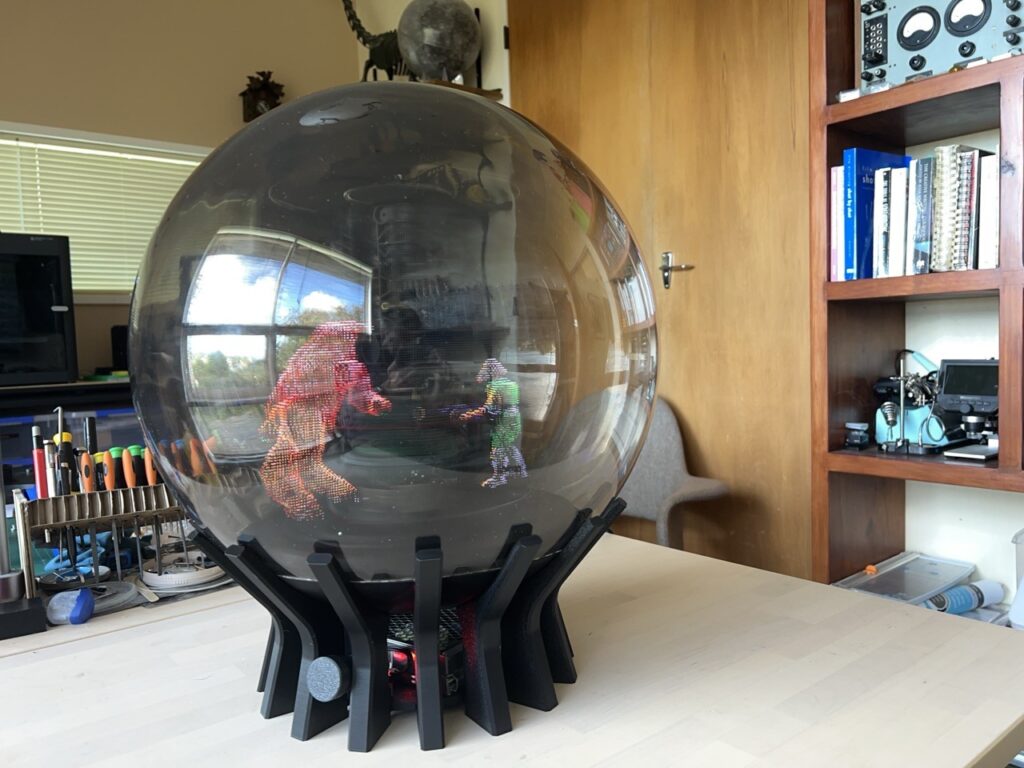
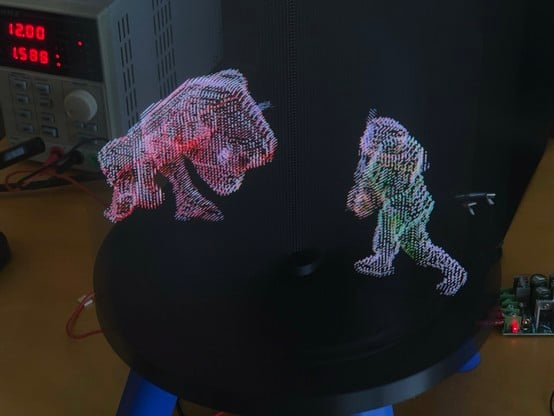
The models shown inside James’ crystal ball are from Cheello’s Voxel Doom. Voxel Doom is a graphics mod that replaces all monsters, weapons, and props from the game with 3D voxel models.
A long time coming
There’s an epic Mastodon thread going back to October 2023, when James first started playing around with making these displays. He started off with a cylindrical design before moving on to create the magical crystal ball-style one last month. Posts about the original cylindrical model were accompanied by more technical detail, but both versions are powered by Raspberry Pi, and James mentions Raspberry Pi 4 in his BOM. Photos of the inner workings of both displays show boards that look a lot like a Pi 4, which is evidence enough for us.

What’s it made from?
While James chose to use Raspberry Pi 4 for the brains of his builds, he explained that you just need something with Wi-Fi and enough RAM for the voxel buffer. The voxel images are displayed on vertically arranged 128×64 LED panels with the help of a HUB75 interface very similar to this one, though James chose to make his own with JLCPCB because he wanted a different layout. The Raspberry Pi wears the board like a HAT and, from the looks of the images below, he used different interface designs for each build.
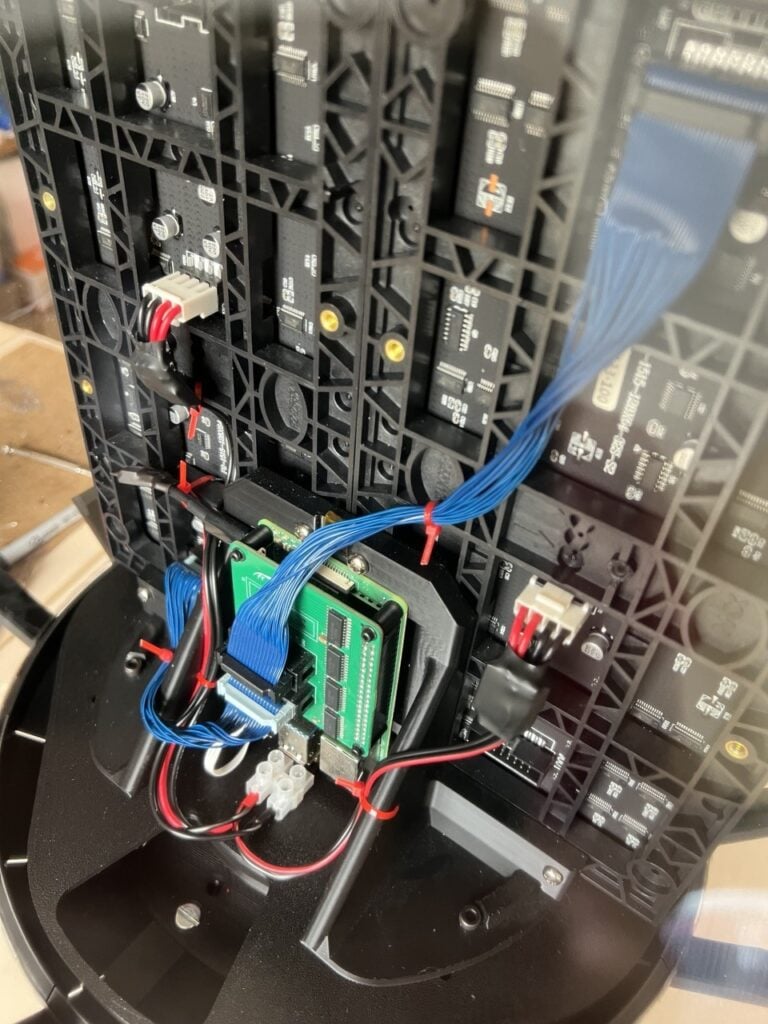
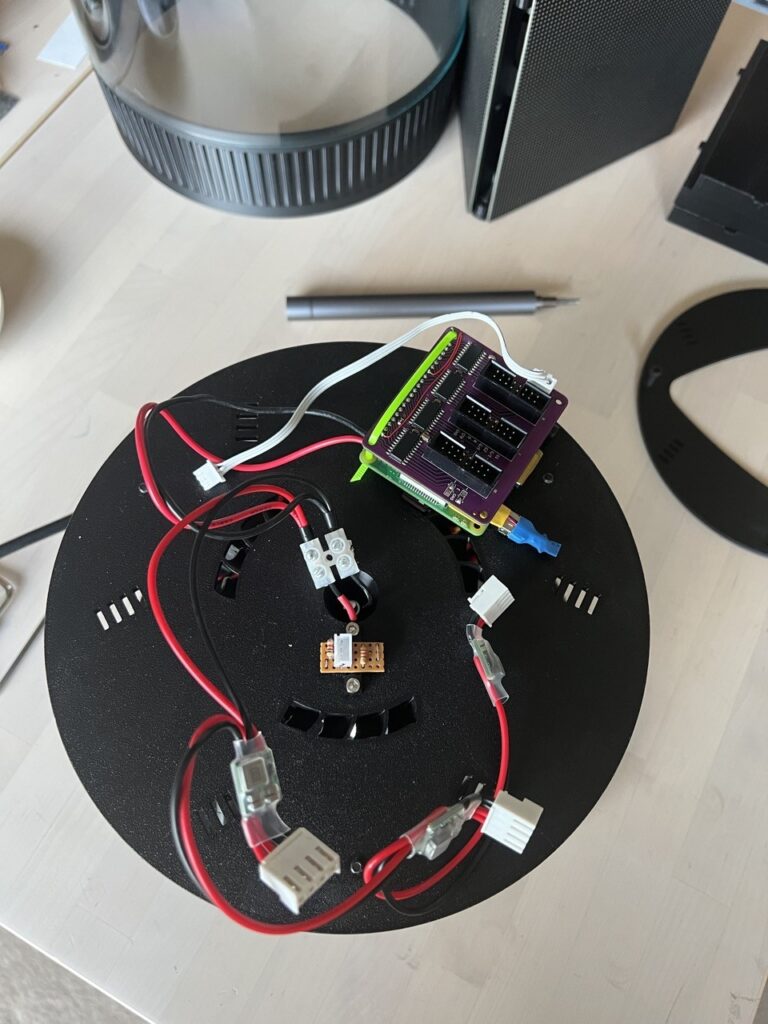
Above left shows the electronics hiding on the back of the LED panels inside the crystal ball-style build. On the right is the layout of the original cylindrical build before James attached the LED panels to those red cables.
Vox what?
Don’t be embarrassed if you’re not sure what voxels are. I had to do some Googling too and found that this YouTube video explaining them in the context of video game design made the most sense to me. You know what a pixel is, right? Well, a voxel does the same job as a 2D pixel, but in 3D.
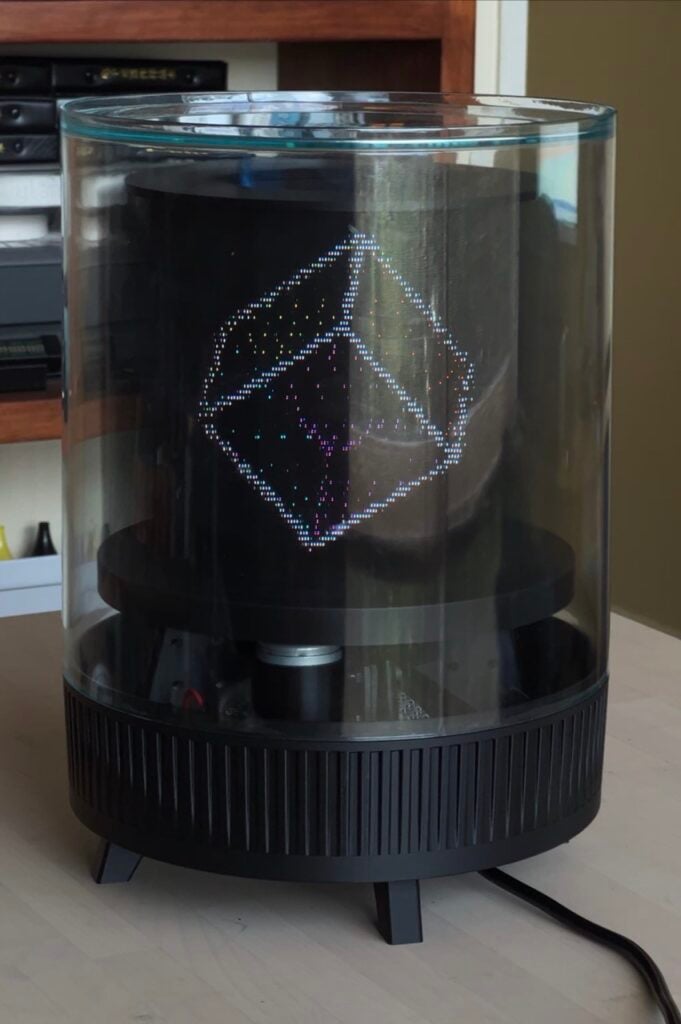
“Voxel” is a portmanteau of “volumetric” and “pixel”. While voxel-generated images are full of information, they’re generally less capable of rendering fine detail; at least, it takes longer to render detail in voxels than it does in polygons.
What would have your desktop crystal ball show? I’d go full Disney’s Haunted Mansion and have Madame Leota’s judgemental face peering over my procrastination. That’ll help, right?


5 comments
Andrew S
Fun fact: “pixel” is itself a portmanteau, so “voxel” is a portmanteau of a portmanteau :-D
Anthony R. King
Do elaborate!
Lukas V
Pixel stand for “picture element”.
Anthony R. King
on the explanatory video by the way.
Anthony R. King
That comment was meant to be prefixed with ‘Parental Advisory – Explicit Language’, however, putting it inside square brackets disappeared it!
Comments are closed