Can Raspberry Pi steer a boat across the Atlantic?
Full disclosure: it’s an autonomous boat, not one that actual humans can set sail in. Raspberry Pi Zero W powers a prototype boat set to tackle the Microtransat Challenge, which aims to encourage the development of autonomous watercraft with a little friendly transatlantic competition.

Don’t come at me for the gently misleading blog title. Headlines are supposed to do a job and now that you’re here, let’s all have a good time together.
Sailing gone electric
Maker slash captain Matt Clarke has set out on his bid to ace the Microtransat Challenge with a 3D-printed version of what he hopes will become the boat that navigates the Atlantic. The plan for the final design is to include solar panels which will power all aspects of the craft.
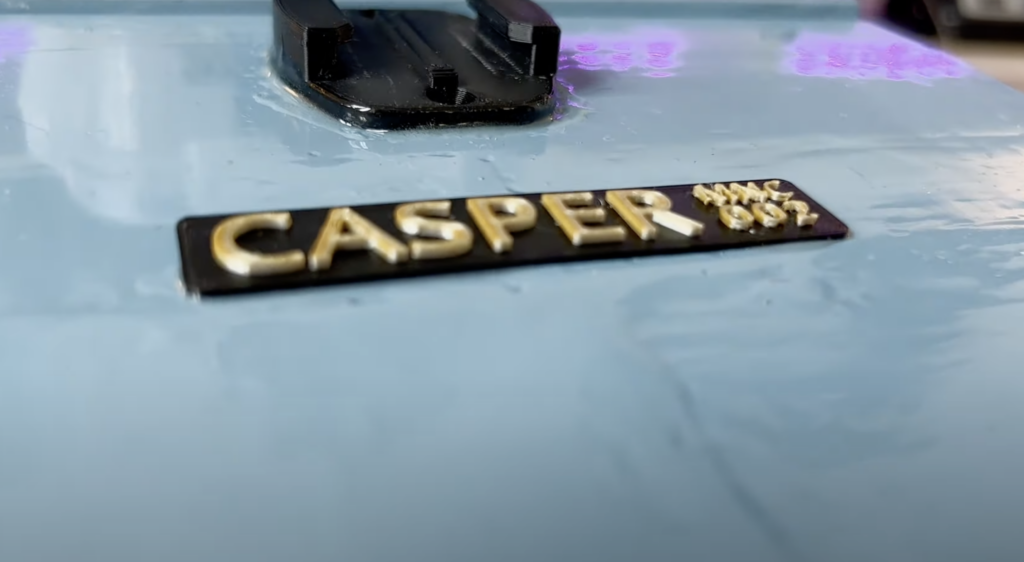
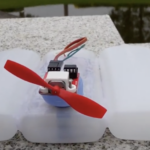
Most entries to the Microtransat Challenge are unmanned sailboats with robotics controlling the sail, but Matt wanted to try something different and use purely electric propulsion. You may have noticed the lack of a rudder on Casper the boat: this is because he opted to use differential thrust for yaw control.
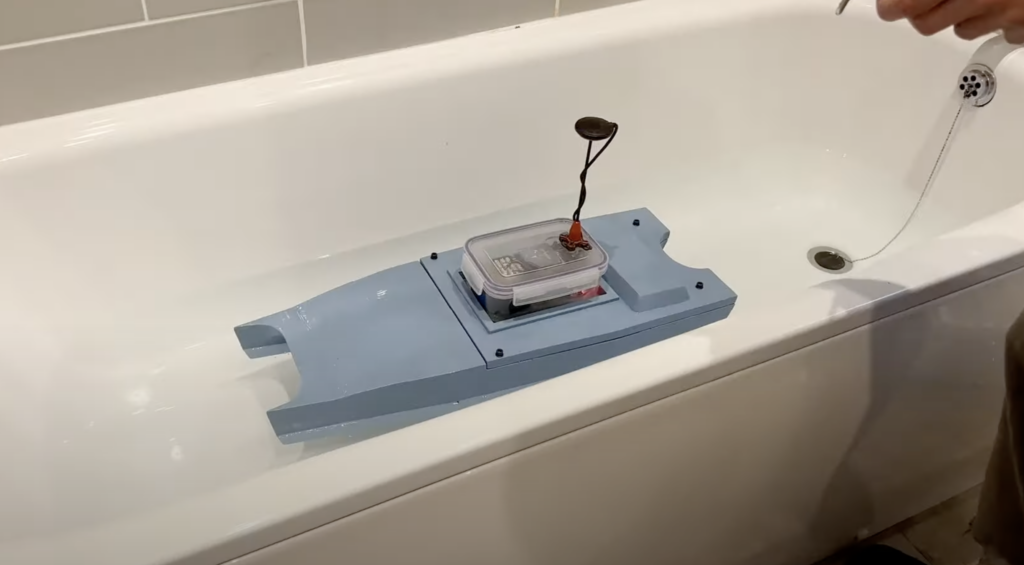
Matt 3D printed the very first prototype at home, and when that proof of concept survived a bathtub test, it was time to move on. Turns out PCB Way lets you 3D print your designs in a range of materials, including metal, so the current Casper is a fully aluminium 3D-printed creation. All the STL files for the hull design are available on Dropbox.
Hardware
A Pix32 v5 is the flight controller and is connected over serial to a Raspberry Pi Zero W for wireless telemetry. The Zero also had one of our cameras attached to it in the early development stages, but it looks like Matt switched out to the bigger GoPro you can see during the lake tests in the project video.
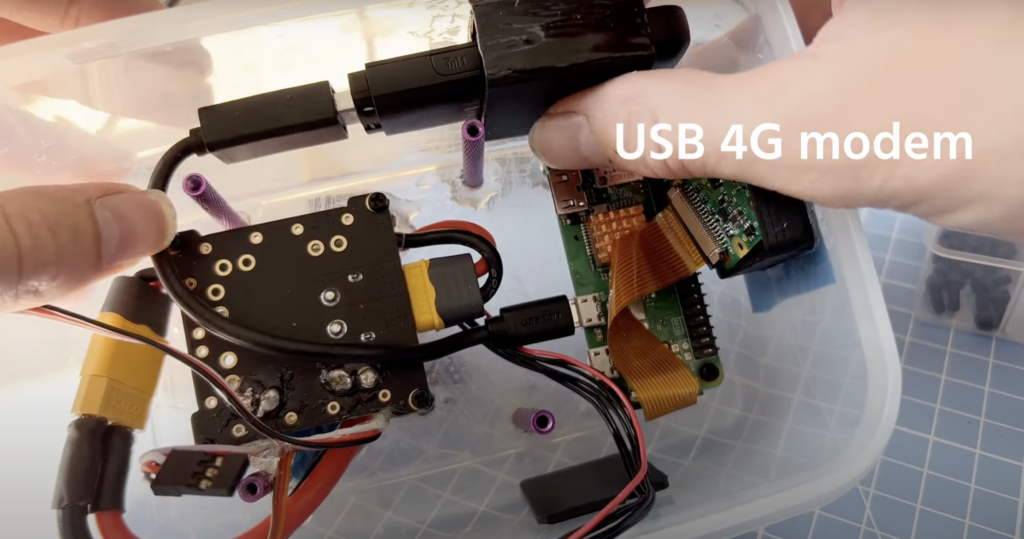

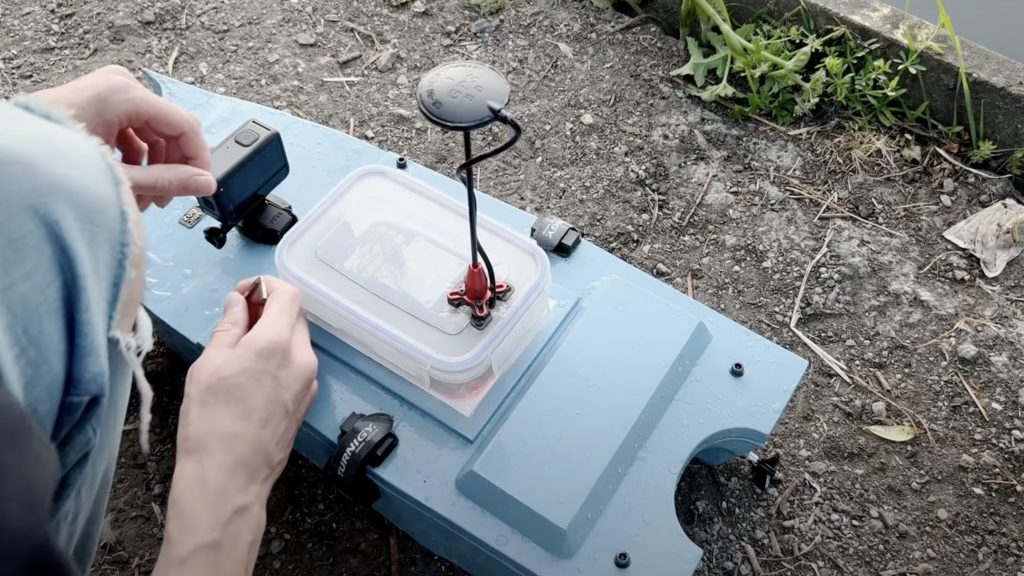
This hardware lives inside an airtight snap-lid food container, but the boat’s motors and all the wires connecting everything are inside the main body of the craft. Matt threw everything he could at the hold to make it watertight down there. Regular shop-bought silicon wasn’t good enough, so clingfilm and velcro straps were added after the lake tests showed signs of leakage inside the hull.
Good luck with your ongoing design, Matt. We hope Raspberry Pi makes it into the final craft that takes the journey from Plymouth, UK to New York, US. Cross your fingers for Casper the friendly boat!


9 comments
Matt Clarke
Thanks for the feature! Just a heads up, Casper is printed in ABS+; the metal printing was part of the sponsorship deal to mention in the video 😅
I’m currently working on a hull redesign to elimate a bunch of the issues flagged during this build – compartmentalised electronics, addition of dual rudders to allow redundancy if a motor fails and yaw authority is lost, and of course solar power!
Raspberry Pi Staff Ashley Whittaker — post author
Matt! Drop a link here when you’ve got the next update posted.
Johannes van Schalkwyk
Hi Matt, Great project idea. Have you considered self-righting? It will be a small craft which could easily be rolled by a wave. A catamaran does not have a self-righting capability once it is flipped. Would a tube design, like a torpedo, with a weighted keel not be better? The weight at the bottom of the keel would act like a pendulum always keeping the craft upright.
Just my two cents. All the best and would love to see the outcome of this challenge.
Raspberry Pi Staff Ashley Whittaker — post author
☝️ this guy sounds like they know what they’re on about
London
I found this looking for a Raspberry Pi. I’ve never coded in my life, it’s just a dream of my to learn how this stuff works. This was a breath of fresh air. I enjoyed every second. Wish you the best!
Voyager
We as human kind landed on the moon with a computer as powerful(or much less) than you find on any wearable but can’t navigate the pond with a pi.
Raspberry Pi Staff Ashley Whittaker — post author
This remains to be seen…
Anders
If this project had 2.5% of US GDP and a couple hundred thousand people contributing efforts then I’m sure that success would be likely.
Travis Peacock
The reason the computer didn’t have to be that sophisticated was it was largely flown by the astronauts themselves. The computer involved was the brain of the human beings.
Getting this to work involves many different fields within both classic engineering and technology.
Comments are closed